Revelation 11 (Part 2: Historicist View)


REVELATION 11

Scripture text for this study: Revelation 11:1-13

This post was created on December 6th (but backdated to November 2nd so that it’s not out of order) to supplement Dave’s previous post on Revelation 11. This is a summary of Sam Storms’ views on this chapter—at least up through verse 13. Sam Storms, by the way, is a Historicist in his interpretation of the book of Revelation. His study of Rev. 11 takes up two separate posts on his website, so I have taken a summary of both posts and placed them below under the labels of “PART 1” and “PART 2,” respectively. A source link is given at the end of each part. While not a Historicist myself per se, I feel there is plenty of valuable information in Sam’s study, as well as much that I’m able to agree with him on.

Adding this information to the previous post would have made it too long; thus the decision to create a second post. Dave’s earlier post can be seen here.

PART 1

Verses 1-2: Aside from the partial-preterist view of this passage which formed the primary basis for Dave’s post, Sam Storms articulates several other positions. He summarizes the “traditional dispensational, pretribulational (or futurist) interpretation” in this way:

[It] is that the temple is the literal structure to be rebuilt in or just before the tribulation period at the close of history. [For John Walvoord, the] worshipers are faithful, believing Jews of the tribulation period who will have reinstituted the sacrifices and rituals of the Mosaic economy. Their activity, however, will be terminated by the Beast who will bring desolation to the temple service and subject the holy city of Jerusalem to severe affliction for the last (literal) 3 ½ years (or 42 months) of the (literal) 7 year tribulation period.

If this is an accurate representation of this view, how sad that “faithful believers” are seen reverting back to the types and shadows which pointed the way to the cross, and this more than 2000 years after Christ came the first time as Messiah, Savior, and Redeemer. How any true believer could reinstitute these sacrifices and rituals, if given the opportunity to do so, is almost beyond comprehension. It seems more tragic than verbally denying one’s faith when sentenced to die by the blade of a guillotine.

Storms moves to the position of George Ladd, who was a Historic Premillennialist. For Ladd, Revelation 11:1-13 is “descriptive of the preservation and salvation of the Jewish people as portrayed in Romans 11:25-27.” He says, “The most natural meaning of Jerusalem is that it stands for the Jewish people.” Ladd sees “a contrast between a faithful remnant of believing Israelites who, in contrast to the city as a whole will be trodden down by the nations, i.e., they will fall under the divine judgment because they have become spiritually apostate.”

Sam Storms’ own position is this:

[All of Revelation 11:1-13] describes symbolically the mission and fate of the Church during the present inter-advent age, culminating in the final period of opposition and persecution by the Beast. On this view, the temple or sanctuary, together with the altar and the worshipers, stands for the church as God’s people (cf. 1 Cor. 3:16-17; 2 Cor. 6:16; Eph. 2:19-22; 1 Peter 2:5). The Greek word translated ‘temple’ is naos which without exception in Revelation refers to the present heavenly temple (7:15; 11:19; 14:15,17; 15:5-6,8; 16:1,17) or to the temple of God’s presence in the age to come (3:12; 7:15; 21:22). Thus the people of God, the members of God’s temple in heaven, are referred to in their existence on earth as ‘the temple of God.’

Regarding verse 2, Storms adds:

The measuring of the temple speaks of spiritual preservation from God’s wrath, but not from physical persecution and martyrdom. The people of God are sustained and protected in their faith while suffering greatly at the hands of the Beast. Thus this ‘measuring’ is equivalent to the ‘sealing’ of chapter seven and the ‘worshipers’ in 11:1 are the same as the ‘144,000’ in 7:4 (see 2 Sam. 8:2b; Isa. 28:16-17; Jer. 31:38-40; Ezek. 40:1-6; 42:20; Zech. 1:16; for OT examples of ‘measuring’ as ‘protection’; for the notion of destruction see 2 Sam. 8:2a; 2 Kings 21:13; Amos 7:7-9; Isa. 34:11; Lam. 2:8)…

Storms then, speaking for himself, says some things regarding verse 2 which I find myself agreeing with more and more:

Some say this is descriptive of the church’s experience viewed from two different perspectives. The church is spiritually protected from God’s wrath (the inner sanctuary) but is physically oppressed by pagan forces (outer court). According to this view the holy city must be yet another symbolic designation of the church. In Revelation “city” (polis) is used four times of the future heavenly city, the New Jerusalem (3:12; 21:2, 10; 22:19). This is similar to what we read in Hebrews 11:10; 12:22; and 13:14. The people of God on earth are members and representatives of the heavenly Jerusalem (cf. Gal. 4:26). I believe this is also the meaning of the “beloved city” in Rev. 20:9.

But is it plausible to believe that the temple, the altar, the outer court, and the holy city, here in 11:1-2, all refer figuratively or symbolically to the church, i.e., the believing community of God’s people now on earth? Yes! Let us remember that in Rev. 3:12 the church, the believing community of God’s people now on earth, are promised that they will be “a pillar in the temple” of God. They will have written on them the name of God and “the name of the city” of God, “the New Jerusalem”!

Verses 3-13: George Ladd saw the two witnesses as two latter day prophets who would minister during “the final calamitous days of the tribulation period,” and whose “resurrection and ascension (11:11-12) are not literal but symbolic of the spiritual restoration or conversion of the nation Israel, spoken of in Ezek. 37 and again in Rom. 11:25-27.”

John Walvoord and other Futurists are open to the two witnesses being “individuals who are characterized in their persons and ministries by the elements and activities of [Moses and Elijah] as recorded in the OT narratives.”

Sam Storms says, “The two witnesses are not real or historical individuals, but symbolize the Church in its missionary and prophetic role during the present age and particularly at the close of history.”

Source: http://www.enjoyinggodministries.com/article/revelation-111-13-part-i/

PART 2

Verses 3-4: Continuing on with his discussion of the two witnesses, Sam Storms lists numerous possibilities which have been suggested for their identity. The following are several of the suggestions which are beyond the usual ones:

[1] Peter and Paul – Some point to the martyrdom of these two apostles and the tradition that Nero prohibited their burial (cf. Rev. 11:19).
[2] The OT and the NT – Or more likely, the Law (represented by Moses) and the Prophets (represented by Elijah).
[3] The Word of God and the testimony of Jesus – See Strand (AUSS 19 [1981], 127-35.

Storms further comments,

[T]hey are called “two olive trees and two lampstands” (11:4), the latter of which clearly reminds us of the lampstands in Rev. 1:12, 20; 2:1 which Jesus says represent the churches. Says Bauckham, “if the seven lampstands [in 1:20] are churches, so must be the two lampstands. But it would be better to say that, if the seven lampstands are representative of the whole church, since seven is the number of completeness, the two lampstands stand for the church in its role of witness, according to the well-known biblical requirement that evidence be accepted only on the testimony of two witnesses (Num. 35:30; Deut. 17:6; 19:15; cf. Matt. 18:16; John 5:31; 8:17; 15:26-27; Acts 5:32; 2 Cor. 13:1; Heb. 10:28; 1 Tim. 5:19). They are not part of the church, but the whole church insofar as it fulfills its role as faithful witness” (274). This probably explains why there are “two” lampstands here instead of one as in Zech. 4.

Storms notes that Leon Morris suggests another plausible explanation for why there are two witnesses spoken of here:

As John has spoken of seven churches only two of which (Smyrna and Philadelphia) are not blameworthy, it is tempting to think of the two witnesses as standing for that part of the church which is faithful. Perhaps he has the martyrs in mind.

Storms then makes the point that the language of verse 7 (“the beast that rises from the bottomless pit will make war on them and conquer them and kill them…”) is a clear echo of “Dan. 7:21 where the objects of persecution are collectively the people of God.” This is a good point, and it also echoes Rev. 13:5, which says, “Also it [the beast] was allowed to make war on the saints and to conquer them.” This reference is also to the people of God in a collective sense, so why wouldn’t it be the same in Rev. 11:7?

Storms also references Greg Beale, who says, “[T]he corporate interpretation is pointed to by the statement in vv. 9-13 that the entire world of unbelievers will see the defeat and resurrection of the witnesses. This means that the witnesses are visible throughout the earth.” [If this has a first-century fulfillment, we can think in terms of the Roman Empire (cf. Luke 2:1, Acts 2:5), rather than globally. We might also limit the scope of “the earth” to Israel/Palestine, since that seems to be the usage of this phrase in other passages (See, for example, the post on Revelation 1, where we examined the phrase “tribes of the earth” in verse 7, which is often thought to be worldwide in scope. When this prophecy is compared, though, to its counterpart in Zechariah 12:10-14, it’s clear that every one of those tribes belongs to the land of Israel).]

Regarding the two witnesses being clothed in sackcloth (verse 3), Storms adds this study note:

Sackcloth…was a dark-colored fabric made of goat hair or camel hair and was worn in the OT for any one of several reasons: (1) as a sign of individual mourning or national distress (Gen. 37:34; 2 Sam. 3:31; Lam. 2:10; Esther 4:1; Ps. 30:11; Isa. 15:3; 22:12; Joel 1:13; Amos 8:10); (2) as a sign of submission when supplicating people or offering prayers to God (1 Kings 20:31-32; Jer. 4:8; 6:26; Dan. 9:23); (3) as an expression of repentance and sorrow for sin (1 Kings 22:27-29; 2 Kings 19:1-2; 1 Chron. 21:16; Neh. 9:1; Ps. 35:13; Jonah 3:5-8; or (4) as the clothing of prophets as they anticipated a coming judgment (Isa. 50:3; cf. Rev. 6:12).

Verses 5-6: Regarding the fire which comes out of the mouths of the witnesses, Storms says,

That “fire” should proceed “out of their mouths” points again to the symbolic nature of both the witnesses and the ministry they are described as fulfilling. In Rev. 1:16; 19:15,21, Jesus is portrayed as judging his enemies by means of a “sharp sword proceeding from his mouth” (cf. 2:16). This is clearly a metaphor of the effect and fruit of his spoken word, whether it be of judgment or blessing (cf. John 12:48 (“the word I spoke is what will judge him on the last day”). We read of this same imagery in Jer. 5:14, “Therefore, thus says the Lord, the God of hosts, ‘Because you have spoken this word, behold I am making My words in your mouth fire and this people wood, and it will consume them’” (cf. also Ps. 18:13).

Storms, without being dogmatic, suggests that the witnesses have the power to shut the sky, turn water into blood, etc. in the sense that God responds with judgment on an unbelieving world which disregarded their witness:

But precisely what is meant, practically speaking, by the imagery of the church, through her ministry, stopping the rain, turning water into blood, and smiting the earth with plagues? Is the idea that God will, in response to the preaching, praying, and prophesying of the church, pour out his judgments on an unbelieving world? Beale suggests that “the church’s prophetic declaration of God’s truth concerning the gospel, including the message of final judgment, unleashes torments toward those who remain ultimately impenitent” (584). See also 11:10 where the two witnesses are described as having “tormented” the earth-dwellers. Is the torment equal to the trumpet judgments? Is the church and its ministry one of the means by which the seal, trumpet, and bowl judgments are poured out? Is the torment psychological in nature, as, for example, when Paul preached to Felix and provoked this response: “And as he [Paul] was discussing righteousness, self-control and the judgment to come, Felix became frightened and said, ‘Go away for the present, and when I find time, I will summon you’” (Acts 24:25)? The church not only brings comfort, consolation, and joy to the repentant, it also brings discomfort, conviction, and consternation to those who continue to resist the truth of the gospel.

Verses 7-10: At the mention of the phrase “when they have finished their testimony,” Storms now sees the end of history as being in view. Also, quoting Beale, he sees that “the beast’s spirit has stood behind the earthly persecutors throughout history, and at the end he will manifest himself openly to defeat the church finally.” However, the beast is conquered by the faithfulness of the martyrs it puts to death. Storms speculates that the “great city” of verse 8 is Rome, a matter on which I personally don’t agree with him (much more will be said on this point in our study on chapters 17-18).

Verses 11-13: Storms believes that the portrayal of resurrection here “is an echo of Ezek. 37:5 and 10, where we read of God’s restoration of Israel out of the Babylonian exile. The nation in exile is described as corpses of which only dry bones remain: ‘Thus says the Lord God to these bones, “Behold I will cause breath to enter you that you may come to life”… So I prophesied as He commanded me, and the breath came into them, and they came to life, and stood on their feet, an exceedingly great army.’”

[That’s an interesting connection! Ezekiel 36:26-28 and 37:15-27 are especially reminiscent of Jeremiah’s picture of the New Covenant (Jeremiah 31:31-34; cf. Hebrews 8:6-13, Ephesians 2:11-22). These passages surround the text being alluded to here. That being the case, and considering how much we’ve seen by way of the Old Covenant being contrasted with the New Covenant, how are we to understand the imagery of believers receiving a breath of life and being called up to heaven in the sight of their enemies? Is this also a picture of the final transition from one covenant to the other, where the kingdom of God has been taken from national Israel and given exclusively to the body of Christ, completely divorced from temple-based Judaism (Matt. 21:33-46, Daniel 7:13-27, Hebrews 8:13)? Without taking away from that question, is this also a portrayal of the Church having overcome a time of great persecution through her faithfulness even in the face of martyrdom?]

Beale, on the other hand, maintains “that this scene is simply a symbolic portrayal of vindication. He writes: ‘The acceptance of the witnesses into the cloud [v. 12] shows the divine approval since the cloud…in the OT was representative of God’s presence either in judgment or in commissioning his prophetic servants.’”

Regarding the seven thousand killed in the earthquake (verse 13), Storms speculates:

If the two witnesses are linked to the ministry of Elijah, the 7,000 who die may be the just equivalent of the 7,000 faithful who “did not bow the knee to Baal” (cf. Rom. 11:4).

This marks the end of Sam Storm’s commentary on Revelation 11. He does not appear to deal with verses 14-19.

Source: http://www.enjoyinggodministries.com/article/revelation-111-13-part-ii/

——————————————————————————————————————————————–

Our study of Revelation 12 can be found here.

All of our Revelation chapter-by-chapter studies, and any other posts related to the book of Revelation, can be found here.

Revelation Chapter 9


REVELATION 9

Adam Maarschalk: September 24, 2009

Scripture text for this study: Revelation 9

Quick review: In our study of Revelation 8, we read of a scene in heaven in which seven angels were given seven trumpets which they were to sound. The prayers of the saints were offered upon the golden altar before the throne, and this seemed to be directly related to the judgments which were about to follow. Chapter 8 covered the first four trumpets: [1] the burning up of a third of the trees and grass [2] the destruction of a third of the sea creatures and ships [3] a third of the water becoming lethally bitter [4] a third of the sun, moon, and stars struck and darkened.

A. Fifth Trumpet: Locusts from the Bottomless Pit (Rev. 9:1-12)

Verse 1: The one who was given the key to the shaft of the bottomless pit was “a star [that had] fallen from heaven to earth.” Might this have anything to do with the great star that fell from heaven in Rev. 8:10? Another possibility for the identity of this star, clearly a person or entity, would be that it is Lucifer (See Luke 10:18 and Rev. 12:9-10). David Chilton notes that “the bottomless pit,” referenced in verse 1, is referred to a total of seven times in Revelation (9:1, 2, 11; 11:7; 17:8; 20:1, 3). He adds,

In Biblical symbolism, the Abyss is the farthest extreme from heaven (Genesis 49:25; Deuteronomy 33:13) and from the high mountains (Psalm 36:6). It is used in Scripture as a reference to the deepest parts of the sea (Job 28:14; 38:16; Psalm 33:7) and to subterranean rivers and vaults of water (Deuteronomy 8:7; Job 36:16), whence the waters of the Flood came (Genesis 7:11; 8:2; Proverbs 3:20; 8:24), and which nourished the kingdom of Assyria (Ezekiel 31:4, 15). The Red Sea crossing of the covenant people is repeatedly likened to a passage through the Abyss (Psalm 77:16; 106:9; Isaiah 44:27; 51:10; 63:13). The prophet Ezekiel threatened Tyre with a great desolation of the land, in which God would bring up the Abyss to cover the city with a new Flood, bringing its people down to the pit in the lower parts of the earth (Ezekiel 26:19-21), and Jonah spoke of the Abyss in terms of excommunication from God’s presence, a banishment from the Temple (Jonah 2:5-6). The domain of the Dragon (Job 41:31; Psalm 148:7; Revelation 11:7; 17:8), the prison of the demons (Luke 8:31; Revelation 20:1-3; cf. 2 Peter 2:4; Jude 6), and the realm of the dead (Romans 10:7) are all called by the name Abyss.

St. John is thus warning his readers that hell is about to break loose upon the Land of Israel; as with Tyre of old, the Abyss is being dredged up to cover the Land with its unclean spirits. Apostate Israel is to be cast out of God’s presence, excommunicated from the Temple, and filled with demons. One of the central messages of Revelation is that the Church tabernacles in heaven (see Revelation 7:15; 12:12; 13:6); the corollary of this is that the false church tabernacles in hell (David Chilton, Days of Vengeance, 1987).

That the land of Israel is indicated here is further seen in the references to “the earth” (also properly translated as “the land”) in verses 3-4. In our study of Revelation so far, we have suggested that many of the references to “the earth” in the book of Revelation are not meant to be taken as worldwide in scope, but as dealing instead with the land of Israel/Palestine. In a 3-part study on this subjectbeginning with this post, I have outlined nearly 20 instances where this appears to be the case (See, for example, the post on Revelation 1, where we examined the phrase “tribes of the earth” in verse 7, which is often thought to be worldwide in scope. When this prophecy is compared, though, to its counterpart in Zechariah 12:10-14, it’s clear that every one of those tribes belonged to the land of Israel).

Q: In verse 4, we see that the locusts are told not to harm the grass, green plants, or trees, but only those without the seal of God on their foreheads. Where have we seen this before?
A: We saw it in Revelation 7:1-4, with the sealing of the 144,000 Jewish believers before the destruction began.

Chilton notes that in Judea it was typical for locusts to appear in the land anytime between May and September, a period of five months. In this case they were to remain and attack relentlessly for five months. Regarding verse 4, Chilton reminds us that “[t]he vegetation of the earth is specifically exempted from the destruction caused by the ‘locusts.’ This is a curse on disobedient men.”

Q: What is the likely significance of the five month period cited in verse 5?
A: The siege of Jerusalem by the Roman armies in 70 AD lasted five months. It covered the time span of May to September, the exact time of the year when locusts normally would appear in Judea.

The “Models of Eschatology” blog site (moderated by a person identified as “wbdjr” for the United Christian Church in Richmond, Virginia) has this to sayabout the five month siege:

Five months is the time period that the Roman siege lasted around Jerusalem. During this time the Romans didn’t try to take the city, but let the work of the siege slowly weaken the city defenders and bring conditions upon them that could fit the definition of a great tribulation. During the siege the Zealots inside Jerusalem set fire to the foodstocks that were stored up thinking that without food the inhabitants would be more compelled to join them in fighting the Romans. As food disappeared people were compelled to eat leather from belts, shoes, and anywhere else it could be found.[1]

Kenneth Gentry (Before Jerusalem Fell, p. 248) also states, quoting from F.F. Bruce (New Testament History, p. 382): “Titus began the siege of Jerusalem in April, 70. The defenders held out desperately for five months, but by the end of August the Temple area was occupied and the holy house burned down, and by the end of September all resistance in the city had come to an end.”

Q: Where else in Scripture do we see a similar vision of a destroying army which is likened to locusts?
A: We see it in Joel 1:2-7; 2:1-11.

Verse 6: We are told that people would “seek death and…not find it” and “long to die, but death [would] flee from them.” Did this happen in 70 AD? Josephus records that during the height of the siege surviving Jews “poured forth their congratulations on those whom death had hurried away from such heartrending scenes” as were seen during the siege. Thousands were literally starved to death during this time. As we saw in our study on Revelation 6, Josephus records that when the temple was burned in August 70 AD, many survivors retreated to Upper Jerusalem and longed for death. Josephus said in Wars 6.7.2 that “as they saw the city on fire, they appeared cheerful, and put on joyful countenances, in expectation, as they said, of death to end their miseries.” This longing for death is reminiscent of what Jesus said in Luke 23:27-30 (cf. Rev. 6:16).

Kenneth Gentry (ibid, pp. 247-248) sees verses 1-12 as speaking strictly of demonic activity, and verses 13-19 as speaking of the invasion of a physical army. His reference to Jesus’ words in Matthew is most compelling:

Revelation 9:1-12 clearly seems to speak of demons under the imagery of locusts (perhaps due to their destructive power and the gnawing agony they cause). A great many commentators agree that, stripped of the poetical imagery, the locusts are really demons and their sting is that of the pain and influence of demonic oppression. This seems to be quite clearly the case in light of their origin (the bottomless pit, 9:1-3), their task (they afflict only men, 9:4), and their ruler (“the angel of the abyss,” surely Satan, 9:11). Were this a reference to the Roman army (or some later army), their restriction from killing (Rev. 9:5, 10) would be inexplicable in that the Roman army actually did destroy thousands of Jews in its assault. But if these are demons, and the physical killing is left to the armies (which are seen later, Rev. 9:13ff), the picture begins to come into focus.

If demons are in view in this passage, this fits well with requirements of the early date [for the writing of the book of Revelation, i.e. before 70 AD] and the prophetic expectation of Christ in Matthew 12:38-45. There Christ teaches that during His earthly ministry He had cast out demons in Israel, but because of Israel’s resistance to His message, the demons will return in greater numbers within the “generation.”

While I agree that this text does not speak of literal locusts present during this judgment, I see the possibility that in addition to a picture of demonic activity there are also hints of physical attacks, i.e. both happening concurrently. In verse 7, it is said that they appeared as “horses prepared for battle.” Their faces were “like human faces” (verse 7b), they had “hair like women’s hair,” they had breastplates of iron, and the noise made by their “wings” was “like the noise of many chariots with horses rushing into battle” (verse 9). There are enough literal references mixed in to possibly portray a picture of 1st century-type warfare. Steve Gregg, editor of Revelation: Four Views (A Parallel Commentary), has this to say (pp. 182, 184):

Though the locusts themselves are no doubt a portrayal of armies of demons that afflicted the whole society of the Jews during their conflicts with the Romans, the description is perhaps mingled with some features of the demonized zealots who made life so miserable for their fellow Jews during the siege. That they have hair like women’s hair [v. 8] may actually be a reference to their transvestitism, as Josephus describes:

“With their insatiable hunger for loot, they ransacked the houses of the wealthy, murdered men and violated women for sport; they drank their spoils with blood, and from mere satiety and shamelessness gave themselves up to effeminate practices, plaiting their hair and putting on women’s clothes, drenched themselves with perfumes and painting their eyelids to make themselves attractive. They copied not merely the dress, but also the passions of women, devising in their excess of licentiousness unlawful pleasures in which they wallowed as in a brothel. Thus they entirely polluted the city with their foul practices. Yet though they wore women’s faces, their hands were murderous. They would approach with mincing steps, then suddenly become fighting men, and, whipping out their swords from under their dyed cloaks, they would run through every passerby” (Wars, IV:9:10).

Regarding the appearance of this army, David Chilton adds,

The frightening description of the demon-locusts in Revelation 9:7-11 bears many similarities to the invading heathen armies mentioned in the prophets (Jeremiah 51:27; Joel 1:6; 2:4-10; cf. Leviticus 17:7 and 2 Chronicles 11:15, where the Hebrew word for demon is hairy one). This passage may also refer, in part, to the Satanic gangs of murderous Zealots that preyed on the citizens of Jerusalem, ransacking houses and committing murder and rape indiscriminately. Characteristically, these perverts dressed up as harlots in order to seduce unsuspecting men to their deaths. One particularly interesting point about the description of the demon army is St. John’s statement that “the sound of their wings was like the sound of chariots, of many horses rushing to battle.” That is the same sound made by the wings of the angels in the Glory-Cloud (Ezekiel 1:24; 3:13; 2 Kings 7:5-7); the difference here is that the noise is made by fallen angels.

Verse 11: The king over this army was named “Abaddon” in Hebrew, but “Apollyon” in Greek. According to Livius, an online ancient history encyclopedia compiled by the Dutch historian, Jona Lendering, “Apollo” was the favorite god of the Roman emperor, Augustus. For this reason, the famous 15th Roman legion was called “Legio XV Apollinaris.” When the Jewish revolt against Rome began in 66 AD, this 15th legion, Apollinaris, was moved from Alexandria, Egypt, and called to advance toward Judea. In 67 AD this legion captured Josephus in Jotapata (in Galilee).

After Vespasian was named emperor in 69 AD, his son, Titus, led the 15th legion, Apollinarus, toward Jerusalem. After a 5-month siege, Titus and his legion overthrew Jerusalem, destroyed the temple, and burned the city. It appears that Titus was the Apollyon of Revelation 9:11. 

Emblem on the Shields of the Roman 15th Legion (Photo Source)

B. Sixth Trumpet: Angels from the Euphrates (Rev. 9:13-21)

David Chilton remarks: “John’s opening words about the sixth Trumpet (Revelation 9:13) again reminds us that the desolations wrought by God in the earth are on behalf of His people (Psalm 46), in response to their official, covenantal worship: the command to the sixth angel is issued by a voice ‘from the four horns of the golden altar [i.e., the incense altar] which is before God.’ The mention of this point is obviously intended to encourage God’s people in worship and prayer, assuring them that God’s actions in history proceed from his altar, where He has received their prayers.”

Q: How many were to be killed in this plague?
A: One third of mankind (Again, in context, I understand “mankind” to refer to the population of Judea).

We are told that four angels would be released from the river Euphrates where they had been bound in preparation for this very day and hour:

“Then the sixth angel sounded: And I heard a voice from the four horns of the golden altar which is before God, saying to the sixth angel who had the trumpet, ‘Release the four angels who are bound at the great river Euphrates.’ So the four angels, who had been prepared for the hour and day and month and year, were released to kill a third of mankind. Now the number of the army of the horsemen was two hundred million, and I heard the number of them” (Revelation 9:13-16, NKJV).

During the winter of 67-68 AD, Ananus II, the former high priest in Jerusalem, gave speeches urging the people of Jerusalem to oppose the lawless Jewish Zealots who had taken over the temple as “blood-shedding villains.” John of Gischala pretended to be on the side of Ananus and was invited to be an ambassador to the Zealots (Josephus, Wars 4.3.13). However, John quickly betrayed him and falsely claimed that Ananus had invited the Roman general (and soon-to-be emperor) Vespasian to conquer Jerusalem (Wars 4.3.14).

In response, the Zealot leaders Eleazar, the son of Simon and Zacharias, the son of Phalek requested help from the Idumeans. They told the Idumeans that “unless they would come immediately to their assistance, they should themselves be soon in the power of Artanus, and the city would be in the power of the Romans.” Josephus described the Idumeans as a “tumultuous and disorderly nation… delighting in mutations” and a people who would “make haste to a battle, as if it were to a feast” (Wars 4.4.1). The Idumeans promptly prepared an army of 20,000 directed by four commanders:

“Now these rulers were greatly surprised at the contents of the letter, and at what those that came with it further told them; whereupon they ran about the nation like madmen, and made proclamation that the people should come to war; so a multitude was suddenly got together, sooner indeed than the time appointed in the proclamation, and every body caught up their arms, in order to maintain the liberty of their metropolis; and twenty thousand of them were put into battle- array, and came to Jerusalem, under four commanders, John, and Jacob the son of Sosas; and besides these were Simon, the son of Cathlas, and Phineas, the son of Clusothus” (Wars 4.4.2).

Says David Chilton,

In verses 14-16, the sixth angel is commissioned to release the four angels who had been “bound at the great river Euphrates”; they then bring against Israel an army consisting of “myriads of myriads.” The Euphrates River to the north formed the boundary between Israel and the fearsome, pagan forces from Assyria, Babylon, and Persia which God used as a scourge against His rebellious people (cf. Genesis 15:18; Deuteronomy 11:24; Joshua 1:4; Jeremiah 6:1, 22; 10:22; 13:20; 25:9, 26; 46:20, 24; 47:2; Ezekiel 26:7; 38:6, 15; 39:2). It should be remembered too that the north was the area of God’s throne (Isaiah 14:13); and both the Glory-Cloud and God’s agents of vengeance are seen coming from the north, i.e., from the Euphrates (cf. Ezekiel 1:4; Isaiah 14:31; Jeremiah 1:14-15). Thus, this great army from the north is ultimately God’s army, and under His control and direction, although it is also plainly demonic and pagan in character (on the “binding” of fallen angels, cf. 2 Peter 2:4; Jude 6). God is completely sovereign, and uses both demons and the heathen to accomplish His holy purposes (1 Kings 22:20-22; Job 1:12-21.

Jay Adams (Westminster Theological Seminary) is one scholar who points out that Israel’s past conquerors had traditionally crossed the Euphrates before wreaking their destruction. He notes that Josephus (Wars 7:1:3) told of Roman armies stationed along the Euphrates, including the famed 10th Legion, before they made their final advance on Jerusalem in 69-70 AD (Steve Gregg, ibid, p. 186).

Verse 16: The number of mounted troops was 200 million. Or was it? Futurist interpreters often insist that this number is to be taken literally, and some have supposed that this must refer to a future army that will come out of China. Sam Storms says that in the Greek, the expression denotes “a ‘double myriad of myriads,’ a ‘myriad’ typically equivalent to 10,000.” Therefore, it’s very possible that John heard the number 20,000, but that this has often been wrongly translated as 200 million.

Q: What did the survivors of these plagues not repent of?
A: They did not repent of [1] the works of their hands [2] worshiping demons [3] idols of gold, silver, bronze, stone, and wood [4] murders [5] sorceries [6] sexual immorality [7] thefts.

Josephus says this of mid-first century Jerusalem:

…neither did any other city ever suffer such miseries, nor did any age ever breed a generation more fruitful in wickedness than this was from the beginning of the world… I suppose that had the Romans made any longer delay in coming against those villains, the city would either have been swallowed up by the ground opening upon them, or been overflowed by water, or else been destroyed by such thunder as the country of Sodom perished by, for it had brought forth a generation of men much more atheistical than were those that suffered such punishments; for by their madness it was that all the people came to be destroyed (Kenneth Gentry, ibid, p. 249).

David Chilton notes that Jerusalem (see the reference to the “great city” in Rev. 11:8, and then compare with 16:19, 17:18, 18:10, 18:16-21) is described in Revelation 18 as “a dwelling place of demons and a prison of every unclean spirit, and a prison of every unclean and hateful bird” (18:2).  He adds:

The entire generation became increasingly demon-possessed; their progressive national insanity is apparent as one reads through the New Testament, and its horrifying final stages are depicted in the pages of Josephus’ The Jewish War: the loss of all ability to reason, the frenzied mobs attacking one another, the deluded multitudes following after the most transparently false prophets, the crazed and desperate chase after food, the mass murders, executions, and suicides, the fathers slaughtering their own families and the mothers eating their own children. Satan and the host of hell simply swarmed throughout the land of Israel and consumed the apostates.

—————————————————————————————————————————–

Our study of Revelation 10 can be found here.

All of our Revelation chapter-by-chapter studies, and any other posts related to the book of Revelation, can be found here.


[1] For more information regarding this 5-month siege, the famine in Jerusalem, etc., please see [1] here and [2] here.

Revelation Chapter 8


REVELATION 8

Adam/Dave/Rod: September 17, 2009

Scripture text for this study: Revelation 8

A. Seventh Seal: Prelude to the Seven Trumpets (8:1-6)

Verse 2: The seven angels who were given the seven trumpets are said to “stand before God.” Is it possible that one of these seven angels was Gabriel, as he testified to Zechariah (Luke 1:19) that he “stands in the presence of God”? Steve Gregg, editor of Revelation: Four Views (A Parallel Commentary), says, “For Israel, the trumpet was an instrument used to rally the troops for war or to warn of an enemy invasion. Likening the upcoming judgments to the sounding of trumpets suggests that God Himself is making war against His enemies in apostate Israel” (p. 146).

Verses 3-5: The “prayers of all the saints” were offered together with “much incense” on the golden altar that was in front of the throne pictured in heaven. It seems clear that the judgments that followed were, in part, a direct result of these prayers. Sam Storms sees a direct link between the cries of the martyrs for vengeance (Rev. 6:10) and God’s response here in these verses. As a result of the censer filled “with fire from the altar” being thrown to the earth, there were “peals of thunder, rumblings, flashes of lightning, and an earthquake.” One application to take away from this passage, then, is that God hears the prayers of His people and acts in a sovereign way in His own timing and according to His will. The thunder, lightning, and rumblings are again reminiscent of the giving of the Old Covenant through Moses at Mount Sinai (Exodus 19:16), just as in Rev. 4:5.

In her book, “Revelation: Introduction, Translation, and Commentary,” J. Massyngberde Ford says that there are four striking reversals in the text for Israel:

1. From the throne and altar, the “mercy seat,” now comes wrath;
2. Incense, the “soothing aroma to the Lord” ( Leviticus 1:13), now becomes an agent of death (cf. 2 Corinthians 2:14-16);
3. The trumpets, which called Israel to worship, now become heralds of her destruction;
4. The heavenly liturgy itself, appointed for Israel’s sanctification, becomes the means of her overthrow and dissolution.

John Piper said in 1994 that this text “portrays the prayers of the saints as the instrument God uses to usher in the end of the world with great divine judgments… [It] is an explanation of what has happened to the millions upon millions of prayers over the last 2,000 years as the saints have cried out again and again, ‘Thy kingdom come…’” Sam Storms, a Historicist, agrees with Piper’s cause/effect premise, but disagrees with him regarding the timing of God’s actions:

It may well be that the trumpets, no less than the sixth and seventh seals, are God’s answer to the prayers of his people in 6:9-11 for vindication against their persecutors. If so, this would strongly militate against the futurist interpretation which relegates the trumpets to the final few years of history just before the second coming. In other words, it seems unlikely that God would act in response to that prayer only at the end of history while passing by and leaving unscathed more than sixty generations of the wicked.

Sam Storms goes on to say that most of the seal, trumpet, and bowl judgments “describe the commonplaces of history.” The Preterist response, of course, is that the prayers of the first-century martyrs who cried out “O Sovereign Lord, holy and true, how long before You will judge and avenge our blood on those who dwell on the earth?” (Rev. 6:10-11) were vindicated within one generation when God poured out His judgment on Jerusalem in 70 AD (cf. Matt. 23:29-38; Luke 13:33-35; Rev. 17:6, 18:20, 24). The Historicist idea that God has continued to act in various ways upon the prayers of His people throughout history certainly applies.

B. First Trumpet: Vegetation Struck (8:7)

Hail and fire, mixed with blood, is thrown to the earth. In our study of Revelation so far, we have suggested that many of the references to “the earth” in the book of Revelation are not meant to be taken as worldwide in scope, but as dealing instead with the land of Israel/Palestine. In a 3-part study on this subject beginning with this post, I have outlined nearly 20 instances where this appears to be the case (See, for example, the post on Revelation 1, where we examined the phrase “tribes of the earth” in verse 7, which is often thought to be worldwide in scope. When this prophecy is compared, though, to its counterpart in Zechariah 12:10-14, it’s clear that every one of those tribes belonged to the land of Israel).

Steve Gregg notes that “[as] the first four seals [Rev. 6:1-8] were set off from the latter three, in that each of the first group revealed a horseman, so the first four trumpets are set off from the last three, in that the latter are referred to as ‘Woes.’ The entire series, however, is concerned with the Jewish War of A.D. 66-70, ‘the Last Days’ of the Jewish commonwealth” (p. 148). Steve quotes from Jay Adams, who notes that during this period “the land suffered terribly. The plagues are reminiscent of those in Egypt, at the birth of the Hebrew nation. Here they mark both the latter’s cessation, and the birth of a new nation, the kingdom of God (I Pet. 2:9, 10).”[1]

We are told that a third of the earth (the land of Israel), the trees, and the green grass were burned up in this judgment. This account from Josephus points to a very plausible fulfillment during the five-month siege upon Jerusalem leading up to its destruction in 70 AD:

And now the Romans, although they were greatly distressed in getting together their materials, raised their banks in [21] days, after they had cut down all the trees that were in the country that adjoined to the city, and that for ninety furlongs [10 miles] round about, as I have already related. And, truly, the very view itself of the country was a melancholy thing; for those places which were before adorned with trees and pleasant gardens were now become a desolate country every way, and its trees were all cut down: nor could any foreigner that had formerly seen Judea and the most beautiful suburbs of the city, and now saw it as a desert, but lament and mourn sadly at so great a change; for the war had laid all signs of beauty quite waste; nor if any one that had known the place before, had come on a sudden to it now, would he have known it again; but though he were at the city itself, yet would he have inquired for it notwithstanding (Wars 6.1.1).

C. Second Trumpet: The Seas Struck (8:8-9)

Verse 8: John was shown “something like a great mountain burning with fire …thrown into the sea.” Steve Gregg asserts that there is both a symbolic and a literal sense in which this trumpet can be applied to the destruction of Jerusalem and Israel in 66-70 AD: [1] It’s symbolic, in that in Biblical prophecy a mountain often refers to a government or a kingdom, even as it did for Israel (e.g. Exodus 15:17). The sea is a frequent prophetic “symbol of the Gentile nations, in contrast to ‘the land,’ signifying Israel. The symbolism could predict the Jewish state collapsing and the resultant dispersion of the Jews throughout the Gentile world.” (97,000 Jews were sold into slavery by Rome in 70 AD.) [2] It’s also literal in that Jerusalem was burned with fire by the Romans in 70 AD (pp. 154, 156).

Later John sees an angel picking up a great millstone and casting it into the sea, which the angel says is symbolic of “Babylon, that great city” being thrown down with violence (Revelation 18:21). The literary structures of these two passages show that they are parallel:

Revelation 8:8

Revelation 18:21a

Revelation 18:21b

“And the second angel sounded, “And a strong angel saying,
and something like a great took up a stone like a great ‘Thus will Babylon that great
mountain burning with fire millstone city
was thrown into the sea…” and threw it into the sea, will be thrown down with violence
and it will not be found any longer.”

See this post for more details on how the prayers of the saints were answered when the mountain of Jerusalem was cast into the sea: https://adammaarschalk.com/2016/07/25/that-mountain-was-cast-into-the-sea-and-these-mountains-can-be-too/.

Verses 8-9: John was also shown a third of the sea becoming blood, with the result being that a third of the living creatures in the sea died and a third of the ships were also destroyed. For those open to the idea of Revelation having been written before 70 AD,[2] this most definitely calls to mind some of the battles during the Jewish-Roman War (66-70 AD). The Roman Emperor Nero officially declared war on Israel in February 67 AD in response to the Jewish rebellion, and by the spring of that year his general Vespasian had marched into the land of Judea with 60,000 men. In the coming months more than 150,000 Jews were killed in Judea and Galilee. The Jewish historian Josephus described Galilee at one point as “filled with fire and blood.” Here is his description of one battle that took place in the Sea of Galilee:

“Sometimes the Romans leaped into their ships, with swords in their hands, and slew them; but when some of them met the vessels, the Romans caught them by the middle, and destroyed at once their ships and themselves who were taken in them. And for such as were drowning in the sea, if they lifted their heads up above the water, they were either killed by darts, or caught by the vessels; but if, in the desperate case they were in, they attempted to swim to their enemies, the Romans cut off either their heads or their hands; and indeed they were destroyed after various manners every where, till the rest being put to flight, were forced to get upon the land, while the vessels encompassed them about [on the sea]: but as many of these were repulsed when they were getting ashore, they were killed by the darts upon the lake; and the Romans leaped out of their vessels, and destroyed a great many more upon the land: one might then see the lake all bloody, and full of dead bodies, for not one of them escaped” (Wars 3.10.9).

With such carnage, it’s easy to see how many creatures in the Sea of Galilee were poisoned and did not survive, and how a third of its ships could have been destroyed. In another instance, Josephus described what happened to some Jews who had escaped from Joppa:

“Now as those people of Joppa were floating about in this sea, in the morning there fell a violent wind upon them; it is called by those that sail there “the black north wind,” and there dashed their ships one against another, and dashed some of them against the rocks, and carried many of them by force, while they strove against the opposite waves, into the main sea; for the shore was so rocky, and had so many of the enemy upon it, that they were afraid to come to land; nay, the waves rose so very high, that they drowned them; nor was there any place whither they could fly, nor any way to save themselves; while they were thrust out of the sea, by the violence of the wind, if they staid where they were, and out of the city by the violence of the Romans. And much lamentation there was when the ships were dashed against one another, and a terrible noise when they were broken to pieces; and some of the multitude that were in them were covered with waves, and so perished, and a great many were embarrassed with shipwrecks. But some of them thought that to die by their own swords was lighter than by the sea, and so they killed themselves before they were drowned; although the greatest part of them were carried by the waves, and dashed to pieces against the abrupt parts of the rocks, insomuch that the sea was bloody a long way, and the maritime parts were full of dead bodies; for the Romans came upon those that were carried to the shore, and destroyed them; and the number of the bodies that were thus thrown out of the sea was four thousand and two hundred” (Wars 3.9.3).

D. Third Trumpet: The Waters Struck (8:10-11)

This passage speaks of a “great star” falling from heaven, “burning like a torch,” causing many deaths because a third of the rivers and springs of water become wormwood (bitter). Some futurists interpret this trumpet judgment symbolically, as referring either to a future Antichrist (e.g. Arno Gaebelein) or a future Pope (e.g. H.A. Ironside) who causes much corruption (Steve Gregg, pp. 161, 163). Other futurist interpreters (e.g. Henry Morris, Charles Ryrie, John Walvoord) see this as a literal reference to a burning meteorite or “a giant set of meteors” that will enter earth’s atmosphere “with contaminating influence upon the rivers and waters” of the entire planet (p. 165). Steve Gregg’s articulation of the Preterist understanding is helpful:

The turning of fresh water sources bitter and toxic may be in part a literal result of the decaying corpses that lay in the Sea of Galilee and in the river as the result of war. However, this fouling of the waters has symbolic significance, occurring as it does here to the nation of Israel. There is probably an intentional allusion to the promise (and implied threat) God made to Israel when they first came out of Egypt. When they came to the bitter waters of Marah, in response to Moses’ casting a tree into the waters, God made the waters sweet and wholesome… However, God’s promise/warning implies that their disobedience to Him will result in His placing upon them the same plagues that He placed on the Egyptians—the waters can be made bitter again [cf. Exodus 15:25-26, Deuteronomy 28:59-60]… It is noteworthy that throughout the pages of Revelation, the plagues that come upon the apostates are comparable to those with which God afflicted the Egyptians in the days of Moses. The star which was burning like a torch (v. 10) is reminiscent of the tree cast into the waters by Moses, but has the opposite effect (pp. 160, 162).

David Chilton adds,

The name of this fallen star is Wormwood, a term used in the Law and the Prophets to warn Israel of its destruction as a punishment for apostasy (Deut. 29:18; Jer. 9:15; 23:15; Lam. 3:15, 19; Amos 5:7). Again, by combining these Old Testament allusions, St. John makes his point: Israel is apostate, and has become an Egypt; Jerusalem has become a Babylon; and the covenant-breakers will be destroyed, as surely as Egypt and Babylon were destroyed (Gregg, p. 164).[3]

[The following information in blue font was edited into this post on October 26, 2009:]

To further illustrate this point, it’s also instructive to consider the test for adultery under the Law of Moses, as recorded in Numbers 5:11-31. This test was to be administered by a priest in cases where a married woman was suspected of defiling herself in an adulterous manner (Numbers 5:11-14). The priest would mix dust from the floor of the tabernacle into holy water contained in a vessel, to create “the water of bitterness that brings the curse” (vss. 16-18). The woman would then take the following oath:

If no man has lain with you, and if you have not turned aside to uncleanness while you were under your husband’s authority, be free from this water of bitterness that brings the curse. But if you have gone astray, though you are under your husband’s authority, and if you have defiled yourself, and some man other than your husband has lain with you, then (let the priest make the woman take the oath of the curse, and say to the woman) the Lord make you a curse and an oath among your people, when the Lord makes your thigh fall away and your body swell. May this water that brings the curse pass into your bowels and make your womb swell and your thigh fall away (vss. 20-22).

The woman would then say, “Amen. Amen,” and the curses would be written into a book and washed off into the bitter water. The woman would then be made to drink the water (vss. 23-26), with the following possible results:

And when he has made her drink the water, then, if she has defiled herself and has broken faith with her husband, the water that brings the curse shall enter into her and cause bitter pain, and her womb shall swell, and her thigh shall fall away, and the woman shall become a curse among her people. But if the woman has not defiled herself and is clean, then she shall be free and shall conceive children (vss. 27-28).

If this imagery and this procedure is what is mirrored by the third trumpet judgment, then this is one more indication that Israel had been found to be apostate. Many people died from the bitter water because they were indeed guilty of spiritual adultery, and were found to be in a state of defilement.

E. Fourth Trumpet: The Heavens Struck (8:12-13)

Verse 12: Regarding the common contention of Futurists that these judgments must literally take place in the future, i.e. a third of the light of the sun, moon, and stars will cease to shine; a practical question is in order. Since this is not to be the final plague, and other judgments must follow this one, is it possible that any life would continue to survive for even a few days, let alone months, under those conditions? We know that life exists on this planet because the sun basically maintains its present intensity. A significant increase or decrease in its intensity would either cause mankind to burn or freeze. Alternatively, David Chilton writes,

The imagery here was long used in the prophets to depict the fall of nations and national rulers (cf. Isa. 13:9-11, 19; 24:19-23; 34:4-5; Ezek. 32:7-8, 11-12; Joel 2:10, 28-32; Acts 2:16-21. [He quotes F.W. Farrar (1831-1903), who wrote that] “ruler after ruler, chieftain after chieftain of the Roman Empire and the Jewish nation was assassinated and ruined. Gaius, Claudius, Nero, Galba, Otho, Vitellius, all died by murder or suicide;[4] Herod the Great, Herod Antipas, Herod Agrippa, and most of the Herodian Princes, together with not a few of the leading High Priests of Jerusalem, perished in disgrace, or in exile, or by violent hands. All these were quenched suns and darkened stars” (Gregg, pp. 166, 168).

Verse 13: As terrible as these plagues are, a flying eagle with a loud voice announces that the three remaining trumpet judgments are even more woeful. Their target again is “those who dwell on the earth,” another reference to the land of Israel, as discussed earlier. We will see these woes beginning in chapter 9. Steve Gregg quotes from Adam Clarke (1732-1815), who he says is a historicist but “accurately puts forth the preterist position”:

These woes are supposed by many learned men to refer to the destruction of Jerusalem: the first woe—the seditions among the Jews themselves; the second woe—the besieging of the city by the Romans; the third woe—the taking and the sacking of the city, and burning the Temple. This was the greatest of all the woes, as in it the city and Temple were destroyed, and nearly a million men lost their lives.

—————————————————————————————————————————————————————–

Our study of Revelation 9 can be found here.

All of our Revelation chapter-by-chapter studies, and any other posts related to the book of Revelation, can be found here.


[1] For more on the concept that 70 AD marked the birthing of God’s kingdom, in the exclusive sense that it was completely separated from the Judaic system, see [1]  here [2] here, and [3] Matthew 21:33-45, Hebrews 8:13.

[2] In my term paper on the destruction of Jerusalem, I included both external and internal evidence [part 1, part 2, part 3] that Revelation was written prior to Jerusalem’s downfall in 70 AD.

[3] Sam Storms shares some interesting thoughts as well regarding how Revelation parallels the plagues which came upon Egypt:

One of the fascinating things in Revelation is the way it portrays the experience of the people of God in terms very similar to what transpired for Israel in Egypt and the ten plagues of judgment. For example,

1) prominence of the Red Sea (Ex. 14:1-31) // 1) prominence of glassy sea (Rev. 15:2)
2) song of deliverance (Ex. 15:1-18) // 2) song of deliverance (Rev. 15:2-4)
3) God’s enemy: Pharaoh // 3) God’s enemy: the Beast
4) court magicians of Egypt // 4) the False Prophet
5) persecution of Israel // 5) persecution of the Church
6) protected from plagues (Ex. 8:22; 9:4,26; 10:23; 11:7) // 6) protected from wrath (Rev. 7:1-8; 9:4)
7) hardened/unrepentant (Ex. 8:15; 9:12-16) // 7) hardened/unrepentant (Rev. 16:9,11,21)
8] the name of God (Ex. 3:14) // 8] the name of God (Rev. 1:4-6)
9) Israel redeemed from bondage by blood // 9) Church redeemed from sin by blood
10) Israel made a kingdom of priests (Ex. 19:6) // 10) Church made a kingdom of priests (Rev. 1:6)
11) 7th plague (Ex. 9:22-25) // 11) 1st trumpet
12) 6th plague (Ex. 9:8-12) // 12) 1st bowl
13) 1st plague (Ex. 7:20-25) // 13) 2nd/3rd trumpet & 2nd/3rd bowl
14) 9th plague (Ex. 10:21-23) // 14) 4th trumpet & 4th bowl
15) 8th & 9th plagues (Ex. 10:1-20) // 15) 5th trumpet & 5th bowl

[4] See the chart of the Emperors here: https://kloposmasm.wordpress.com/2009/08/14/pp5-internal-evidence-for-an-early-date-revelation-part-2/.

Revelation Chapter 6 (Part 2)


REVELATION 6 (Part 2)

Adam Maarschalk: September 3, 2009

Scripture text for this study: Revelation 6:1-17 (Part 2 covers verses 9-17)

This is now the second part of our study on Revelation 6. It is recommended that one refer to the first part before reading what is to follow:

———————————————————————————————————————

E. Fifth Seal: The Cry of the Martyrs (6:9-11)

Rhetorical questions (open for further discussion): [1] In what sense did John see “the souls” of the martyrs (i.e. How can souls be seen)? [2] The martyrs had already passed on from this life and were safe in God’s presence, so why were they still concerned about vengeance? [3] If they hadn’t yet received their redeemed bodies, what were they to do with the white robes they were given? Were these literal robes?

Sam Storms says,

The fifth seal focuses on the oppression and martyrdom of God’s people. Unlike the first four seals, the fifth says nothing of an angelic decree of judgment or suffering but rather a human response to it… John’s language indicates that there is a specified number of God’s people who are destined to be martyred (the verb translated ‘should be completed’ in v. 11 can mean ‘to make something total or complete, to complete the number of’” (Aune, 2:412). Only when all have been killed in accordance with God’s plan will he act in judgment (http://www.enjoyinggodministries.com/article/the-seven-seals-part-ii/).

Dr. Thomas Constable remarks (p. 71), “‘Those who dwell on the earth’ is almost a technical expression in Revelation describing unbelievers who are hostile to God (cf. 3:10; 8:13; 11:10; 13:8, 12; 17:2, 8).” I would agree, and would again add that the term “earth,” as considered earlier, refers specifically to the land of Israel and Palestine. [In our study of Revelation so far, we have suggested that many of the references to “the earth” in the book of Revelation are not meant to be taken as worldwide in scope, but as dealing instead with the land of Israel/Palestine. In a 3-part study on this subjectbeginning with this post, I have outlined nearly 20 instances where this appears to be the case.]

The hostile unbelievers were primarily the apostate Jews of John’s day. Steve Gregg, editor of “Revelation: Four Views (A Parallel Commentary),” remarks (p. 118):

As the blood of sacrificial animals was poured out at the foot of the altar (Lev. 4:7), so the souls of the martyrs (slain like animals by the Jewish priests) are seen under the altar (v. 9). “The soul [Heb. nephesh] of the flesh is in the blood” (Lev. 17:11). Their blood cries out for vindication, as did the blood of Abel (Gen. 4:10). The fact that the martyrs are asking for the avenging of their blood upon those who dwell on the earth [or land] (v. 10) suggests that their persecutors were still alive on earth at the time John saw the vision. Prior to A.D. 70, the main persecutors of the righteous Jews and Christians were the leaders of the Jewish nation, headquartered in Jerusalem (Luke 13:33).

These thoughts are brought together by Jesus when He predicted: “that on you may come all the righteous blood shed on the earth, from the blood of righteous Abel to the blood of Zechariah…whom you murdered between the temple and the altar… All these things will come upon this generation” (Matt. 23:35f). The destruction of Jerusalem in that generation was the sentence of the divine Judge in response to the cries of the blood (souls) of the righteous slain by her leaders.

Indeed, Jesus couldn’t have been more clear that His own generation in Israel would be held responsible for the shedding of the blood of the saints, prophets, and Himself (Matthew 21:33-45, 23:29-38). We will also see in our study of Revelation 18 that the “saints and apostles and prophets” (verse 20) will be invited to rejoice over the destruction of Babylon the Great, i.e. Jerusalem (18:18, 21; cf. 11:8), because in her was found the blood of prophets and of saints, and of all who have been slain on the earth” (18:24; cf. 16:5-6). Their time of waiting (6:11) will have ended at that point. Babylon the Great, then, cannot be a city in the 21st century or beyond, because Jesus stated explicitly that the generation which crucified Him would be the one held responsible for the shedding of righteous blood and justly judged as a result. The generation which heard Jesus speak these things also saw them happen, just as He said they would, in 70 AD. Steve Gregg quotes J. Stewart Russell, who, writing in 1887, said:

[I]t is impossible not to be struck with the marked resemblance between the vision of the fifth seal and our Lord’s parable of the unjust judge (Luke 18:1-8): ‘And shall not God avenge his own elect, which cry day and night unto him, though he bear long with them? I tell you that he will avenge them speedily. Nevertheless, when the Son of man cometh, shall he find faith in the land?’ This is more than resemblance: it is identity.

One more note: These martyrs simply asked God to do what He had said long ago that He would do. This was not a brand new request. It was not a question of “if” this judgment would happen but “when” it would happen.

F. Sixth Seal: Cosmic Disturbances (6:12-17)

Verses 12-14: Sam Storms agrees with Preterists when he remarks,

“These verses and their vivid portrayal of disruptions in the heavens echo several OT texts: Isa. 13:10-13 (the defeat of Babylon); 24:1-6,19-23; 34:4 (the defeat of Edom); Ezek. 32:6-8 (the defeat of Egypt); Joel 2:10, 30-31 (judgment on Israel itself); 3:15-16; Hab. 3:6-11 (the defeat of the Chaldeans and other enemies of Israel). In particular, compare Isaiah 34:4 and God’s judgment against historical Edom with Rev. 6:13-14a.

‘and the powers of the heaven will melt, and the heaven will be rolled up like a scroll; and all the stars will fall . . . as leaves fall from a fig tree’ (Isa. 34:4).

‘and the stars of the heaven fell to the earth, as a fig tree casts its unripe figs when shaken by a great wind, and the heaven was split apart like a scroll when it is rolled up’ (Rev. 6:13-14a).

The point is this: all these celestial (heavenly) and terrestrial (earthly) phenomena are prophetic hyperbole for national catastrophe. God’s judgment of earthly unbelief and idolatry is described in terms of heavenly disasters.

N. T. Wright is surely correct in contending that “it is crass literalism, in view of the many prophetic passages in which this language denotes socio-political and military catastrophe, to insist that this time the words must refer to the physical collapse of the space-time world. This is simply the way regular Jewish imagery is able to refer to major socio-political events and bring out their full significance” (Victory, 361)… In summary, Revelation 6:12-14 is stock-in-trade OT prophetic language for national disaster.”

Verses 15-17: “What sinners dread most is not death, but having to stand before a holy and righteous God” (Dr. Thomas Constable, quoting from Robert Thomas, ibid).

FUTURIST VIEWPOINT: “Next God will send a tremendous earthquake that will rock the whole world (cf. Luke 21:11). The darkening of the sun (cf. Isa. 13:10; Ezek. 32:7-8; Joel 2:10, 31; Amos 8:9; Matt. 24:29; Mark 13:24-25; Luke 21:25), the reddening of the moon (cf. Joel 2:31; Acts 2:20), and the falling of the stars to earth (a meteor-like shower?) appear from the context to be consequences of this judgment… Many commentators have taken this description as picturing a metaphorical convulsion among the nations, not a literal shaking of the earth and the heavens. We should probably take them literally for at least two reasons. First, Jesus used the same language in the Olivet Discourse and gave no indication that it was symbolic[1] (cf. Matt. 24:7; Mark 13:8; Luke 21:11). Second, a shaking of the nations follows in verses 15-17” (Dr. Thomas Constable, p. 72, ibid).

As J. Stuart Russell pointed out, though, the “gorgeous symbolical imagery” used in this passage is fitting for the destruction of Jerusalem because “[t]hat event is not simply a tragical historical incident; it is not to be looked at as in the same category with the siege of Troy or of Carthage. It was a grand providential epoch; the close of an aeon; the winding up of a great period in the divine government of the world” (Steve Gregg, p. 124). Gregg clarifies, “The vision depicts the end of the Jewish state and the fall of its leaders” (p. 122).

In verse 17, John’s readers are told that the great day of God’s wrath has come. J. Stewart Russell says of this day (Gregg, pp. 120, 122), “This is… ‘the great and terrible day of the Lord‘ predicted by Malachi, by John the Baptist, by St. Paul, by St. Peter, and, above all, by our Lord in His apocalyptic discourse on the Mount of Olives. … It is impossible to overlook the connection between the seventeenth verse and the language of Malachi 3:2, ‘But who may abide the day of his coming?’ ” Revelation 6 ends with the question, “and who can stand?” We will see the answer to this question in our study on chapter 7.

Verse 16: It is said that those who would not repent called “to the mountains and rocks, ‘Fall on us and hide us from the face of Him who is seated on the throne, and from the wrath of the Lamb…’” F.F. Bruce said the following in 1986 regarding this verse: “The best commentary on the present passage is found in our Lord’s words to the ‘daughters of Jerusalem’ on the Via Dolorosa (Lk. 23:30)…” (“Revelation” in International Bible Commentary, p. 1608). This is what Luke 23:27-30 says:

And there followed Him [Jesus] a great multitude of the people and of women who were mourning and lamenting for Him. But turning to them Jesus said, ‘Daughters of Jerusalem, do not weep for Me, but weep for yourselves and for your children. For behold, the days are coming when they will say, “Blessed are the barren and the wombs that never bore and the breasts that never nursed!” Then they will begin to say to the mountains, “Fall on us,” and to the hills, “Cover us.” For if they do these things when the wood is green, what will happen when it is dry?

Jesus spoke these things to the “daughters of Jerusalem,” concerning themselves and their children. If these things were to take place centuries later in judgment upon Gentile nations, why would He have directed these remarks in this way to the present generation of Jews among whom He lived?

The same prophecy was given by the prophet Hosea concerning Israel: “The high places of Aven, the sin of Israel, shall be destroyed. Thorn and thistle shall grow up on their altars, and they shall say to the mountains, Cover us, and to the hills, Fall on us” (Hosea 10:8). This is yet another indication that the judgments of the book of Revelation were directed toward apostate 1st-century Israel (Source).

On July 31, 70 AD, after a five month siege, the Romans succeeded in penetrating the final wall around Jerusalem and burned the temple to the ground. Tens of thousands of Jews were killed, but the surviving Jews retreated to the Upper City of Jerusalem, where many continued to plunder, ambush, and assault their fellow Jews. The victims were too weakened by famine to resist, and quite a few were killed senselessly. Josephus tried to persuade them to surrender to the Romans and spare what was left of the city, but he was only laughed at. Josephus also records that when the temple was burned in August 70 AD, many survivors retreated to Upper Jerusalem and longed for death. Josephus said in Wars 6.7.2 that “as they saw the city on fire, they appeared cheerful, and put on joyful countenances, in expectation, as they said, of death to end their miseries.” Many Jews sought refuge in the caves and underground caverns, hoping to remain hidden once the Romans would reach the Upper City, as Josephus records (Steve Gregg, pp. 124, 126):

So now the last hope which supported the tyrants and that crew of robbers who were with them, was in the caves and caverns underground; whither, if they could once fly, they did not expect to be searched for; but endeavored, that after the whole city should be destroyed, and the Romans gone away, they might come out again, and escape from them. This was no better than a dream of theirs; for they were not able to lie hid either from God or from the Romans (Wars, 6:7:3).

The Romans not only ravaged and leveled Jerusalem, but during the next three years they rooted out the Jews who had fled Jerusalem and attempted to hide out in various pockets of resistance in the Dead Sea areas. The famous hill fortress of Masada was the last to be taken by the Romans in April 73 AD, where 960 Jews committed mass suicide.

————————————————————————————————————————

Our study of Revelation 7 can be found here.

All of our Revelation chapter-by-chapter studies, and any other posts related to the book of Revelation, can be found here.


[1] It can be said, though, that this language is indicated to be symbolic by the fact that the same type of language was used symbolically many other times in Scripture to refer to localized judgments.

Revelation Chapter 6 (Part 1)


REVELATION 6 (Part 1)

Adam Maarschalk: September 3, 2009

Scripture text for this study: Revelation 6:1-17 (Part 1 covers verses 1-8)

Brief review of chapter 5: We read of a worship scene around the throne of God in heaven, in which the Lamb who had been slain was found worthy to open a scroll and break its seals. This Lamb, Jesus, has “ransomed people for God from every tribe and language and nation,” and “made them a kingdom and priests” to God. We will now learn what took place when the first six seals were opened.

A. First Seal: The Conqueror (6:1-2)

One of the four living creatures we saw in the last chapter says, “Come!” John said his voice sounded like thunder.

Q: Who was the first living creature talking to, John or someone else?
A: He was speaking to the rider on the white horse, who was wearing a crown, carrying a bow, and going out to conquer.

The command “Come!” appears three more times, at the end of verses 3, 5, and 7. This command was not given to John four times, but to each of the characters mentioned in verses 2, 4, 5, and 8. We will notice, as each of the first four seals are opened, that Jesus is the One who opens them, but each of the four living creatures in turn calls forth some individual to execute judgment.

This first seal judgment was fulfilled in early February 67 AD when Rome officially declared war on Israel, and Nero formally commissioned Vespasian as his general to lead the war to crush the Jewish rebellion. This took place 3.5 years before Jerusalem’s downfall in August 70 AD.[1] We will see the significance of this 3.5 year period later in our study of Revelation.

B. Second Seal: Conflict on Earth (6:3-4)

Q: Does the same type of warfare take place when the second seal is opened, or is there a difference?
A: This time the people are not attacked by an outside force, but they slay one another instead.

Mark A. Copeland, a Preterist, says of this passage that it “[r]epresents civil war, in which people would kill one another, such as God used in His judgment against Egypt (Isa 19:1-4).” This certainly fits the language used here. As a historical fact, in the fall/winter of 67 AD a brutal civil war broke out in Jerusalem and Judea between the revolutionaries and those who wanted to maintain peace with Rome. Jerusalem was eventually divided into three factions led by [1] Eleazar, who was over the Zealots [2] John of Gischala, who was over the Galileans, and [3] Simon, who was over the Idumeans. It remained this way until the city was destroyed. The conditions were awful. In one night 8500 people were killed, and their bodies were cast outside of Jerusalem without being buried. The outer temple was “overflowing with blood” and the inner court even had pools of blood in it. Homes and gravesites were looted (For more information, see Footnote #1).

Steve Gregg, in his book “Revelation: Four Views (A Parallel Commentary),” quotes from J. Stuart Russell, who says (p. 106),

The Jewish war, under Vespasian, commenced at the furthest distance from Jerusalem in Galilee, and gradually drew nearer and nearer to the doomed city. The Romans were not the only agents in the work of slaughter that depopulated the land; hostile factions among the Jews themselves turned their arms against one another, so that it might be said that “every man’s hand was against his brother.”

Gregg also quotes Josephus (from Wars, 2:18:2): “Every city was divided into two armies encamped one against another…so the daytime was spent in shedding of blood, and the night in fear.” Gregg himself adds (p. 108) that these verses in Revelation 6:3-4 substantiate the words of Jesus when He wept over Jerusalem:

The Jews had rejected the Prince of Peace, who had said, while weeping over Jerusalem, “If you had known…the things that make for your peace! But now they are hidden from your eyes” (Luke 19:42). The next words Jesus spoke predicted the Roman armies invading the land and leveling the city of Jerusalem (Luke 19:43-44). What could speak more directly to the fulfillment of this threat than for Revelation to speak, as here, of one sent to take peace (v. 4) from the land? Zechariah also had predicted this as a consequence of the Jews’ rejection of Christ (Zech. 11:10-14).

At this point, it would be valuable to note that the Preterist viewpoint (which sees this as fulfilled in the land of Israel in the first-century) would be less plausible if the phrase “the earth” here refers to the entire globe. In chapter one,[2] we already got the sense that the predicted events in this book were to be localized, and that they had to do primarily with the land of Israel/Palestine as it existed in John’s day. You may recall that we compared the language of Revelation 1:7 with Matthew 24:30 and Zechariah 12:10-14, and saw (for example) that the term “tribes of the earth” clearly had to do with the tribes of the land of Israel. Kenneth Gentry is especially helpful in his book, “Before Jerusalem Fell” (1998, pp. 128-131), in explaining that “land” and “earth” are often used interchangeably in Scripture, with a meaning that is localized rather than global.

A quick glance at a couple of New Testament Scriptures begins to demonstrate this. For example, relating the circumstances surrounding Christ’s death on the cross, Matthew 27:45 in the ESV states, “Now from the sixth hour there was darkness over all the land until the ninth hour.” A footnote says that “earth” could have been used instead of land in this text, but most readers will conclude that this darkness was localized that day and not global. Looking also at Luke 21:20-24, the context likewise shows that these events belong to Judea and Jerusalem, and even Futurists generally agree that this passage speaks of the siege and destruction of Jerusalem from 67-70 AD. Yet verse 23 says, “…For there will be great distress upon the earth and wrath against this people.” The phrase “this people” here no doubt refers to the unrepentant Jews, and “the earth” here is the land of Judea. The same is true in Revelation 6.

[In our study of Revelation, we will suggest that many of the references to “the earth” in the book of Revelation are not meant to be taken as worldwide in scope, but as dealing instead with the land of Israel/Palestine. In a 3-part study on this subject beginning with this post, I have outlined nearly 20 instances where this appears to be the case.]

C. Third Seal: Scarcity on Earth (6:5-6)

Q: Who made the remark about “a quart of wheat for a denarius, and three quarts of barley for a denarius”?
A: We are only told that there “seemed to be a voice in the midst of the four living creatures.”

The following is a short excerpt regarding this famine from a term paper I wrote in 2009:

…[T]he great famine predicted by Agabus in Acts 11:27-30 began in the fourth year of the reign of Claudius (i.e. 45 AD) and “was of long continuance. It extended through Greece, and even into Italy, but was felt most severely in Judea and especially at Jerusalem, where many perished for want of bread” [quote from George Peter Holford in 1805]. This famine was recorded by Eusebius [early church father], Orosius [3rd century Christian historian], and Josephus, who related that “an assaron [about 3.5 pints] of corn was sold for five drachmae” (in the heyday of ancient Greece in the 4th century BC one drachmae was the daily wage for a skilled worker). This brings to mind Revelation 6:6, where under the third seal judgment it is said that a denarius (or a typical daily wage) would only purchase a quart of wheat. This situation was said by Josephus to have climaxed during the five-month siege on Jerusalem in 70 AD.[3]

In December 69 AD John of Gischala foolishly set fire to the supply warehouses in Jerusalem, and nearly all the grain supplies were burned, which would have lasted the city for years. This set the stage for a massive famine which would prove to be Jerusalem’s undoing. The famine became so severe during the final five months in which Jerusalem was under siege by the Romans that there are records of parents roasting and eating their own children. Others ate their belts, sandals, dried grass, and even oxen dung. There were violent home invasions where anyone who was suspected of hoarding food was tormented until they revealed where it was. Some escaped from Jerusalem to the Romans because they couldn’t bear the conditions in the city any longer. Josephus records that some then failed to restrain their appetites, but quickly ate so much that they literally caused their bodies to burst open.[4]

No wonder Jesus had said, “Alas for women who are pregnant and for those who are nursing infants in those days!” (Luke 21:23; cf. Luke 23:28-29). Noting that Revelation 6:6 makes specific reference to wheat and barley, it’s interesting what Josephus said of the conditions in Jerusalem during the Roman siege in 70 AD (Steve Gregg, Revelation, p. 112): “Many there were indeed who sold what they had for one quart; it was of wheat, if they were of the richer sort, but of barley, if they were poorer (Wars, 5:10:2).” Steve Gregg also adds,

The statement, do not harm the oil and the wine (v. 6) could allude to the fact that some sacrilegious Jews pillaged the oil and wine from the temple. Josephus writes that John Gischala, the leader of one of the factions, confiscated the sacred vessels of the temple: “Accordingly, drawing the sacred wine and oil, which the priests kept for pouring on the burnt offerings, and which was deposited in the inner temple, [John] distributed them among his adherents, who consumed without horror more than a hin in anointing themselves and drinking (Wars, 5:13:6).

D. Fourth Seal: Widespread Death on Earth (6:7-8)

A quarter of the population was to be wiped out [1] with sword [2] with famine [3] with pestilence [4] by wild beasts of the earth. We’ve already seen how the period of time leading up to Jerusalem’s downfall was characterized by war and famine. Regarding pestilences, George Peter Holford (1805) added these details:

History…particularly distinguishes two instances of this calamity, which occurred before the commencement of the Jewish war. The first took place at Babylon about A. D. 40, and raged so alarmingly, that great multitudes of Jews fled from that city to Seleucia forsafety, as hath been hinted already. The other happened at Rome A.D. 65, and carried off prodigious multitudes. Both Tacitus and Suetonius also record, that similar calamities prevailed, during this period, in various parts of the Roman empire. After Jerusalem was surrounded by the army of Titus, pestilential diseases soon made their appearance there to aggravate the miseries, and deepen the horrors of the siege. They were partly occasioned by the immense multitudes which were crowded together in the city, partly by the putrid effluvia which arose from the unburied dead, and partly from spread of famine.

Steve Gregg (pp. 114, 116) sheds more light on the significance of John’s description of the fourth seal judgment:

The reference to the means of death, sword, hunger, death [i.e. pestilence], and beasts of the earth [v. 8] are a deliberate echo of Ezekiel 14:21, where “sword and famine and wild beasts and pestilence” are called God’s “four severe judgments on Jerusalem.” In Ezekiel, God used these means to inflict judgment at the destruction of Jerusalem by the Babylonians in 586 B.C., which was a precursor of this event, similar in detail and in significance, in A.D. 70.

Josephus describes the carnage and death in Jerusalem during the siege in the following terms: “So all hope of escaping was now cut off from the Jews, together with their liberty of going out of the city. Then did the famine widen its progress, and devoured the people by whole houses and families; the upper rooms were full of women and children that were dying by famine; and the lanes of the city were full of the dead bodies of the aged. The seditious…as not enduring the stench of the dead bodies…had them cast down from the walls into the valleys beneath. However, when Titus, in going his rounds along those valleys, saw them full of dead bodies, and the thick putrefaction running about them, he gave a groan…and such was the sad case of the city itself (Wars, 5:12:3-4).”

INTERPRETATIONS OF THESE SEAL JUDGMENTS

We’ll examine the fifth and sixth seal judgments in the next post (covering Rev. 6:9-17). First let’s pause briefly and consider how these seals have been interpreted by various schools of thought:

FUTURIST VIEW (#1): “The first seal is a rider on a white horse who is given a crown and sets out to conquer. The second seal is the red horse of war. The remaining seals are famine, death, martyrs, and great earthquakes and astronomical events. In the Olivet discourse, Jesus describes the events leading up to the “great tribulation” as things which are merely birth pangs. These birth pangs, however, include false Messiahs (Matthew 24:5), war (24:6-7a), famines and earthquakes (24:7b). The comparison between this description of events and the first six seals is unmistakable. This suggests that the first six seal judgments take place in the first half of Daniel’s 70th week, and that the remainder of the judgments take place in the last half.” (Grace Institute for Biblical Leadership, “REVELATION – Survey of the New Testament: The General Epistles and Revelation,” Winter 2007, p. 14. At http://www.gcfweb.org/institute/general/revelation.pdf.)

FUTURIST VIEW (#2): “Some interpreters view the seals as describing conditions preparatory to the Tribulation. Other scholars believe that they picture events that are part of the [future Great] Tribulation. I favor the second view.” (Dr. Thomas Constable, Notes on Revelation: 2008 Edition, pp. 66-67. At http://www.soniclight.com/constable/notes/pdf/revelation.pdf)

HISTORICIST/IDEALIST VIEW: “The terrifying events of the first four Seals, which those who have to live through them might imagine to be signs of Christ’s return and of the close of the age . . ., are in fact the commonplaces of history. The four horsemen have been riding out over the earth from that day to this, and will continue to do so…” [Sam Storms (quoting Wilcock), “The Seven Seals – Part 1,” 7 November 2006. At http://www.enjoyinggodministries.com/article/the-seven-seals-part-i/][5]

PRETERIST VIEW: “I view the first four seals as revealing forces God would use to bring judgment upon the oppressors of His people (1-8)” [Mark A. Copeland. “Revelation: Chapter 6,” http://www.ccel.org/contrib/exec_outlines/rev/rev_06.htm. “His people,” of course, refers to the body of Christ, not ethnic Jews, who themselves were the oppressors in partnership with Rome.]

——————————————————————————-

Our study of Revelation 6 (Part 2) continues here.

All of our Revelation chapter-by-chapter studies, and any other posts related to the book of Revelation, can be found here.


[1] For further details, see: https://kloposmasm.wordpress.com/2009/08/16/pp17-the-historical-events-leading-up-to-70-ad-part-1/.

[2] See here: https://kloposmasm.wordpress.com/2009/08/25/revelation-1-study/.

[3] For further details, see here: https://kloposmasm.wordpress.com/2009/08/16/pp13-signs-of-the-close-of-the-age/.

[4] For further details, see: https://kloposmasm.wordpress.com/2009/08/22/pp18-the-historical-events-leading-up-to-70-ad-part-2/.

[5] Although Sam Storms is a Historicist, he views the Olivet Discourse in the same way as Preterists do. For example, noting the similarities between the Olivet Discourse and the seals of Revelation, he says,

What conclusions do we draw from this? Some have argued this proves that the Olivet Discourse and the Seals of Revelation are describing the same period of time, often thought to be the ‘tribulation’ immediately preceding the second advent of Christ. But I have argued elsewhere that the Olivet Discourse is actually concerned with events that the people of Jesus’ own ‘generation’ would witness, i.e., events characteristic of the first century, specifically the period 33-70 a.d…

This leads to one possibility, that Revelation was written before the events of 70 a.d. and is a graphic description, in obviously figurative language, of the fall of the city and destruction of the Temple. I’m more inclined to believe that the solution is found elsewhere… [C]ontrary to the futurist interpretation of the book, I do not believe these judgments are reserved exclusively for a period of ‘tribulation’ just preceding the second coming of Christ.

Revelation Study Resources


The following is a list of online resources that we used as we studied the book of Revelation in 2009-2010. (At the bottom of this page are two books that we also used.)

[A] Preterist viewpoint:

[1] http://www.ccel.org/contrib/exec_outlines/rev.htm
-“Revelation: A Study Guide” by Mark Copeland
-Includes all 22 chapters of Revelation
-Also available here: http://executableoutlines.com/rev.htm

[2] http://www.preteristarchive.com/StudyArchive/index.html
-Limited Scripture Study Archive
-Only has commentary on the following texts: Revelation 1:7, 6:16-17, 9:11, 11:1, 13:18, 17:10, 20:1-10

[3] http://www.preteristarchive.com/
-Type a Scripture text into the search box, and you may or may not find some valuable commentary on that particular text, both modern and ancient commentary.

[B] Neutral viewpoint:

[4] http://www.desiringgod.org/ResourceLibrary/Sermons/ByScripture/17/
-John Piper’s sermons on Revelation over the years
-Generally non-eschatological
-Sermons available only for chapters 1, 2, 3, 5, 8, 19, 21, 22

[C] Futurist and/or Dispensationalist viewpoint:

[5] http://www.gcfweb.org/institute/general/revelation.pdf
-From the Grace Institute for Biblical Leadership
-In outline form, and covers all 22 chapters of Revelation
-In PDF format, so they can be saved and read offline

[6] http://www.soniclight.com/constable/notes/pdf/revelation.pdf
-Notes on Revelation from Dr. Thomas Constable, Department Chairman and Senior Professor of Bible Exposition at Dallas Theological Seminary
-In outline form, and covers all 22 chapters of Revelation
-In PDF format

[7] http://www.studylight.org/com/guz/view.cgi?book=re
-Commentary on the book of Revelation from David Guzik, director of Calvary Chapel Bible College in Siegen, Germany.
-In outline form, and covers all 22 chapters of Revelation

[D] Dr. Sam Storms/Historicist viewpoint

[8] http://www.enjoyinggodministries.com/studies/eschatology/
-Sam Storms is an Amillennialist, and the best I can tell he is also a Historicist. His writings on the various Millennial views came in handy in our study of Revelation 20.
-His commentary at the above site covers Revelation 10, 11, 12, 14, 17, 18, 19, 20, and 21
-He also writes about the seven seals (chapters 6, 8); the seven trumpets (chapters 8, 9, 11); and the seven bowls (chapter 16).
-His meditations on Revelation 2-3 (letters to the seven churches) are here: http://www.enjoyinggodministries.com/biblical-studies/ (scroll down the page 1/3 of the way)

**********************************************************************************************************

The following are offline sources (books) that we used in our study of Revelation:

[1] Gentry, Kenneth L. Before Jerusalem Fell: Dating the Book of Revelation (An Exegetical and Historical Argument for a Pre-A.D. 70 Composition). American Vision: Powder Springs, Georgia, 1988.

[2] Gregg, Steve. Revelation: Four Views (A Parallel Commentary). Thomas Nelson Publishers: Nashville, 1997.

Revelation Chapter 4


REVELATION 4

Adam/Dave: August 20, 2009

Scripture text for this study: Revelation 4

BRIEF PRETERIST SUMMARY OF CHAPTERS 1-3

“The preterists consider the letters to apply to little else than the contemporary situation of the seven churches as they existed in John’s time. As with all biblical epistles, however, application to similar churches of any time is acknowledged” (Steve Gregg, Revelation: Four Views (A Parallel Commentary), p. 81).

Verse 1: John’s eyes are opened to see a door standing open in heaven. A voice like a trumpet invites him upward, and he is told that he will be shown “what must take place after this.” As Steve Gregg states, “Since John was told (in the first century) that these things were ‘about to take place,’ a first-century fulfillment is to be looked for” (p. 84). This is what John’s original audience would have understood and expected. “To the dispensational view,” though, says Gregg (p. 85),

after this…means after ‘the things of the church,’ or after the church age. Thus the material in Revelation after this point will be fulfilled after the church is gone. Some believe that John’s transportation to heaven may be viewed as a type of the Rapture of the church, and the mention of a voice…like a trumpet (v. 1) here may recall the language of the Rapture passages in I Corinthians 15:51-54 (which refers to ‘the last trumpet’) and I Thessalonians 4:16-18 (which refers to the ‘voice of the archangel and the trumpet of God’). Dispensational futurists note that the church is not seen hereafter on the earth—only in heaven (7:9-17).

Others, however, would “note that the terms saints (5:8; 8:3-4; 11:18; 13:7-10; 14:12; 15:3; 16:6; 17;6) and redeemed (5:9; 14:3-4) are indeed ‘terms which are characteristic of the church, the Body of Christ,’ when found elsewhere throughout the New Testament” (p. 87). Therefore, the church IS seen throughout the book of Revelation.

Verse 2: John, now “in the Spirit,” beholds Christ seated on His throne. Steve Gregg, speaking for the Preterist position, writes, “We are introduced, most probably, to a heavenly courtroom scene. The Judge sits on the throne (v. 2) where, as we shall see in chapter 5, He is about to hand down sentence upon the accused. The plaintiffs are the martyrs of Christ, whose complaint against their persecutors is recorded later in the vision (6:9). The accused (Jerusalem) is about to be condemned” (p. 84). This is not stated explicitly in the text, but would have to be deduced from the overall context as a possible explanation.

Verse 3: The One on the throne appears as “jasper and carnelian” (fiery red and sparkling white), and His throne is surrounded by an emerald (green)-colored rainbow.

Verse 4: How are the 24 elders to be identified? There is a difference of opinion as to who these elders are. Steve Gregg writes (p. 89), “The majority opinion among dispensationalists (e.g. Gaebelein, Ryrie, Walvoord, Lindsey, and others) identifies the 24 elders as the New Testament saints, who were raptured into heaven (in v. 1).” Henry Morris, another Futurist, suggests that they are “the first 24 ancestors of Christ (Adam through Pharez) listed in Genesis 5 and 11,” while George Eldon Ladd and Robert H. Mounce believe them to be angels. Jay Adams, a Preterist, however, believes this is not possible because “they are distinguished from angels throughout chapters 5 and 7. David Clark sees them as representing the church, and David Chilton suggests that they are “the representative assembly of the Royal Priesthood, the Church” (pp. 86, 88).

I personally favor this explanation from Mark A. Copeland, a Preterist: “Summers and Hailey suggest that they depict the twelve patriarchs of Israel and the twelve apostles, who represent the redeemed of both covenants now united in Christ.  Note that in 5:8-9 they do seem to speak [on] behalf of the redeemed.”[2] Further support for the idea that the 24 elders depict the 12 tribes of Israel and the 12 apostles can be seen by the fact that the names of both groups are displayed on the gates and foundations of the New Jerusalem (Revelation 21:12, 14).

The elders are pictured clothed in white garments (which generally denotes the righteousness of God’s people; cf. Rev. 19:8), and with golden crowns on their heads. They are later (verse 10) shown casting their crowns before the throne in worship to God. We know elsewhere in Scripture that there are crowns laid up for believers, a crown of rejoicing (I Thess. 2:19), a crown of righteousness (II Timothy 4:8), a crown of life (James 1:12; cf. Rev. 2:10, 3:11), and a crown of glory (I Peter 5:4).

Verse 5: Steve Gregg remarks (p. 88),

The lightnings, thundering and voices (v. 5) recall Mount Sinai, where God first established His covenant with Israel [Exodus 19:16; cf. Rev. 8:5, 11:19]. Similar phenomena are mentioned here to suggest the end of that covenant and its replacement with another. The writer of Hebrews (citing Hag. 2) likened the overthrow of the first covenant (publicly demonstrated by the destruction of Jerusalem and the temple in A.D. 70) to the time of its establishment at Sinai, but the latter would be accompanied by even more fearful phenomena (Heb. 12:18-29).

We will see these same phenomena (thunder, lighting, and rumblings) two more times in this book, in response to the cumulative prayers of the saints (Rev. 8:5) and at the sight of the ark of the covenant and God’s temple in heaven (Rev. 11:19). The final occurrence of these phenomena serves to validate what Steve Gregg has suggested, that the reader is to understand that what is being pictured is the overthrow of the Old Covenant in favor of the New Covenant. One purpose, then, of the judgments which are to follow is to establish the New Covenant within the Church in the exclusive sense. The total destruction of Jerusalem and the Second Temple in 70 AD facilitated this purpose (in the remaining chapters, we will see many examples of how the events during the Roman-Jewish War of 66-70 AD fulfilled what was written in Revelation). Ever since 70 AD, the New Covenant has been unencumbered by the vestiges of the Old Covenant and Judaism, which never has recovered as an intact system. The Judaic age was brought to an end, and the Kingdom of God from that point on has fully belonged to the Church (cf. Matthew 21:33-46, Hebrews 8:13). God came in judgment to take away the Kingdom from the Jewish nation, just as Jesus said He would (Matthew 21:33-46), and it was given to the Church (cf. Daniel 7:13-28).

Pastor Mike Blume sees a series of parallels between Revelation 4:2-11 and Exodus 25:10 – 26:37.

“The sequence of furniture God spoke to Moses to build, which we learn in Hebrews 9 was a pattern of the tabernacle in Heaven, follows with John’s sequence of sights in Heaven.

Ark of the covenant – Exodus 25:10-22
Throne of God – Rev 4:2

Table of Shewbread – Exodus 25:23-30
Twenty Four seats – Rev 4:4

Candelestick – Exodus 25:31-40
Seven Lamps Burning – Rev 4:5

Barrier of Curtains and Veil with Cherubims embroidered: Exodus 26:1-10; 31-37
Barrier of Crystal Sea and Four Beasts (Cherubims): Rev 4:6-11.”

Q: How are the four living creatures described in verses 6-8?
A:
They are full of eyes in front and behind, and also “around and within,” and each has six wings. One is like a lion, one like an ox, one has the face of a man, and the last one is like a flying eagle. They constantly cry out, “Holy, holy, holy is the Lord God Almighty, who was and who is and is to come!”

Verses 6-8: See Ezekiel 1:5-14 and 10:14, where the four creatures that Ezekiel saw were very similar. In Ezekiel’s vision, each creature had all of the four faces mentioned above (human, lion, ox, eagle). If John saw the same creatures Ezekiel saw, perhaps they were turned in four different directions since John describes them as if each had only one of the four features. See also Isaiah 6:2, where Isaiah beheld the seraphim which also had six wings.  According to Jay Adams,

the creatures, like the 24 elders, are neither angels nor men, ‘since they…are distinguished from both in chapters 5 and 7. They are rather to be identified with the Cherubim of Ezekiel, to which they most closely conform. Their function is to guard and bear the throne of God. In this passage, they serve the purpose of emphasizing the majesty of the vision. Like the elders, they are to help the revelation unfold’ (p. 90).

Q: What happens whenever the living creatures give glory, honor, and thanks to the One seated on the throne?
A:
The 24 elders fall down in worship before Him, and they cast their crowns before His throne.

Verses 9-11: If we are to receive literal crowns one day, I’m pretty sure that we won’t be holding onto them as emblems of our achievements on earth. We will know (as we ought to know now) that we could do nothing without Him. We will be extolling His worthiness, as the 24 elders did in John’s vision. The 24 elders proclaimed that God is worthy of glory, honor, and power because He “created all things, and by [His] will they existed and were created.”

—————————————————————————-

Our study of Revelation 5 can be found here.

All of our Revelation chapter-by-chapter studies, and any other posts related to the book of Revelation, can be found here.
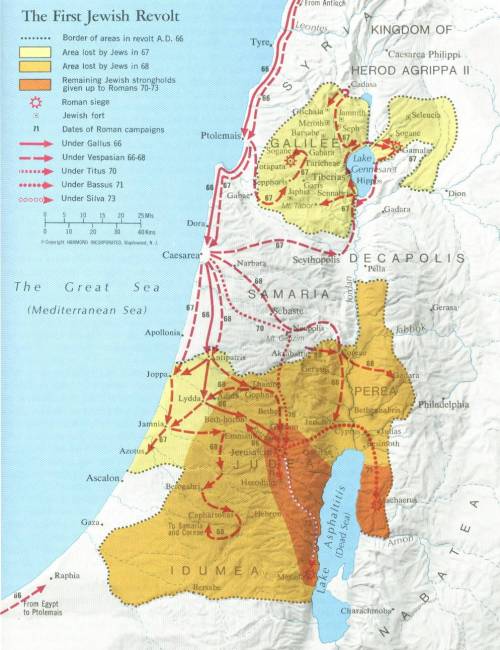
—————————————————————————–

[2] Source: Mark A. Copeland, Revelation: A Study Guide, http://www.ccel.org/contrib/exec_outlines/rev/rev_04.htm.

Revelation Chapter 1


The following study on Revelation 1 was prepared for our group’s weekly Bible study. This post can also be found here, where all of our chapter-by-chapter studies on Revelation will be posted in the coming months: https://kloposmasm.wordpress.com/revelation/.

—————————————————————————————————–

REVELATION 1

Adam Maarschalk: June 25, 2009

Scripture text for this study: Revelation 1:1-20

[New notes were added on October 14th, and are in blue font. They are based in part on Steve Gregg’s book “Revelation: Four Views (A Parallel Commentary).”]

A. Prologue (1:1-3)

Verse 1: The purpose for the giving of the “revelation of Jesus Christ” is stated in the first verse. His servants were to be shown “the things that must soon take place.” This revelation was delivered to John, one of Jesus’ 12 disciples, through an angel. A good exegetical question is this: How would John’s first century readers have understood and interpreted the phrase “things that must soon take place“? This will be discussed shortly.

Steve Gregg (p. 52) notes that the Greek language behind the expression “The Revelation of Jesus Christ” could either indicate that Jesus is [1] the subject being revealed or [2] the One doing the revealing. The first option certainly resonates with the reader when John vividly describes Jesus in chapters 1, 5, 14, and 19. Gregg says the second alternative “seems to agree with the rest of the verse, which suggests that the material of the visions was revealed first to Christ by God (the Father), then by Christ to an angel, who passed it along to John [who then bore witness to the visions].”

Verses 2-3: “Forty-four times in this book John wrote ‘I saw’ (1:12-13; 4:1, 4; 5:1, 2, 6, 11; 6:1, 2, 4, 5, 8, 9, 12; 7:1, 2, 9; 8:2, 13; 9:1, 17; 10:1; 13:1, 3, 11; 14:1, 6, 14; 15:1, 2, 5; 16:13; 17:3; 18:1; 19:11, 17, 19; 20:1, 4, 11, 12; 21:1, 2, 8).” [Source: Dr. Thomas Constable]

Q: When verse 2 says that John bore witness to the testimony of Jesus Christ, is this referring to the vision He received as recorded in this book, or does it refer to the things Jesus taught during His incarnation? Or both?

John states that what he is about to record are “things that must soon take place” (verse 1), and that “the time is near” (verse 3). There are two ways this is commonly interpreted: [1] that these things were going to take place soon after they were written, i.e. during the first century [2] that once these events would commence all would be finished quickly. Interestingly, Daniel, who received some similar revelations, was told to seal his book (Daniel 12:4, 12:9) because what he saw was still far off (Daniel 8:26, 10:14), but John was told that what he saw was about to take place  and thus he should not seal his book (cf. Revelation 22:10). This makes a case for the first interpretation being the correct one. If the fulfillment of these visions has still not come in our day, how do we account for these different instructions, when one set of prophecies was given about 2550 years ago (to Daniel) and the other set about 1950 years ago (to John)? As Kenneth Gentry likes to ask, “If these phrases [‘soon’ and ‘near’] don’t truly indicate nearness in time, because they are spoken from God’s perspective and not ours, what other words would God possibly use to communicate such concepts to us?” As I wrote elsewhere,

John wrote the book of Revelation in such a way that the subject matter of the entire book, not just his letters to the churches, was urgent for and relevant for those churches. At the end of the book, Jesus said, “And behold, I am coming soon. Blessed is the one who keeps the words of the prophecy of this book” (Revelation 22:7). God, speaking in terms that man would understand, spoke through John saying, “The Revelation of Jesus, which God gave him to show his servants the things that must soon take place…Blessed is the one who reads aloud the words of this prophecy, and blessed are those who hear, and who keep what is written in it, for the time is near” (Revelation 1:1-4). We see that the seven churches who received this writing were encouraged to read the entire book aloud in their assemblies, and to keep what was written in it. We can also note that the Greek word used for “soon” here is the same one Jesus used when He said His time to be crucified was “at hand” (Matthew 26:18), and when John said “the Jews’ Feast of Booths was at hand” (John 7:2), events that no doubt were literally near. Four times Jesus said, “Behold, I am coming quickly” (Revelation 3:11; 22:7, 12, 20). In some translations, “soon” is used instead of “quickly.”

John’s words in verse 3 seem to express urgency. The original recipients of this book (the seven churches in Asia) were to receive a blessing if they read the words of this prophecy aloud as they assembled together, and also if they would hear and keep what was written.

B. Greeting to the Seven Churches (1:4-8)

Verse 4: Steve Gregg reminds us that Asia in John’s time “was not, as now, the name of a continent, but of a Roman province, identified with modern Turkey” (p. 54). Dr. Thomas Constable remarks, “The phrase ‘seven Spirits’ may refer to seven principle angelic messengers (cf. v. 20; 8:2, 6; 15:1; 1 Kings 22:19-21; Heb. 1:14). Another possible view is that the phrase refers to the Holy Spirit in His fullness (cf. Isa. 11:2-3; Zech. 4:2-7).”

Verses 5-6: Jesus is called [a] the faithful witness [b] the firstborn of the dead (cf. Colossians 1:18) [c] the ruler of kings on earth. He [a] loves us [b] freed us [c] made us a kingdom (corporately) [d] made us priests (individually), and all glory and dominion belongs to Him forever. Steve Gregg adds (p. 56), “The reference to Christ’s God and Father (v. 6) calls to mind the words of Christ recorded elsewhere by the same apostle: ‘I am ascending to My Father and your Father, and to My God and your God’ (John 20:17).” Regarding the expression “kings and priests,” also found in Rev. 5:10 (and echoed in Rev. 20:6), Gregg comments (pp. 55-56), “This is one of the many New Testament verses that give to the church titles originally applied to Israel (cf. I Peter 2:9-10), suggesting that God’s kingdom is now to be associated with the church rather than Israel.”

Verse 7: This verse begins with the phrase, “Behold He is coming with clouds…” Steve Gregg writes, “The comfort that this promise contains for the suffering believers, and the warning for the obstinate, will be elaborated upon throughout the remainder of the book” (p. 56). Constable (a Dispensationalist) believes that the phrase “every eye will see Him, even those who pierced Him” either refers to Jews living in the final generation (based on Zechariah 12:10-14), or that this imagery could stand for all of Jesus’ enemies up until the Second Coming (the event which he believes is in view here). Personally, I believe that it refers to the very individuals who pierced Christ at the cross (and those who, looking on, approved), meaning that some of them would have still been alive to see this prophecy fulfilled in 70 AD.[1] The following two quotes reflect this same position:

QUOTE: “Another theme that permeates the book is the concept of Jesus’ soon coming. But note in the passages below what ‘kind’ of coming is in view [i.e. Is it a reference to Christ’s Second Coming, or to His coming in judgment (cf. Rev. 2:5, 2:16, 3:3)?]. Again, note the similarity in the first and last chapter of the book.

Rev 1:7 Behold, he is coming with the clouds, and every eye will see him, even those who pierced him, and all tribes of the earth will wail on account of him. Even so. Amen.

22:12 Behold, I am coming soon, bringing my recompense with me, to repay everyone for what he has done.

Note that this [coming is] directed at ‘those who pierced’ him and that it involves his recompense, his retribution. One can stretch the meaning of those who pierced Him to be any one sinner in history metaphorically, but the most obvious and ‘literal’ rendering would be of those who physically put Him to death, which would be the Jews and Rome… There is no mistaking the ‘soon’ nature of the passages. Some have tried to argue that the phrase ‘quickly’ is in reference to when the events do start to happen, that they will happen quickly. This does nothing to answer the immediacy of the expectation and those expected to be still alive when these events take place.”

[Source: David Lowman, http://low5point.wordpress.com/2009/02/17/revealing-revelation-the-early-date-theory-part-1/]

QUOTE: “Most writers consider the theme of the book to be Revelation 1:7. This verse is very similar in context to Matthew 24:30.

Revelation 1:7, ‘Behold, he cometh with clouds; and every eye shall see him, and they also which pierced him: and all kindreds [Greek word #5443] of the earth shall wail because of him. Even so, Amen.

Matthew 24:30, ‘And then shall appear the sign of the Son of man in heaven: and then shall all the tribes [Greek word #5443] of the earth mourn, and they shall see the Son of man coming in the clouds of heaven with power and great glory.

…Zechariah 12:10-14, ‘And I will pour upon the…inhabitants of Jerusalem, the spirit of grace and of supplications: and they shall look upon me whom they have pierced, and they shall mourn for him, as one mourneth for his only sonIn that day shall there be a great mourning in JerusalemAnd the land shall mourn, every family apart; the family of the house of David apart, and their wives apart; the family of the house of Nathan apart, and their wives apart; The family of the house of Levi apart, and their wives apart; the family of Shimei apart, and their wives apart; All the families that remain, every family apart, and their wives apart.’

Obviously, this is the foundation for John’s statement that ‘every eye shall see him, and they also which pierced him: and all kindreds of the earth (or land) shall wail because of him.’ So, in essence, Zechariah was saying that the ‘tribes of the land’ would mourn for Him whom they had pierced. Who were those tribes? ‘The inhabitants of Jerusalem.’ This also helps us identify the ‘earth’ in Revelation 1:7. According to Zechariah, the ‘earth’ is the land of Palestine, specifically, Jerusalem. Also, it is those tribes, i.e., the nation of Israel, who would ‘look upon Me whom they have pierced.’ And because of that, ‘the mourning in Jerusalem’ would be great. With all of this information, we can see that the ‘tribes of the earth’ in Revelation 1:7 are the nation of Israel. The ‘earth’ is Palestine. The land that would mourn is Jerusalem.

So, the main purpose of Revelation would be to reveal Jesus to the nation of Israel. The place of this revealing would be Jerusalem. Lastly, this revealing would be to those who pierced Him, i.e., the Jews.”

(Source: Richard Anthony, http://ecclesia.org/truth/revelation.html)

Steve Gregg (p. 57) articulates the position of some preterist commentators:

[They]  suggest that the passage does not predict the literal Second Coming, but is a figurative description of Christ’s coming in vengeance to destroy Jerusalem, not in person, but using the Roman armies in A.D. 70… Such interpreters note the following considerations: The principal features of the prediction are (a) Christ coming, (b) His coming with clouds; (c) every eye will see Him, even they who pierced him; and (d) all the tribes of the earth [or land] mourning at His coming.
(a) The expression coming of the Lord is used in many contexts that do not appear to be referring to the Second Coming (e.g., Rev. 2:5; 3:20; cf. Deut. 33:2; Isa. 19:1; Zech. 1:16; Mal. 3:1-2; Matt. 10:23), thus leaving open the possibility of another meaning here;
(b) The specific language of the Lord coming with clouds is used in the Old Testament with reference to historic judgments not associated with the end of the world (Isa. 19:1; Ps. 104:3) and may be so understood here as well;
(c) Jesus placed the time of His “coming with the clouds” within the lifetime of some of His contemporaries (Matt. 16:28; 24:30, 34; 26:64). This would allow one to understand they who pierced Him as the actual generation that crucified Christ, which would be the natural understanding to the literalist…
(d) The judgment of Jerusalem is implied by the expression all the tribes of the earth (which can be translated, “all the tribes of the land [Israel]”) will mourn. The Old Testament passage which is alluded to is a prophecy concerning “the inhabitants of Jerusalem” (Zech. 12:10). This view finds further support in the fact that Israel is divisible into tribes, whereas the earth is generally divided into nations.

[As we continue in our study of Revelation, we will suggest that many of the references to “the earth” in the book of Revelation are not meant to be taken as worldwide in scope, but as dealing instead with the land of Israel/Palestine. In a 3-part study on this subject beginning with this post, I have outlined nearly 20 instances where this appears to be the case.]

Verse 8: For the second time, God is referred to as the One “who is and who was and who is to come.” The speaker here appears to be Jesus.

C. Vision of the Son of Man (1:9-20)

Verse 9: John was in Patmos, a Roman prison island off the coast of modern Turkey. It was located in the Aegean Sea southwest of Ephesus. Steve Gregg notes (p. 57) that “Patmos is a rocky, crescent-shaped island about 37 miles southwest of the mainland of Asia Minor (modern Turkey), where the seven recipient churches were located.” Only the Romans could banish their subjects to Patmos, so in what sense was John a “partner in the tribulation” with the seven churches? Until Nero’s campaign of persecution from November 64 AD – June 68 AD, the Church experienced persecution primarily from the Jews. When John wrote Revelation, though, they were apparently also under a significant Roman persecution. No Roman Imperial persecution was as intense as the one under Nero.[2] As I wrote here,

John wrote to seven historical churches in Asia Minor (Rev. 1:4, 11) which were going through a time of great trouble and tribulation, just as he was (Rev. 1:9, 2:3, 2:9-10, 2:13, 3:10). What better candidate was there for such an intense time of trouble than the first and greatest imperial persecution of Christianity initiated by Nero from late November 64 AD until his death in early June 68 AD?

Verse 11: John was instructed to get these writings into the hands of the believers in seven locations. Each of the seven churches received not only the statements that were directed to them, but the entire book of Revelation. This means that the subject matter of the entire book of Revelation was urgent for and relevant to these churches. The same tribulation and persecution spoken of in chapter 1 is alluded to time and time again throughout the book. As Kenneth Gentry says, “Put yourself in first century sandals: Would you think John might be speaking of events occurring untold centuries after the collapse of the Empire which was presently persecuting you? Would you surmise that he was not really relating a message about Imperial Rome?”[3] Steve Gregg notes how the seven churches are listed and then remarks:

The cities are listed in the logical order in which they would likely receive the letter. Assuming Ephesus would receive the letter first, it would travel northward then east and southward again in a horseshoe-shaped route.

Seven Churches 1

Verse 12: Steve Gregg writes (p. 59),

The first thing that caught [John’s] attention was the seven lampstands of gold, recalling the seven-branched lamp, by whose light the priests offered their incense in the tabernacle. As verse 20 informs us, these lampstands represent the seven churches addressed in the letter. The church is the light of the world (Matt. 5:14; Phil. 2:15; Eph. 5:8-13). It may be significant that John’s vision of Christ was set in the midst of the churches (v. 13), suggesting that it is in the gathered assemblies of Christians that the presence of Christ resides on earth today (Matt. 18:20).

Verse 13: John Piper notes, “The word translated ‘robe reaching to the feet’ is not used anywhere else in the New Testament, but in the Old Testament it almost always refers to the robe of the high priest. And the gold band across his chest shows two things: the fact that it is high—not around the waist but around the chest—and the fact that it is gold, show that the priesthood that he holds is very great” (Source: http://www.desiringgod.org/ResourceLibrary/Sermons/ByScripture/17/822_A_YearEnd_Look_at_Jesus_Christ/).

Verse 14: “His head, even His hair, was very white, as Daniel described the Ancient of Days in Daniel 7:9 (i.e., God the Father). White hair often represents wisdom and the dignity of age in Scripture. John referred the images of God the Father in the Old Testament to Jesus Christ, thus granting to Jesus the attributes and titles previously reserved for the Father (cf. v. 18; 2:8; 5:12; 22:13). This is one way of stressing the equality of Jesus with the Father, here specifically His eternal pre-existence.” (Source: Dr. Thomas Constable, ibid.)

Verse 15: Steve Gregg asserts (p. 60) that the description of Jesus’ feet being “like burnished bronze, refined in a furnace” is given to “suggest the irresistibility of His judgment as He will later tread the ‘great winepress of the wrath of God’ (Rev. 14:19).”

Verse 16: The image of Jesus having a “sharp two-edged sword” coming out of His mouth is depicted again in Revelation 19:15 when He goes out to war against the nations. Steve Gregg (p. 60) is of the opinion that this image “can hardly refer to anything other than His word (Heb. 4:12; Eph. 6:17).” John sees the face of Jesus as “the sun shining in full strength.” Steve Gregg remarks (p. 60) that His shining face is “reminiscent of that which John had seen on the Mount of Transfiguration decades earlier (Matt. 17:2). As for the seven stars Jesus held in His right hand, verse 20 tells us that they were “the angels of the seven churches.”

Verse 17: John fell “as though dead” at Jesus’ feet when he saw Him. This is similar to Daniel’s experience in which he “retained no strength” and “was in a deep sleep” on His face (Dan. 10:8-9).

Verse 18: Jesus identifies Himself as “the first and the last, the living One.” He spoke of His death and resurrection, and His victory over death and the grave.

Verse 19: John is told to write about [1] things he had already seen [2] things which were presently taking place, and [3] things which had not yet taken place.

Verse 20: Steve Gregg comments (pp. 61-62):

Whether the “angel” of each church refers to a heavenly being, like a guardian angel, or to an earthly messenger (Gr. angelos simply means messenger), like a pastor or bishop, has been disputed. In each of the letters that follow, the angel of each church is addressed as the recipient. Since these angels are expected to pass along to the churches the information communicated to them by Christ, many commentators feel that they must be visible, human messengers in contact with the congregations. We may justly conceive of the communication between God and His heavenly angels as being somewhat more direct than to require letters posted by apostles.

————————————————————————————————————————————————-

Our study of Revelation 2 (Part 1) can be found here: https://kloposmasm.wordpress.com/2009/08/26/revelation-chapter-2-ephesus-and-smyrna/.


[1] Regarding the topic of Jesus’ coming in judgment in 70 AD, when Jerusalem and apostate Israel were destroyed as Jesus had predicted, please see the following posts: [1] https://kloposmasm.wordpress.com/2009/08/15/pp11-did-jesus-come-in-70-ad-part-1/ [2] https://kloposmasm.wordpress.com/2009/08/15/pp12-did-jesus-come-in-70-ad-part-2/.

[2] See this post for further details: https://kloposmasm.wordpress.com/2009/08/14/pp6-internal-evidence-for-an-early-date-revelation-part-3/.

[3] See here for further details: https://kloposmasm.wordpress.com/2009/08/14/pp7-internal-evidence-for-an-early-date-revelation-part-4/.

PP20: The Spiritual Significance of 70 AD (Conclusion)


This is now the twentieth and final* post in our series on “A Partial-Preterist Perspective on the Destruction of Jerusalem in 70 AD.” This is the same title as a term paper I recently submitted to Northwestern College. All previous posts can be found below and, together with this present post, make up the entire contents of my term paper. It’s recommended that all previous posts be read in order before reading this post:

[1] https://kloposmasm.wordpress.com/2009/08/13/brief-explanation-of-partial-preterism/
[2] https://kloposmasm.wordpress.com/2009/08/13/pp2-references/
[3] https://kloposmasm.wordpress.com/2009/08/13/pp3-external-evidence-for-an-early-date-revelation/
[4] https://kloposmasm.wordpress.com/2009/08/14/pp4-internal-evidence-for-an-early-date-revelation-part-1/
[5] https://kloposmasm.wordpress.com/2009/08/14/pp5-internal-evidence-for-an-early-date-revelation-part-2/
[6] https://kloposmasm.wordpress.com/2009/08/14/pp6-internal-evidence-for-an-early-date-revelation-part-3/
[7] https://kloposmasm.wordpress.com/2009/08/14/pp7-internal-evidence-for-an-early-date-revelation-part-4/
[8] https://kloposmasm.wordpress.com/2009/08/14/pp8-daniels-70-week-prophecy-part-1/
[9] https://kloposmasm.wordpress.com/2009/08/15/pp9-daniels-70-week-prophecy-part-2/
[10] https://kloposmasm.wordpress.com/2009/08/15/pp10-jerusalems-destruction-foretold-in-the-olivet-discourse/
[11] https://kloposmasm.wordpress.com/2009/08/15/pp11-did-jesus-come-in-70-ad-part-1/
[12] https://kloposmasm.wordpress.com/2009/08/15/pp12-did-jesus-come-in-70-ad-part-2/
[13] https://kloposmasm.wordpress.com/2009/08/16/pp13-signs-of-the-close-of-the-age/
[14] https://kloposmasm.wordpress.com/2009/08/16/pp14-abomination-of-desolation/
[15] https://kloposmasm.wordpress.com/2009/08/16/pp15-the-man-of-lawlessness-ii-thess-2-part-1/
[16] https://kloposmasm.wordpress.com/2009/08/16/pp16-the-man-of-lawlessness-ii-thess-2-part-2/
[17] https://kloposmasm.wordpress.com/2009/08/16/pp17-the-historical-events-leading-up-to-70-ad-part-1/
[18] https://kloposmasm.wordpress.com/2009/08/22/pp18-the-historical-events-leading-up-to-70-ad-part-2/
[19] https://kloposmasm.wordpress.com/2009/08/22/pp19-the-historical-events-leading-up-to-70-ad-part-3/

In the previous three posts we discussed the historical events which led up to the destruction of Jerusalem and its temple in 70 AD. In this final* post we will see statements from 20 different persons of influence in Church history, spanning from the 2nd century until the present, regarding the spiritual significance of what took place in 70 AD.

*(This is the final post in the sense that it brings to completion the contents of my 48-page term paper as it was submitted to Northwestern College in July 2009. There may be future posts which function as appendixes to what has been included here so far.)

Adam Maarschalk

——————————————————————————————————————————————————————–

H. The Spiritual Significance of 70 AD

It seems clear that the knowledge of Jerusalem’s destruction in 70 AD, and the significance of this event, once held a prominent place in Christian theology, and that this understanding has been supplanted in direct proportion to the rise of Dispensationalism within the last 180 years. As R.C. Sproul says in his book, The Last Days according to Jesus (p. 26), “No matter what view of eschatology we embrace, we must take seriously the redemptive-historical importance of Jerusalem’s destruction in 70 AD.” The following are quotes from early church writers, reformers, and other leaders regarding the spiritual significance of 70 AD (Todd Dennis [19], 2009):

[1] Irenaeus (174 AD): “CHAP. IV.–ANSWER TO ANOTHER OBJECTION, SHOWING THAT THE DESTRUCTION OF JERUSALEM, WHICH WAS THE CITY OF THE GREAT KING, DIMINISHED NOTHING FROM THE SUPREME MAJESTY’ AND POWER OF GOD, FOR THAT THIS DESTRUCTION WAS PUT IN EXECUTION BY THE MOST WISE COUNSEL OF THE SAME GOD. (1) Further, also, concerning Jerusalem and the Lord, they venture to assert that, if it had been ‘the city of the great King,’ it would not have been deserted. This is just as if anyone should say, that if straw were a creation of God, it would never part company with the wheat; and that the vine twigs, if made by God, never would be lopped away and deprived of the clusters… Even as Esaias saith, ‘The children of Jacob shall strike root, and Israel shall flourish, and the whole world shall be filled with his fruit.’ The fruit, therefore, having been sown throughout all the world, she (Jerusalem) was deservedly forsaken, and those things which had formerly brought forth fruit abundantly were taken away; for from these, according to the flesh, were Christ and the apostles enabled to bring forth fruit. But now these are no longer useful for bringing forth fruit. For all things which have a beginning in time must of course have an end in time also. (2) Since, then, the law originated with Moses, it terminated with John as a necessary consequence. Christ had come to fulfil it: wherefore ‘the law and the prophets were’ with them ‘until John.’ And therefore Jerusalem, taking its commencement from David, and fulfilling its own times, must have an end of legislation when the new covenant was revealed.”

[2] Tertullian (160-220 AD): “Therefore, when these times also were completed, and the Jews subdued, there afterwards ceased in that place [Jerusalem] ‘libations and sacrifices,’ which thenceforward have not been able to be in that place celebrated; for ‘the unction,’ too, was ‘exterminated’ in that place after the passion of Christ. For it had been predicted that the unction should be exterminated in that place; as in the Psalms it is prophesied, ‘They exterminated my hands and feet.’ … Accordingly, all the synagogue of Israel did slay Him, saying to Pilate, when he was desirous to dismiss Him, ‘His blood be upon us, and upon our children;’ and, ‘If thou dismiss him, thou art not a friend of Caesar;’ in order that all things might be fulfilled which had been written of Him” (An Answer to the Jews, Chapter VII—Of Jerusalem’s Destruction).

[3] Hyppolytus of Rome, disciple of Irenaeus (170-236 AD): “Come, then, O blessed Isaiah; arise, tell us clearly what thou didst prophesy with respect to the mighty Babylon [Isaiah 13]. For thou didst speak also of Jerusalem, and thy word is accomplished. For thou didst speak boldly and openly: ‘Your country is desolate, your cities are burned with fire; your land, strangers devour it in your presence, and it is desolate as overthrown by many strangers. The daughter of Sion shall be left as a cottage in a vineyard, and as a lodge in a garden of cucumbers, as a besieged city’ [Isaiah 1:8]. What then? Are not these things come to pass? Are not the things announced by thee fulfilled? Is not their country, Judea, desolate? Is not the holy place burned with fire? Are not their walls cast down? Are not their cities destroyed? Their land, do not strangers devour it? Do not the Romans rule the country? And indeed these impious people hated thee, and did saw thee asunder, and they crucified Christ. Thou art dead in the world, but thou livest in Christ” (Fragments of Dogmatic and Historical Works).

[4] Origen (185-254 AD): “Therefore He [God], also, having separated from her [Israel], married, so to speak, another [the Church], having given into the hands of the former the bill of divorcement; wherefore they can no longer do the things enjoined on them by the law, because of the bill of divorcement. And a sign that she has received the bill of divorcement is this, that Jerusalem was destroyed along with what they called the sanctuary of the things in it which were believed to be holy, and with the altar of burnt offerings, and all the worship associated with it… And what was more unseemly than the fact, that they all said in His case, ‘Crucify Him, crucify Him,’ and ‘Away with such a fellow from the earth’? And can this be freed from the charge of unseemliness, ‘His blood be upon us, and upon our children’? Wherefore, when He was avenged, Jerusalem was compassed with armies, and its desolation was near, and their house was taken away from it, and ‘the daughter of Zion was left as a booth in a vineyard, and as a lodge in a garden of cucumbers, and as a besieged city.’ And, about the same time, I think, the husband wrote out a bill of divorcement to his former wife, and gave it into her hands, and sent her away from His own house, and the bond of her who came from the Gentiles has been cancelled about which the Apostle says, ‘Having blotted out the bond written in ordinances, which was contrary to us, and He hath taken it out of the way, nailing it to the cross;’ for Paul also and others became proselytes of Israel for her who came from the Gentiles” (Commentary on the Gospel According to Matthew, Book 2, Section 19).

[5] Lactantius (240-320 AD): “Also Zechariah says: ‘And they shall look on me whom they pierced.’ Amos thus speaks of the obscuring of the sun: ‘In that day, saith the Lord, the sun shall go down at noon, and the clear day shall be dark; and I will turn your feasts into mourning, and your songs into lamentation.’ Jeremiah also speaks of the city of Jerusalem, in which He suffered: ‘Her sun is gone down while it was yet day; she hath been confounded and reviled, and the residue of them will I deliver to the sword.’ Nor were these things spoken in vain. For after a short time the Emperor Vespasian subdued the Jews, and laid waste their lands with the sword and fire, besieged and reduced them by famine, overthrew Jerusalem, led the captives in triumph, and prohibited the others who were left from ever returning to their native land. And these things were done by God on account of that crucifixion of Christ, as He before declared this to Solomon in their Scriptures, saying, ‘And Israel shall be for perdition and a reproach to the people, and this house shall be desolate; and every one that shall pass by shall be astonished, and shall say, “Why hath God done these evils to this land, and to this house? And they shall say, Because they forsook the Lord their God, and persecuted their King, who was dearly beloved by God, and crucified Him with great degradation, therefore hath God brought upon them these evils.”’ For what would they not deserve who put to death their Lord, who had come for their salvation?” (Epitome of the Divine Institutes, Chapter 46).

[6] Eusebius (314 AD): “If any one compares the words of our Saviour with the other accounts of the historian (Josephus) concerning the whole war, how can one fail to wonder, and to admit that the foreknowledge and the prophecy of our Saviour were truly divine and marvelously strange” (Proof of the Gospel, Book III, Ch. VII).

[7] Athanasius (345 AD): “When did prophet and vision cease from Israel? Was it not when Christ came, the Holy One of holies? It is, in fact, a sign and notable proof of the coming of the Word that Jerusalem no longer stands, neither is prophet raised up nor vision revealed among them. And it is natural that it should be so, for when He that was signified had come, what need was there any longer of any to signify Him? And when the Truth had come, what further need was there of the shadow? On His account only they prophesied continually, until such time as Essential Righteousness has come, Who was made the Ransom for the sins of all. For the same reason Jerusalem stood until the same time, in order that there men might premeditate the types before the Truth was known. So, of course, once the Holy One of holies had come, both vision and prophecy were sealed” (Incarnation, Chapter VI).

[8] John Calvin (1509-1564): “So in this passage [Daniel 9], without doubt, he treats of the period after the destruction of the Temple; there could be no hope of restoration, as the law with all its ceremonies would then arrive at its termination… That devastation happened as soon as the gospel began to be promulgated. God then deserted his Temple, because it was only founded for a time, and was but a shadow, until the Jews so completely violated the whole covenant that no sanctity remained in either the Temple, the nation, or the land itself. Some restrict this [the abomination of desolation] to those standards which Tiberius erected on the very highest pinnacle of the Temple, and others to the statue of Caligula, but I have already stated my view of these opinions as too forced. I have no hesitation in referring this language of the angel to that profanation of the Temple which happened after the manifestation of Christ, when sacrifices ceased, and the shadows of the law were abolished. From the time, therefore, at which the sacrifice really ceased to be offered; this refers to the period at which Christ by his advent should abolish the shadows of the law, thus making all offering of sacrifices to God totally valueless… The Jews never anticipated the final cessation of their ceremonies, and always boasted in their peculiar external worship, and unless God had openly demonstrated it before their eyes, they would never have renounced their sacrifices and rites as mere shadowy representations. Hence Jerusalem and their Temple were exposed to the vengeance of the Gentiles. This, therefore, was the setting up of this stupefying abomination; it was a clear testimony to the wrath of God, exhorting the Jews in their confusion to boast no longer in their Temple and its holiness.”

[9] Jonathan Edwards (1703-1758): “Thus there was a final end to the Old Testament world: all was finished with a kind of day of judgment, in which the people of God were saved, and His enemies terribly destroyed” (1736).

[10] William Whiston (1667-1752): “Josephus speaks so, that it is most evident he was fully satisfied that God was on the Romans’ side, and made use of them now for the destruction of the Jews, which was for certain the true state of this matter, as the prophet Daniel first, and our Saviour himself afterwards had clearly foretold” (Literature Accomplished of Prophecy, p. 64, 1737).

[11] John Wesley (1703-1791): “Josephus’ History of the Jewish War is the best commentary on this chapter (Matt. 24). It is a wonderful instance of God’s providence, that he, an eyewitness, and one who lived and died a Jew, should, especially in so extraordinary a manner, be preserved, to transmit to us a collection of important facts, which so exactly illustrate this glorious prophecy, in almost every circumstance” (Explanatory Notes Upon the New Testament, 1754).

[12] Dom Toutee (1790): “St. Chrysostom shows that the destruction of Jerusalem is to be ascribed, not to the power of the Romans, for God had often delivered it from no less dangers; but to a special providence which was pleased to put it out of the power of human perversity to delay or respite the extinction of those ceremonial observances.”

[13] William Dool Killen (1859): “Nero died A.D. 68, and the war which involved the destruction of Jerusalem and of upwards of a million of the Jews, was already in progress. The holy city fell A.D. 70; and the Mosaic economy, which had been virtually abolished by the death of Christ, now reached its practical termination. At the same period the prophecy of Daniel was literally fulfilled; for “the sacrifice and the oblation” were made to cease, [168:5] as the demolition of the temple and the dispersion of the priests put an end to the celebration of the Levitical worship. The overthrow of the metropolis of Palestine contributed in various ways to the advancement of the Christian cause. Judaism, no longer able to provide for the maintenance of its ritual, was exhibited to the world as a defunct system; its institutions, now more narrowly examined by the spiritual eye, were discovered to be but types of the blessings of a more glorious dispensation; and many believers, who had hitherto adhered to the ceremonial law, discontinued its observances. Christ, forty years before, had predicted the siege and desolation of Jerusalem; [169:1] and the remarkable verification of a prophecy, delivered at a time when the catastrophe was exceedingly improbable, appears to have induced not a few to think more favourably of the credentials of the gospel. In another point of view the ruin of the ancient capital of Judea proved advantageous to the Church. In the subversion of their chief city the power of the Jews sustained a shock from which it has never since recovered; and the disciples were partially delivered from the attacks of their most restless and implacable persecutors” (The Ancient Church: Its History, Doctrine, Worship, and Constitution, Project Gutenberg, available at http://www2.cddc.vt.edu/gutenberg/1/6/7/0/16700/16700-8.txt).

[14] C.H. (Charles) Spurgeon (1834-1892): “The destruction of Jerusalem was more terrible than anything that the world has ever witnessed, either before or since. Even Titus seemed to see in his cruel work the hand of an avenging God… Truly, the blood of the martyrs slain in Jerusalem was amply avenged when the whole city became veritable Aceldama, or field of blood… There was a sufficient interval for the full proclamation of the gospel by the apostles and evangelists of the early Christian Church, and for the gathering out of those who recognized the crucified Christ as their true Messiah. Then came the awful end, which the Saviour foresaw and foretold, and the prospect of which wrung from his lips and heart the sorrowful lament that followed his prophecy of the doom awaiting this guilty capital…Nothing remained for the King but to pronounce the solemn sentence of death upon those who would not come unto him that they might have life: ‘Behold, your house is left unto you desolate.’ The whole ‘house’ of the Jews was left desolate when Jesus departed from them; and the temple, the holy and beautiful ‘house’ became a spiritual desolation when Christ finally left it. Jerusalem was too far gone to be rescued from its self-sought doom (Commentary on Matthew, 1868, pp. 412-413).

[15] Philip Schaff (1819-1893): “A few years afterwards followed the destruction of Jerusalem, which must have made an overpowering impression and broken the last ties which bound Jewish Christianity to the old theocracy…The awfiul catastrophe of the destruction of the Jewish theocracy must have produced the profoundest sensation among the Christians… It was the greatest calamity of Judaism and a great benefit to Christianity; a refutation of the one, a vindication…of the other. It separated them forever” (History of the Christian Church, Vol. 1, 1877, pp. 403-404).

[16] F.W. Farrar (1831-1903): “The Fall of Jerusalem and all the events which accompanied and followed it in the Roman world and in the Christian world, had a significance which it is hardly possible to overestimate. They were the final end of the Old Dispensation. They were the full inauguration of the New Covenant. They were God’s own overwhelming judgment on that form of Judaic Christianity which threatened to crush the work of St. Paul, to lay on the Gentiles the yoke of abrogated Mosaism, to establish itself by threats and anathemas as the only orthodoxy… No event less awful than the desolation of Judea, the destruction of Judaism, the annihilation of all possibility of observing the precepts of Moses, could have opened the eyes of the Judaisers from their dream of imagined infallibility. Nothing but God’s own unmistakable interposition – nothing but the manifest coming of Christ – could have persuaded Jewish Christians that the Law of the Wilderness was annulled” (The Early Days of Christianity, 1882, pp. 489-490).

[17] Philip Mauro (1859-1952): “It is greatly to be regretted that those who, in our day, give themselves to the study and exposition of prophecy, seem not to be aware of the immense significance of the destruction of Jerusalem in A.D. 70, which was accompanied by the extinction of Jewish national existence, and the dispersion of the Jewish people among all the nations. The failure to recognize the significance of that event, and the vast amount of prophecy which it fulfilled, has been the cause of great confusion, for the necessary consequence of missing the past fulfillment of predicted events is to leave on our hands a mass of prophecies for which we must needs contrive fulfillments in the future. The harmful results are twofold; for first, we are thus deprived of the evidential value, and the support to the faith, of those remarkable fulfillments of prophecy which are so clearly presented to us in authentic contemporary histories; and second, our vision of things to come is greatly obscured and confused by the transference to the future of predicted events which, in fact, have already happened, and whereof complete records have been preserved for our information.

“Yet, in the face of all this, we have today a widely held scheme of prophetic interpretation, which has for its very cornerstone the idea that, when God’s time to remember His promised mercies to Israel shall at last have come, He will gather them into their ancient land again, only to pour upon them calamities and distresses far exceeding even the horrors which attended the destruction of Jerusalem in A.D. 70. This is, we are convinced, an error of such magnitude as to derange the whole program of unfulfilled prophecy” (Seventy Weeks and the Great Tribulation, 1921, emphasis added).

[18] Tony Campolo (1988): “Jesus told his disciples that their generation would not pass away before everything that needed to be fulfilled for His return would take place. I do not believe the Lord was wrong. I am convinced that by A.D. 70 everything was in place for the [physical] return of Christ, and that it has been right for Christians to expect His return ever since that time… I must point out that for centuries Christians did not see any need for the restoration of the state of Israel or the rebuilding of the temple…for the return of Christ” (20 Hot Potatoes Christians are Afraid to Touch, p.233).

[19] John Piper (1996): “It is almost impossible to exaggerate the importance of what happened in A.D. 70 in Jerusalem. It was an event that, for Jews and Christians, was critical in defining their faith for the next 2000 years.”

[20] R.C. Sproul (1997-98): “The coming of Christ in A.D.70 was a coming in judgment on the Jewish nation, indicating the end of the Jewish age and the fulfillment of a day of the Lord. Jesus really did come in judgment at this time, fulfilling his prophecy in the Olivet Discourse” (The Last Days According to Jesus, p. 158, 1998). “The most significant, redemptive, historical action that takes place outside the New Testament, is the judgment that falls on Jerusalem, and by which judgment the Christian Church now [clearly] emerges as The Body of Christ” (R.C. Sproul, Dust to Glory video series, 1997).

Kevin Daly (2009) states, “In much the same way as a person might unwittingly wait for a bus that has already departed, our ignorance of the history of the interval between Jesus’ ascension and the Roman siege of AD70 has contributed much to our expectation that events mentioned in Matthew 24 must still come to pass.” However, these events were designed to achieve several purposes, and this has already been accomplished.

One of these purposes was to demonstrate once and for all that the very means by which forgiveness and mercy were administered under the Old Covenant, i.e. the temple, the sacrificial system, and the priesthood, were done away with (Hebrews 8:13). Those things ceased to exist so that one could no longer look to them for redemption or atonement, even if one were to try. Forgiveness and mercy are found solely through Jesus Christ and His work on the cross. Just as we rejoice in seeing prophecy fulfilled in Christ’s first coming as our Savior to take away sin, we can also rejoice in seeing how many of the words of Christ and the prophets were fulfilled in 70 AD.

———————————————————————————————————————————————————————————–

Sources can be found here: https://kloposmasm.wordpress.com/2009/08/13/pp2-references/

PP19: The Historical Events Leading Up to 70 AD (Part 3)


This is now the nineteenth post in our series on “A Partial-Preterist Perspective on the Destruction of Jerusalem in 70 AD.” This is the same title as a term paper I recently submitted to Northwestern College. All the previous posts can be found here, and it’s recommended that they be read in order before reading this post:

[1] https://kloposmasm.wordpress.com/2009/08/13/brief-explanation-of-partial-preterism/
[2] https://kloposmasm.wordpress.com/2009/08/13/pp2-references/
[3] https://kloposmasm.wordpress.com/2009/08/13/pp3-external-evidence-for-an-early-date-revelation/
[4] https://kloposmasm.wordpress.com/2009/08/14/pp4-internal-evidence-for-an-early-date-revelation-part-1/
[5] https://kloposmasm.wordpress.com/2009/08/14/pp5-internal-evidence-for-an-early-date-revelation-part-2/
[6] https://kloposmasm.wordpress.com/2009/08/14/pp6-internal-evidence-for-an-early-date-revelation-part-3/
[7] https://kloposmasm.wordpress.com/2009/08/14/pp7-internal-evidence-for-an-early-date-revelation-part-4/
[8] https://kloposmasm.wordpress.com/2009/08/14/pp8-daniels-70-week-prophecy-part-1/
[9] https://kloposmasm.wordpress.com/2009/08/15/pp9-daniels-70-week-prophecy-part-2/
[10] https://kloposmasm.wordpress.com/2009/08/15/pp10-jerusalems-destruction-foretold-in-the-olivet-discourse/
[11] https://kloposmasm.wordpress.com/2009/08/15/pp11-did-jesus-come-in-70-ad-part-1/
[12] https://kloposmasm.wordpress.com/2009/08/15/pp12-did-jesus-come-in-70-ad-part-2/
[13] https://kloposmasm.wordpress.com/2009/08/16/pp13-signs-of-the-close-of-the-age/
[14] https://kloposmasm.wordpress.com/2009/08/16/pp14-abomination-of-desolation/
[15] https://kloposmasm.wordpress.com/2009/08/16/pp15-the-man-of-lawlessness-ii-thess-2-part-1/
[16] https://kloposmasm.wordpress.com/2009/08/16/pp16-the-man-of-lawlessness-ii-thess-2-part-2/
[17] https://kloposmasm.wordpress.com/2009/08/16/pp17-the-historical-events-leading-up-to-70-ad-part-1/
[18] https://kloposmasm.wordpress.com/2009/08/22/pp18-the-historical-events-leading-up-to-70-ad-part-2/

In the previous two posts we have been discussing the historical events which led up to Jerusalem’s destruction in 70 AD. In the first post we saw a timeline of these events, and in the last post we examined some of these historical events in more detail. In this present post we will speak of Rome’s burning of the temple and the city of Jerusalem.

For further details regarding the final five-month siege on Jerusalem (April-September 70 AD), and the crushing of all remaining Jewish resistance in the nation of Israel (Sept. 70 – May 73 AD), please refer back to the timeline which is laid out in part 1 (PP17).

Adam Maarschalk

—————————————————————————————————————————————————-

G. The Historical Events Leading Up to 70 AD (Part 3)

Titus, the son of Vespasian, had determined to spare the temple as an ornament to the Roman Empire. In a speech to the Jews defending the city, he had said, “I appeal to my own army, and the Jews that are now with me, and even to you yourselves, that I do not force you to defile this sanctuary; and if you will but change the place whereon you will fight, no Roman shall either come near your sanctuary, or offer any affront to it; nay, I will endeavor to preserve you your holy house, whether you will or not” (The Wars of The Jews, 6:2:4).

However, a Roman soldier, ignoring his words because he was urged on by a “divine impulse,” threw a flaming stick into a window of the temple, setting it on fire. The Jews instantly rushed in and tried in vain to extinguish the flames. Titus also shouted for help in stopping the fire, but his own men helped only to spread them wider. Writes Holford,

They rushed furiously upon [the Jews], slaying some with the sword, trampling others under their feet, or crushing them to death against the walls. Many, falling amongst the smoking ruins of the porches and galleries, were suffocated. The unarmed poor, and even sick persons, were slaughtered without mercy. Of these unhappy people numbers were left weltering in their gore. Multitudes of the dead and dying were heaped round about the altar, to which they had formerly fled for protection, while the steps that led from it into the outer court were literally deluged with their blood… The Romans, exasperated to the highest pitch against the Jews, seized every person whom they could find, and, without the least regard to sex, age or quality, first plundered and then slew them. The old and the young, the common people and the priests, those who surrendered and those who resisted, were equally involved in this horrible and indiscriminate carnage. Meanwhile the Temple continued burning, until at length, vast as was its size, the flames completely enveloped the whole building; which, from the extent of the conflagration, impressed the distant spectator with an idea that the whole city was now on fire. The tumult and disorder which ensued upon this event, it is impossible (says Josephus) for language to describe. The Roman legions made the most horrid outcries; the rebels, finding themselves exposed to the fury of both fire and sword, screamed dreadfully; while the unhappy people who were pent up between the enemy and the flames, deplored their situation in the most pitiable complaints. Those on the hill and those in the city seemed mutually to return the groans of each other. Such as were expiring through famine, were revived by this hideous scene, and seemed to acquire new spirits to deplore their misfortunes. The lamentations from the city were re-echoed from the adjacent mountains, and places beyond Jordan. The flames which enveloped the Temple were so violent and impetuous, that the lofty hill on which it stood appeared, even from its deep foundations, as one large body of fire. The blood of the sufferers flowed in proportion to the rage of this destructive element; and the number of the slain exceeded all calculation. The ground could not be seen for the dead bodies, over which the Romans trampled in pursuit of the fugitives; while the crackling noise of the devouring flames mingled with the clamor of arms, the groans of the dying and the shrieks of despair, augmented the tremendous horror of a scene, to which the pages of history can furnish no parallel.

The smoke of Jerusalem’s burning was indeed seen by those who stood afar off and who were out at sea (Revelation 18:17-18). Ivan Lewis writes (Todd Dennis [24], 2009), “No one believed that God would permit His Temple to be destroyed, and when this finally did happen, everyone within the city, men and women, young and old, were crazed with despair. Thousands cast themselves into the fire while others fell on their own swords.”

The Romans then hoisted their own idol-covered banners at every key point of the temple area, and plundered and burned the houses in the city. They murdered by the sword every Jew they could find, man, woman, and child. Their only compassion was for the dead, whom they encountered in mass numbers in many of the houses, mostly victims of the famine. Josephus writes, “But although they had this commiseration for such as were destroyed in that manner, yet had they not the same for those that were still alive, but they ran every one through whom they met with, and obstructed the very lanes with their dead bodies, and made the whole city run down with blood, to such a degree indeed that the fire of many houses was quenched with these men’s blood” (The Wars Of The Jews, 6:8:5).

The amount of blood that flowed, not only in Jerusalem but also throughout the surrounding region, could possibly bring to mind a passage like Revelation 14:19-20, which says, “So the angel swung his sickle across the earth and gathered the grape harvest of the earth and threw it into the great winepress of the wrath of God. And the winepress was trodden outside the city, and blood flowed from the winepress, as high as a horse’s bridle, for 1,600 stadia [about 184 miles].” This was the understanding of John Wesley (1703-1791) who, in his commentary on this passage, wrote:

And the winepress was trodden – By the Son of God, Rev 19:15. Without [outside] the city – Jerusalem. They to whom St. John writes, when a man said, ‘the city,’ immediately understood this. And blood came out of the winepress, even to the horses’ bridles – So deep at its first flowing from the winepress! One thousand six hundred furlongs – So far! At least two hundred miles, through the whole land of Palestine.

Wesley, like many today, tied this passage (Revelation 14:19-20) to Rev. 19:11-21, and rightly so. This is often referred to as the “Battle of Armageddon,” which Tim Lahaye and other Futurist authors generally say will happen in the plain of Megiddo. Author John Noe, on the other hand, notes that what the Bible refers to as a “battle on the great day of God the Almighty” (Rev. 16:14) would transpire “at the place that in Hebrew is called Armageddon” (Rev. 16:16). In Hebrew it’s actually “Har-Magedon,” as “har” means mountain in Hebrew (“Armageddon” is based on the Greek rendering, since “h” is silent in Hebrew). Therefore, this battle was to take place primarily on a mountain, not in a valley. Noe adds,

The most likely case is that Revelation’s “Har” is Jerusalem. Geographically, Jerusalem sits on top of a mountain. To get there from any direction one must go “up to Jerusalem” (2 Sam. 19:34; 1 Ki. 12:28; 2 Ki. 18:17; 2 Chron. 2:16; Ezra 1:3; 7:7; Zech. 14:17; Matt. 20:17, 18; Mark 10:32, 33; Luke 18:31; 19:28; John 2:13; 5:1; Acts 11:2; 15:2; 21:12, 15; 24:11; 25:9; Gal. 1:17, 18). Jerusalem is also called God’s “holy mountain” (Psa. 43:3) and the “chief among the mountains” (Isa. 2:2-3; also 14:13; Exod. 15:17; Joel 2:32; 3:16-17)… “Magedon/Megiddo” may also be comparative imagery. A great slaughter once took place in the valley of Megiddo (2 Ki. 9:27; Zech. 12:11). Throughout ancient history, this valley was also a favorite corridor for invading armies and the scene of numerous famous battles (Jud. 4-7; 1 Sam. 29-31; 2 Sam. 4; 1 Ki. 9:15; 2 Ki. 9-10; 22; 2 Chron. 35). So much blood was shed in this valley of Jezreel or Megiddo that it became a synonym for slaughter, violence, bloodshed, and battlefield, as well as a symbol for God’s judgment (Hos. 1:4-5). In our day, Armageddon has also become synonymous with and a symbol for the ultimate in warfare and conflict.

In a similar fashion, the word “Waterloo” has garnered a symbolic use. Back in 1815, this town in Belgium was the battleground and scene of Napoleon’s final defeat. Today, we have a saying that some one or some thing has met their “Waterloo.” We don’t mean they have met that city in Europe. We mean, by way of comparative imagery, that they have met a decisive or crushing defeat, or their demise. I suggest Revelation employs the word Magedon/Megiddo in this same manner. History records that a great slaughter took place on a mountain in Palestine within the lifetime of the original recipients of the book of Revelation. In A.D. 70 the Roman armies of Titus totally destroyed Jerusalem and the Temple. According to Eusebius, 1.1million Jews were killed (Todd Dennis [15], 2009).

Josephus goes on to say, “Now as soon as the army had no more people to slay or plunder, because there remained none to be the objects of their fury, Caesar gave orders that they should now demolish the entire city and temple but for all the rest of the wall, it was so thoroughly laid even with the ground by those that dug it up to the foundation, that there was left nothing to make those that came thither believe it had ever been inhabited” (The Wars Of The Jews, 7:1:1).

First Jewish Revolt (66-73 AD)

The final siege ended on September 26, 70 AD after a duration of five months. The destruction of Jerusalem, though, was not the end of Rome’s fury. Jews outside of Jerusalem also became victims. Holford continues,

All above the age of seventeen were sent in chains into Egypt, to be employed there as slaves, or distributed throughout the empire to be sacrificed as gladiators in the amphitheatres ; whilst those who were under this age, were exposed to sale. During the time that these things were transacted, eleven thousand Jews, guarded by one of the generals, named Fronto, were literally starved to death. This melancholy occurrence happened partly through the scarcity of provisions, and partly through their own obstinacy, and the negligence of the Romans. Of the Jews destroyed during the siege, Josephus reckons not less than one million and one hundred thousand [1.1 million], to which must be added, above two-hundred and thirty-seven thousand [237,000] who perished in other places, and innumerable multitudes who were swept away by famine, and pestilence, and of which no calculation could be made. Not less than two thousand [2000] laid violent hands upon themselves. Of the captives the whole was about ninety-seven thousand [97,000]… After the destruction of Jerusalem seventeen hundred [1700] Jews who surrendered at Macherus were slain, and of fugitives not less than three thousand [3000] in the wood of Jardes. Titus, having marched his army to Caesarea, he there, with great splendour, celebrated the birthday of his brother Domitian; and according to the barbarous manner of those times, punished many Jews in honour of it. The number who were burnt, and who fell by fighting with wild beasts, and in mutual combats, exceeded two thousand five hundred [2500]. At the siege of Massada [73 AD], Eleazer, the commander, instigated the garrison [of Jews] to burn their stores, and to destroy first the women and children, and then themselves.

In summary, says Josephus, “neither did any other city ever allow such miseries, nor did any age ever breed a generation more fruitful in wickedness than this was, from the beginning of the world” (Josephus, The Jewish War, Book 5, Chapter 10, Paragraph 5).