The Son of Man Will Come… With His Angels


I first published this article two days ago in The Fulfilled Connection Magazine (tfcmag.com):

In the book of Revelation the word “angel(s)” appears a total of 76 times, according to Strong’s Concordance (and based on the King James Version). In the majority of these instances, angels had the role of announcing or pouring out judgments. Why is this significant?

Six days before Jesus was transfigured on a high mountain (Matthew 17:1-8), He made some detailed predictions about His coming, telling His disciples that some of them would live long enough to witness it:

For the Son of Man will come in the glory of His Father with His angels, and then He will reward each according to His works. Assuredly, I say to you, there are some standing here who shall not taste death till they see the Son of Man coming in His kingdom” (Matthew 16:27-28).

In Matthew 16 Jesus said He would come with His angels to judge. In the book of Revelation, as we will see, angels are directly connected with a multitude of judgments poured out on the harlot (see Rev. 11, 16, 17, 18), the great city where Jesus was crucified (Rev. 11:8). I didn’t initially make this connection between Matthew 16:27-28 and Revelation on my own. In early 2011 my friend, Mark Church, introduced himself and this Scriptural connection when he left this comment on my blog:

“Has anyone else ever seen the imagery given by Jesus in Matthew 16:27 about Him coming with His “ANGELS” and the imagery given in the whole of the book of Revelation? Preterists claim that much of what Jesus spoke of on the Mount of Olives was related to the book of Revelation. THEN NOTICE ALL THROUGHOUT REVELATION, THAT IT WAS ***ANGELS*** POURING OUT THE JUDGMENTS UPON THE NATION OF ISRAEL!!! He came back with His ANGELS and poured out His Judgments that He decreed would come upon them! WOW!”

In another post last month, we explored how Jude predicted that Jesus would come with thousands of angels to judge those who were presently troubling the church, and how Enoch predicted that this judgment would take place 70 generations after his time (confirmed in Luke 3 to be the generation in which Jesus lived). Before examining the prevalence of angels in the book of Revelation, let’s break down the four elements of Jesus’ coming which He predicted in Matthew 16:27-28.

1. IN THE GLORY OF HIS FATHER: As Don Preston well points out, this can be understood to mean that just as the Father had come in the past, Jesus would also come in the same manner. Don gives as an example Isaiah 64:1-3, where the writer declares that God had “come down” numerous times in the past:

“Oh, that You would rend the heavens and come down, that the mountains might quake at Your presence – as when fire kindles brushwood, and the fire causes water to boil – to make Your name known to Your adversaries, and that the nations might tremble at Your presence! When You did awesome things that we did not look for,You came down, the mountains quaked at Your presence.”

2. WITH HIS ANGELS: Compare this to what Paul promised the Thessalonian believers when he told them that they could expect relief “when the Lord Jesus is revealed from heaven with His mighty angels in flaming fire, inflicting vengeance (II Thessalonians 1:7), in order “to repay with affliction those who afflict you” (verse 6). This was imminent in their day, for Paul said that the wrath of God had already come upon the Jewish persecutors (I Thess. 2:14-16). He knew this to be true because Jesus had declared in no uncertain terms (Matthew 23:35-36) that the blood of all the prophets would be required of His own generation. As we will see, all throughout the book of Revelation God’s angels pour out judgment upon “the great city” where the Lord was crucified (Revelation 11:8) – that is, Jerusalem, the city marked as a harlot because of its shedding of the blood of the saints and martyrs (Rev. 17:1-6), apostles, and prophets (Rev. 18:20-24).

3. TO REPAY EACH PERSON: The context of Jesus’ promise to come and “repay each person” for what they had done was His foretelling of [1] His own death and suffering at the hands of the Jewish leaders (Matt. 16:21-23) and [2] the suffering that His own disciples would experience (verses 24-26). In other words, Jesus would come to vindicate this very persecution. In Revelation 6:10, the “souls of those who had been slain for the word of God and for the testimony which they held” cried out for this very thing: “How long, O Lord, holy and true, until You judge and avenge our blood on those who dwell on the earth?”

4. IN HIS KINGDOM: Jesus promised to come in His kingdom before all of His disciples had died. This echoes His earlier promise to come before His disciples could pass through all the towns and cities of Israel (Matthew 10:23). It also fits perfectly with the following prophecy given to Daniel: “And in the days of those kings* the God of heaven will set up a kingdom that shall never be destroyed, nor shall the kingdom be left to another people” (Daniel 2:44). [*Many scholars agree that the four kingdoms in Daniel’s vision were Babylon, Medo-Persia, Greece, and Rome. Since Rome was destroyed in 476 AD, the kingdom had to be set up before that time.] A first century fulfillment fits; a 21st century fulfillment doesn’t. Furthermore, the kingdom was to be given to the saints (Daniel 7:18, 22, 27). This is reminiscent of Jesus’ words in the Parable of the Tenants that the kingdom of God would soon be taken away from the Jewish leaders and given instead “to a people producing its fruits” (Matthew 21:43) – i.e. the body of Christ. This was to happen even as the stone was to crush those who would fall (verse 44) – 1.1 million Jews killed in August/September 70 AD by the Romans would seem to qualify as a fulfillment of this prediction.

Let’s now examine the prevalence of angels in the book of Revelation. What follows is a record of all 76 instances where angels are mentioned in Revelation. This is lengthy, but you can skim it, use it as a topical study tool, or skip ahead to the conclusion (if it appears small, press the Control and + keys together on your keyboard to increase the size on your screen):

Instance

Reference

Scripture Text

#1 Rev. 1:1 “And He sent and signified it by His angel to His servant John…”
#2 1:20 “The seven stars are the angels of the seven churches…”
#3 – #9 2:1, 8, 12, 18; 3:1, 7, 14 “To the angel of the church of
Ephesus / Smyrna / Pergamos / Thyatira / Sardis / Philadelphia / Laodicea write…”
#10 3:5 “He who overcomes… I will confess His name before My Father and before His angels.”
#11 5:2 “Then I saw a strong angel proclaiming with a loud voice, ‘Who is worthy to open the scroll and to loose its seals?’”
#12 5:11 “Then I looked, and I heard the voice of many angels around the throne, the living creatures, and the elders; and the number of them was ten thousand times ten thousand, and thousands of thousands…”
#13 7:1 “After these things I saw the four angels standing at the four corners of the earth, holding the four winds of the earth…”
#14 – #15 7:2 “Then I saw another angel ascending from the east, having the seal of the living God. And he cried with a loud voice to the four angels to whom it was granted to harm the earth and the sea…”
#16 7:11 “And all the angels stood around the throne and the elders and the four living creatures, and fell on their faces before the throne and worshiped God…”
#17 8:2 “And I saw the seven angels who stand before God, and to them were given seven trumpets.”
#18 – #20 8:3-5 “Then another angel, having a golden censer, came and stood at the altar. And he was given much incense, that he should offer it with the prayers of all the saints upon the golden altar which was before the throne. And the smoke of the incense, with the prayers of the saints, ascended before God from the angel’s hand. Then the angel took the censer, filled it with fire from the altar, and threw it to the earth. And there were noises, thunderings, lightnings, and an earthquake.”
#21 8:6 “So the seven angels who had the seven trumpets prepared themselves to sound.”
#22 8:7 “The first angel sounded: And hail and fire followed, mingled with blood, and they were thrown to the earth…”
#23 8:8 “Then the second angel sounded: And something like a great mountain burning with fire was thrown into the sea, and a third of the sea became blood…”
#24 8:10 “Then the third angel sounded: And a great star fell from heaven, burning like a torch, and it fell on a third of the rivers and on the springs of water…”
#25 8:12 “Then the fourth angel sounded: And a third of the sun was struck, a third of the moon, and a third of the stars, so that  a third of them were darkened; and a third of the day did not shine, and likewise the night.”
#26 – #27 8:13 “And I looked, and I heard an angel flying through the midst of heaven, saying with a loud voice, ‘Woe, woe, woe to the inhabitants of the earth, because of the remaining blasts of the trumpet of the three angels who are about to sound!’”
#28 9:1 “Then the fifth angel sounded: And I saw a star fallen from heaven to the earth. And to him was given the key to the bottomless pit.”
#29 9:11 “And they had as king over them the angel of the bottomless pit, whose name in Hebrew is Abaddon, but in Greek he has the name Apollyon.”
#30 – #32 9:13-14 “Then the sixth angel sounded: And I heard a voice from the four horns of the golden altar which is before God, saying to the sixth angel who had the trumpet, ‘Release the four angels who are bound at the great River Euphrates.’”
#33 9:15 “So the four angels, who had been prepared for the hour and day and month and year, were released to kill a third of mankind.”
#34 10:1 “And I saw still another mighty angel coming down from heaven, clothed with a cloud. And a rainbow was on his head, his face was like the sun, and his feet like pillars of fire.”
#35 – #36 10:5-7 “And the angel whom I saw standing on the sea and on the land lifted up his hand to heaven and swore… that there should be delay no longer, but in the days of the sounding of the seventh angel, when he is about to sound, the mystery of God would be finished, as He declared to His servants the prophets.”
#37 – #39 10:8-10 “Then the voice which I heard from heaven spoke to me again and said, ‘Go, take the little book which is open in the hand of the angel who stands on the sea and on the earth.’ So I went to the angel and said to him, ‘Give me the little book.’ And he said to me, ‘Take and eat it; and it will make your stomach bitter, but it will be as sweet as honey in your mouth.’”
#40 11:1 “Then I was given a reed like a measuring rod. And the angel stood, saying, ‘Rise and measure the temple of God, the altar, and those who worship there.’”
#41 11:15 “Then the seventh angel sounded: And there were loud voices in heaven, saying, ‘The kingdoms of this world have become the kingdoms of our Lord and of His Christ, and He shall reign forever and ever!’”
#42 – #43 12:7 “And war broke out in heaven: Michael and his angels fought against the dragon; and the dragon and his angels fought…”
#44 12:9 “So the great dragon was cast out, that serpent of old, called the Devil and Satan, who deceives the whole world; he was cast to the earth, and his angels were cast out with him.”
#45 14:6 “Then I saw another angel flying in the midst of heaven, having the everlasting gospel to preach to those who dwell on the earth…”
#46 14:8 “And another angel followed, saying, ‘Babylon is fallen, is fallen, that great city, because she has made all nations drink of the wine of the wrath of her fornication.’”
#47 – #48 14:9-10 “Then a third angel followed them, saying with a loud voice, ‘If anyone worships the beast and his image, and receives his mark on his forehead or on his hand, he himself shall also drink of the wine of the wrath of God, which is poured out full strength into the cup of His indignation. And he shall be tormented with fire and brimstone in the presence of the holy angels and in the presence of the Lamb.’”
#49 14:15 “And another angel came out of the temple, crying with a loud voice to Him who sat on the cloud, ‘Thrust in Your sickle and reap, for the time has come for You to reap, for the harvest of the earth is ripe.’”
#50 14:17 “Then another angel came out of the temple which is in heaven, he also having a sharp sickle.”
#51 – #52 14:18-19 “And another angel came out from the altar, who had power over fire, and he cried with a loud cry to him who had the sharp sickle, saying, ‘Thrust in your sharp sickle and gather the clusters of the vine of the earth, for her grapes are fully ripe.’ So the angel thrust his sickle into the earth and gathered the vine of the earth, and threw it into the great winepress of the wrath of God.”
#53 15:1 “Then I saw another sign in heaven, great and marvelous: seven angels having the seven last plagues, for in them the wrath of God is complete.”
#54 15:6 “And out of the temple came the seven angels having the seven plagues, clothed in pure bright linen…”
#55 15:7 “Then one of the four living creatures gave to the seven angels seven golden bowls full of the wrath of God who lives forever and ever.”
#56 15:8 “The temple was filled with smoke from the glory of God and from His power, and no one was able to enter the temple till the seven plagues of the seven angels were completed.”
#57 16:1 “Then I heard a loud voice from the temple saying to the seven angels, ‘Go and pour out the bowls of the wrath of God on the earth.”
#58 16:3 “Then the second angel poured out his bowl on the sea, and it became blood as of a dead man; and every living creature in the sea died.”
#59 16:4 “Then the third angel poured out his bowl on the rivers and springs of water, and they became blood.”
#60 16:5-6 “And I heard the angel of the waters saying: ‘You are righteous, O Lord… For they have shed the blood of saints and prophets, and You have given them blood to drink. For it is their just due.’”
#61 16:8 “Then the fourth angel poured out his bowl on the sun, and power was given to him to scorch men with fire.”
#62 16:10 “Then the fifth angel poured out his bowl on the throne of the beast, and his kingdom became full of darkness…”
#63 16:12 “Then the sixth angel poured out his bowl on the great river Euphrates, and its water was dried up, so that the way of the kings from the east might be prepared.”
#64 16:17 “Then the seventh angel poured out his bowl into the air, and a loud voice came out of the temple of heaven, from the throne, saying, ‘It is done!’”
#65 17:1 “Then one of the seven angels who had the seven bowls came and talked with me, saying to me, ‘Come, I will show you the judgment of the great harlot who sits on many waters…”
#66 17:7 “But the angel said to me, ‘Why did you marvel? I will tell you the mystery of the woman and of the beast that carries her, which has the seven heads and the ten horns.’”
#67 18:1-2a “After these things I saw another angel coming down from heaven, having great authority, and the earth was illuminated with his glory. And he cried mightily with a loud voice, saying, ‘Babylon the great is fallen!’”
#68 18:21 “Then a mighty angel took up a stone like a great millstone and threw it into the sea, saying, ‘Thus with violence the great city Babylon shall be thrown down, and shall not be found anymore.’”
#69 19:17-18 “Then I saw an angel standing in the sun; and he cried with a loud voice, saying to all the birds that fly in the midst of heaven, ‘Come and gather together for the supper of the great God, that you may eat the flesh of kings…and the flesh of all people, free and slave, both small and great.’”
#70 20:1-2 “Then I saw an angel coming down from heaven, having the key to the bottomless pit and a great chain in his hand. He laid hold of the dragon, that serpent of old, who is the Devil and Satan, and bound him for a thousand years…”
#71 21:9 “Then one of the seven angels who had the seven bowls filled with the seven last plagues came to me and talked with me, saying, ‘Come, I will show you the bride, the Lamb’s wife.’”
#72 21:12 “Also she had a great and high wall with twelve gates, and twelve angels at the gates, and names written on them, which are the names of the twelve tribes of the children of Israel.”
#73 21:17 “Then he measured its wall: one hundred and forty-four cubits, according to the measure of a man, that is, of an angel.”
#74 22:6 “Then he said to me, ‘These words are faithful and true.’ And the Lord God of the holy prophets sent His angel to show His servants the things which must shortly take place.”
#75 22:8 “Now I, John, saw and heard these things. And when I heard and saw, I fell down to worship before the feet of the angel who showed me these things. Then he said to me, ‘See that you do not do that…’”
#76 22:16 “I, Jesus, have sent My angel to testify to you these things in the churches. I am the Root and the Offspring of David, the Bright and Morning Star.”

As we can see from these texts, a different angel was assigned to pour out each seal judgment, each trumpet judgment, and each bowl judgment. The “Revelation of Jesus Christ” was given in the first century to show God’s servants things which would “shortly take place” (Rev. 1:1, 22:6), “for the time [was] near” (Rev. 1:3). Jesus also said in Revelation 22:12 that He would come quickly, and He added, “My reward is with Me, to give to every one according to his work.” This is identical to what He told His disciples in Matthew 16:27-28, i.e. that He would come with His angels, while some of them were still alive, to judge everyone for their deeds.

Jesus, John, and Paul clearly predicted that Jesus was about to come in vengeance, with His angels, in their generation. Indeed, before their generation passed, angels presided over a series of judgments in the events leading up to and including Israel’s downfall and Jerusalem’s destruction in 70 AD. The book of Revelation gives a clear picture of just how deeply the angels would be involved, and everything came to pass just as Jesus said it would.

Sarah of Jerusalem (1st Century AD): A Story by David Collins


Following this introduction is a neat story by David Collins from Auckland, New Zealand which I would classify as part Biblical and part realistic fiction. Titled “Sarah of Jerusalem,” this story is told from the perspective of Sarah, a grandmother living with her daughter and her family in Jerusalem two years before the city was destroyed by the Romans. It explores how believers in Jesus at that time may have resisted efforts by Judaizers to bring them back under the law of Moses, how they may have reacted to the book of Revelation and the book of Hebrews, how they may have been affected by the murder of Peter and Paul, etc. Following this story are a few of my own notes, indicated by numbers in red.

Sarah lives in a small apartment in Jerusalem. The year is 68 AD. [1] She is the oldest of three generations of her family crammed into the small space in the middle of this bustling city. Many baby girls of her generation bore the name, Sarah – a reflection of the love they all had for Abraham’s wife from whom their beloved nation had been born a good 2000 years earlier.

Sarah was the mother of Tom, who also lived in the apartment with his wife Ruth and their twin daughters. Sarah’s husband had not been seen for thirty years – it was assumed he had not survived after a gang of thugs had broken into their home all that time ago … a proud Pharisee named Saul had led this unruly band [2] – they especially relished breaking in as the believers – disciples of the Nazarene – sang their hymns together. Dragging Sarah’s young husband away, along with other men-folk from the group … Sarah could still remember Saul’s mocking laughter, even though she had long ago forgiven these men and happily immersed herself in the life of the community of believers, and her little family.

For thirty years, Sarah had been rebuilding her life – but it had been far from easy. In the mayhem of those early years of faith, large numbers of her friends had fled Jerusalem for the towns and cities that surrounded the eastern Mediterranean. In those days the Christ community numbered close to 20,000 devotees, but was radically reduced to just a few thousand by the effect of Saul’s persecution against them.

But making new friends was not hard for Sarah – they needed one another, they loved one another and through all the trials shared laughter, song and many a good meal together. [3] They never ceased to wonder at how Jesus healed the sick among them – their fellowship was simple, yet full of the wonder of His presence. And then there was that report that Saul himself had met Jesus on the Damascus road – and had been baptised a believer, but had not been heard from since – a most curious business.

Despite the conversion of Saul, the persecution from the Temple rulers and their gangs of zealots continued. Many of Sarah’s friends, along with many of the community leaders, found that they could lessen the threat to their lives and livelihoods by reintroducing some of the Temple practices into their lives – circumcision, observing the holy days of the Old Covenant and abstaining from certain foods. It wasn’t long before some of their preachers were demanding this of them, and telling them that true salvation couldn’t really be enjoyed without these observances. [4]

This disturbed Sarah greatly, the message of the Christ had been so liberating for her – the rituals of the Temple had been just that – lifeless forms, but when she heard of the free grace of God and the love and freedom of which Jesus had spoken – and then the miracle of miracles of his resurrection and ascension to heaven … well Sarah, Tom and Ruth held firm to the simple things that had brought them freedom and refused to bow to the pressure from the Temple and the compromise that had infiltrated the Jesus community.

If all that wasn’t enough, everyone in the region were finding it hard
to make ends meet. The farms surrounding Jerusalem were not doing well, it was dry and crops were failing – this had effected everyone’s livelihoods, and those who started with little were now barely able to feed their families. Without a hubby, Sarah was struggling. [5]

There would be three times in Sarah’s life that a knock on her apartment door would change everything. The first was hardly a knock, more the brutish force of Saul and his gang bursting in on their worship. The second was completely different – this time it was in the midst of the famine, and the visitor had come from one of the servers in their faith community. [6] She told Sarah how Saul, now named Paul, had turned up in Jerusalem bringing with him money and treasures from the northern gentile churches. This was a great relief to all in Jerusalem who were in hardship [7] – but, Paul had also passed on a list of addresses where he asked that special favour be shown in supplying their needs. Sarah’s little apartment was on the list, as were all the homes where 20 years earlier Paul had once entered with murderous intent.

The leaders in Jerusalem were full of gratitude and good news that
they shared with Paul – thousands in Jerusalem have believed in the Lord, However, they are all zealous for the law of Moses. Paul was known to have stood firmly against these Jerusalem zealots who had insisted that old Jewish laws be adhered to by the Christ communities wherever they were –
he was in hostile territory and a clash was looming. [8]

Sarah, her family and a growing number of her friends were now Paul’s strongest supporters – they were not about to surrender the unconditional love, the grace and freedom they had experienced. Some of Paul’s writings had filtered into the city, and now there was a stark choice in Jerusalem: be part of a free, but persecuted, community of Christ; or join the drift back to the Temple for safety’s sake.

During this time, bands of Jewish militants had launched random
attacks on garrisons of the Roman occupation. The deranged Roman emperor, Nero, was looking for an excuse to move against everything that threatened his rule. In 64 AD a massive fire destroyed large parts of Rome and Nero, seizing the opportunity, unleashed a cruel and massive campaign against the communities of Christ all over his Empire – after all wasn’t this Jesus a Jew? They must be responsible for the fire. There was every reason why the believers started calling Caesar Nero, The Beast. [9]

Three years later – well 67 AD seemed like the worst year of Sarah’s
life. Now 59 years of age, she is more grateful than ever for the loving support of Tom and Ruth and their girls, plus that of her believing friends in Jerusalem – but this was the year that Sarah learned that the Roman’s had murdered the beloved Peter and her spiritual hero, Paul the apostle of grace. Both murders needing the help of the authorities in Jerusalem. On top of that John, whom they called the apostle of love, had been exiled to a prison island [10], and now 60,000 Roman troops are marching through Judea, killing as they go, headed for Jerusalem.

In the New Year there’s a knock on the apartment door – this was
number three. She opened the door to a true brother in Christ, one who was doing the rounds of the believer’s homes in Jerusalem. He had with him three scrolls of parchment. Sarah was not alone that evening, some twenty of her believing neighbours would cram every corner of her house, often five times a week – they jokingly called it their “New Covenant love nest.”

The first parchment was read aloud in the room. It had come from the beloved John – a vastly ranging account of visions and picture scenes and images – the violence and turmoil portrayed looked a lot like the world they were living in, but by the time the visitor had read the final paragraphs, Sarah’s apartment had filled with praise and shouts of victory at what was told. There was Jesus, there was His New Covenant Bride, there were the nations walking in the precious light of the Lamb of God. [11]

The second parchment contained none of the mystery of the first. It
was a letter to them, and to all the Jews who had put their trust in the Messiah and in Him alone. The letter had come from a friend, an apostle they loved and respected greatly. Don’t throw away your confidence in Jesus, the letter urged, don’t forsake gathering together as you do … we are surrounded by such a huge crowd of witnesses to the life of faith, run with endurance the race God has set before you … keep your eyes on Jesus, who because of the joy awaiting him, endured the cross, disregarding its shame. Think of all the hostility he endured from sinful people; then you won’t become weary and give up. [12]

Soon there’s a room full of people holding and hugging one another – speaking with true affection to one another – encouraging and praying over one another. There’s tears aplenty, but all of them of pure beauty.

The third parchment was at least ten years old, and looked like a copy
of a copy of a copy. It had originally been written by the old tax collector from Galilee who had become a disciple of Jesus. It was Matthew’s whole story of Jesus’ life and the things he’d heard Jesus say. Sarah’s visitor went straight to the middle of the scroll, and when he finally locates the bit he wants to read them, begins:

Jesus, as a good farmer, has planted good seed in his field … people who love the King and love his Kingdom. But an enemy has also been at work, sowing false seed, tares among the wheat, people working for another kingdom – one of bondage and wickedness. This enemy is the devil. But this mixture in the field is coming to an end; at harvest time there will be a furnace of fire into which these tares, these offenders will be burned. They will wail and gnash their teeth as they are thrown from God’s field. Then those whose righteousness is by grace alone will shine forth … they’ll come out of the shadows and shine as bright as the sun in the Kingdom of their loving Father. [13]

With that, the small crowd in Sarah’s apartment grew silent as they pondered what lay ahead of them. The Roman troops were now spreading out around the city, the well tested strategy of conquer by siege was beginning to form.

An old man started to speak; as a Jew he’d been taught to memorise the Torah from a boy: “They shall besiege you at all your gates until your high and fortified walls, in which you trust, come down throughout all your land; and they shall besiege you at all your gates throughout all your land which the Lord your God has given you.”

The mood in the room was becoming decidedly somber until Sarah’s
visitor, the bearer of the three parchment scrolls spoke up. “Dear friends, I’ve come to show you that none of what has happened or is about to happened has escaped the understanding of our Lord, nor that of his servants who have written these things. Jesus has always known that your faith would be tested that the enemies of His grace would seek to trample it out. But as far as he is concerned, their opposition is soon coming to an end, as is the old law with which they have sought to bind you.”

And then looking directly at Sarah, her two grand daughters in her lap, he says, it won’t be long now, Sarah, and it’s your time to shine without the shadow of the Judaizers, the Pharisees, the Temple rulers to hinder you. Somehow, dear ones, you’ll escape all this and will then be free to live in the ever advancing Kingdom of the Son. Sarah, all of you, get ready to leave this city – God will make a way – and get ready to shine as the sun.

As they returned to their homes, there was hardly one of them that
wasn’t wondering how the rest of this would play out … and they wondered what it was going to be like for people in every generation to come, all over the earth, to live fully new creation lives in the grace – and grace alone – of their loving God.

[1] Sarah and her family are followers of Christ. My understanding is that the believers fled from Jerusalem about 3.5 years before Jerusalem fell, which would have been late 66 AD/early 67 AD. See these posts (one, two, and three) for a timeline and details on these and other events from this time period.

[2] See Acts 8:1-3.

[3] See Acts 2:46.

[4] See Acts 15, Galatians 1-6, Colossians 2:11-23, etc.

[5] See Matthew 24:7, Acts 11:28-30, Revelation 6:5-6.

[6] See Acts 6:1-7.

[7] See I Corinthians 16:1-4.

[8] See Acts 21:15-25.

[9] See Revelation 13:5-7 (and this post featuring evidence that Rev. 13 concerns Nero and Rome). 

[10] According to Tertullian (160 – 220 AD), it was Nero who banished John to the island of Patmos where he wrote the book of Revelation. Nero banished John after first attempting to boil him alive in oil.

[11] This was the book of Revelation.

[12] This was the book of Hebrews.

[13] See Matthew 13:24-30, 36-43.

Sarah of Jerusalem

Jude, Moses, and Enoch on Jesus’ Coming to Execute Judgment


(I first published the following article yesterday in The Fulfilled Connection Magazine):

The book of Enoch is not part of the Biblical canon, the 66 books of the Bible. However, one of Enoch’s prophecies (of judgment) is quoted in Jude 14-15. In this article we will look at this prophecy in relation to Deuteronomy 33:2 and in relation to the timing given by Enoch for the fulfillment of this judgment.

Aside from Jude’s favorable reference to the book of Enoch, this work was also once highly regarded by Barnabas (1st century AD), Irenaeus (130 – 202 AD), Athenagoras (133 – 190 AD), Clement of Alexandria (150 – 215 AD), Tertullian (160 – 225 AD), and other early church leaders. On the other hand, it was banned by Jerome (347 – 420 AD) and Augustine (354 – 430 AD). 

Let’s take a look at Jude 1-19, Deuteronomy 33:1-2, and two portions from the Book of Enoch, including the prophecy referenced by Jude:

JUDE 1-19

Jude, a bondservant of Jesus Christ, and brother of James, to those who are called, sanctified by God the Father, and preserved in Jesus Christ: Mercy, peace, and love be multiplied to you. Beloved, while I was very diligent to write to you concerning our common salvation, I found it necessary to write to you exhorting you to contend earnestly for the faith which was once for all delivered to the saints. For certain men have crept in unnoticed, who long ago were marked out for this condemnation, ungodly men, who turn the grace of our God into lewdness and deny the only Lord God and our Lord Jesus Christ. 

But I want to remind you, though you once knew this, that the Lord, having saved the people out of the land of Egypt, afterward destroyed those who did not believe. And the angels who did not keep their proper domain, but left their own abode, He has reserved in everlasting chains under darkness for the judgment of the great day; as Sodom and Gomorrah, and the cities around them in a similar manner to these, having given themselves over to sexual immorality and gone after strange flesh, are set forth as an example, suffering the vengeance of eternal fire.

Likewise also these dreamers defile the flesh, reject authority, and speak evil of dignitaries. Yet Michael the archangel, in contending with the devil, when he disputed about the body of Moses, dared not bring against him a reviling accusation, but said, “The Lord rebuke you!” 10 But these speak evil of whatever they do not know; and whatever they know naturally, like brute beasts, in these things they corrupt themselves. 11 Woe to them! For they have gone in the way of Cain, have run greedily in the error of Balaam for profit, and perished in the rebellion of Korah.

12 These are spots in your love feasts, while they feast with you without fear, serving only themselves. They are clouds without water, carried about by the winds; late autumn trees without fruit, twice dead, pulled up by the roots; 13 raging waves of the sea, foaming up their own shame; wandering stars for whom is reserved the blackness of darkness forever.

14 Now Enoch, the seventh from Adam, prophesied about these men also, saying, “Behold, the Lord comes with ten thousands of His saints, 15 to execute judgment on all, to convict all who are ungodly among them of all their ungodly deeds which they have committed in an ungodly way, and of all the harsh things which ungodly sinners have spoken against Him.”

16 These are grumblers, complainers, walking according to their own lusts; and they mouth great swelling words, flattering people to gain advantage. 17 But you, beloved, remember the words which were spoken before by the apostles of our Lord Jesus Christ: 18 how they told you that there would be mockers in the last time who would walk according to their own ungodly lusts. 19 These are sensual persons, who cause divisions, not having the Spirit.

Note that Jude was not speaking of ungodly men who would appear 2000 years later. Jude spoke of false teachers who were bothering the church in his own time, the first century. “For certain men have crept in…” Their condemnation was marked out a long time ago (verse 4), and Enoch prophesied about these same men (verse 14), predicting that the Lord would judge them when He would come with thousands of saints. Many scholars believe that “saints” here refers to angels. It’s good to recall that Jesus promised to come in judgment “with His holy angels” while some of His disciples were still alive (Matthew 16:27-28). Also note that angels are present at every judgment outlined in the book of Revelation. Jude told his readers that they were seeing the fulfillment of what Jesus’ other apostles predicted – that mockers would come “in the last time.”

DEUTERONOMY 33:1-2

Now this is the blessing with which Moses the man of God blessed the children of Israel before his death. And he said: “The Lord came from Sinai, and dawned on them from Seir; He shone forth from Mount Paran, and He came with ten thousands of saints; From His right hand came a fiery law for them.

This passage clearly provides a background to Jude 14-15. Moses told the people of Israel that the Lord came from Mount Sinai with thousands of saints (angels) at the time the old covenant law was established. Jude used remarkably similar language to predict the overthrow of that same old covenant system.

ENOCH 1:9

1. The words of the blessing of Enoch, wherewith he blessed the elect ⌈and⌉ righteous, who will be living in the day of tribulation, when all the wicked ⌈and godless⌉ are to be removed. 2. And he took up his parable and said–Enoch a righteous man, whose eyes were opened by God, saw the vision of the Holy One in the heavens, ⌈which⌉ the angels showed me, and from them I heard everything, and from them I understood as I saw, but not for this generation, but for a remote one which is for to come. 3. Concerning the elect I said, and took up my parable concerning them:

The Holy Great One will come forth from His dwelling, 4. And the eternal God will tread upon the earth, (even) on Mount Sinai, ⌈And appear from His camp⌉ And appear in the strength of His might from the heaven of heavens. 5. And all shall be smitten with fear And the Watchers shall quake, And great fear and trembling shall seize them unto the ends of the earth. 6. And the high mountains shall be shaken, And the high hills shall be made low, And shall melt like wax before the flame. 7. And the earth shall be ⌈wholly⌉ rent in sunder, and all that is upon the earth shall perish, and there shall be a judgement upon all (men). 8. But with the righteous He will make peace. And will protect the elect, and mercy shall be upon them. And they shall all belong to God, and they shall be prospered, and they shall ⌈all⌉ be blessed. ⌈And He will help them all⌉, and light shall appear unto them, ⌈and He will make peace with them⌉. 9. And behold! He cometh with ten thousands of ⌈His⌉ holy one to execute judgement upon all, and to destroy ⌈all⌉ the ungodly: and to convict all flesh of all the works ⌈of their ungodliness⌉ which they have ungodly committed, and of all the hard things which ungodly sinners ⌈have spoken⌉ against Him.

ENOCH 10:11-14

And the Lord said unto Michael [in the days of Noah]: ‘Go, bind Semjaza and his associates who have united themselves with women so as to have defiled themselves 12 with them in all their uncleanness. And when their sons have slain one another, and they have seen the destruction of their beloved ones, bind them fast for seventy generations in the valleys of the earth, till the day of their judgement and of their consummation, till the judgement that is 13 for ever and ever is consummated. In those days they shall be led off to the abyss of fire: and 14 to the torment and the prison in which they shall be confined for ever.

Source

The very first part of the book of Enoch reveals that Enoch saw visions “not for this [his own] generation, but for a remote one which is for to come,” who would “be living in the day of tribulation” (verse 2). God would tread on Mount Sinai (verse 4), the place where the old covenant was inaugurated. At that time of judgment, God’s people, the elect, would receive protection and help (verse 8). The portion quoted by Jude is in verse 9.

In the 10th chapter of the book of Enoch, we see that Enoch is even more specific about when this time of judgment and tribulation would occur. Writing in the days of Noah, Enoch said that 70 generations would pass until that time (Enoch 10:12). Luke, who “had perfect understanding of all things from the very first” and who gave “an orderly account” (Luke 1:3), recorded exactly 70 generations from his own time until the generation of Jesus (Luke 3:23-37). 

Jesus’ generation did indeed witness great tribulation (Matthew 24:21, Mark 13:19, Luke 21:23). For a detailed timeline of this period of tribulation, see this article. The old covenant system was judged and destroyed at this time, as Jerusalem and the temple fell to the Roman armies in 70 AD just as Jesus predicted. Furthermore, God’s people, the elect, received protection and help:

“[F]or on the approach of the Roman army, all the Christians in the province, warned, as ecclesiastical history tells us, miraculously from heaven, withdrew, and passing the Jordan, took refuge in the city of Pella; and under the protection of that King Agrippa, of whom we read in the Acts of the Apostles, they continued some time.”

-Remigius (437 – 533 AD)

“Moreover, the people of the church at Jerusalem, in accordance with a certain oracle that was vouchsafed by way of revelation to the approved men there, had been commanded to depart from the city before the war, and to inhabit a certain city of Peraea. They called it Pella. And when those who believed in Christ had removed from Jerusalem, as if holy men had utterly deserted both the royal metropolis of the Jews itself and the whole land of Judaea, the Justice of God then visited upon them all their acts of violence to Christ and his apostles, by destroying that generation of wicked persons root and branch from among men.”

-Eusebius (“father of church history”), Proof of the Gospel (Book III, Chapter VII), 314 AD

The language used by Jude is enough to show that the predicted judgment was to fall upon wicked false teachers who were harassing the church in his day. His tie-in with Deuteronomy 33 confirms that this was to be a judgment upon the old covenant system. The words of Enoch, though not considered inspired Scripture, were respected by Jude and add weight to the many New Testament passages indicating that Jesus would come with His angels in fiery judgment upon unfaithful Israel before His own generation would pass away. These things were fulfilled in the manner and within the time frame they were predicted.

Guest Post: The Biblical Heavens and Earth (Part 3 of 3)


This post concludes Steve’s 3-part series on the Biblical heavens and earth, exploring comparisons between Genesis 1, Jeremiah 4:23-27, and Matthew 24:35. Part 1 can be seen here, and part 2 (which explores Jeremiah 4:23-27) can be seen here.

I would like to thank Adam Maarschalk for allowing me this opportunity to share with his readers even though we do not see eye to eye on many things. Studying the Word of God is a great joy and privilege, and I hope this study will benefit your own Bible studies.

In part two of this study, we saw that the old heavens & earth was synonymous with Jerusalem and the Holy Land (Jer. 4:23-26; Matt. 23:34-38 & 24:29-35). In the final post in this series, we will see that New Jerusalem is synonymous with the new heavens & earth, and that it arrived in 70 AD. (Based upon this, I have been at times accused of being a hyperpreterist, but I am not, since I still believe in the future Second Coming and the resurrection of our bodies, which hyperpreterists deny.) Just as the heavens & earth represented the kingdom of Israel, the new heavens & earth represents the kingdom of the Israel of God here on the earth. The Israel of God was established here on the earth when the old Israel was cast out of “Abraham’s camp” (Gal. 4:21-31). To better understand what the new heavens & earth is and isn’t, it will help to look at the biblical timeline.

The timing of New Jerusalem’s arrival and the new heavens & earth

In the book of Revelation, the bride of Christ is identified as New Jerusalem (Rev. 21:2, 9-10). This New Jerusalem is synonymous with the new heavens & earth (Rev. 21:1-2). The bride arrives back in Rev. 19:7-9. The bride’s wedding supper consists of scavenging birds feasting on the flesh of the dead, when Jesus comes in judgment against the beast and the false prophet (Rev. 19:7-21). Likewise, the bride arrives as the people of God are rejoicing over the death of the great harlot Babylon, which is the great city (Rev. 19:1-6, also see Rev. chapters 17 & 18). So when the great city is destroyed, and the two persecutors of the Church are judged (the beast from the sea & the beast from the land/false prophet), New Jerusalem comes down to the earth. So who is the great city Babylon?

Since there is a great deal of material easily available here on this blog to prove this point, I will only provide a few proofs that Babylon is the city of Jerusalem. In Rev. 11:8, the great city is identified as where “their Lord was crucified,” which can only be Jerusalem. This verse also gives Babylon two other symbolic names: “Sodom and Egypt.” In the case of Babylon, Sodom, and Egypt, God poured out His wrath on them even as He brought His people out of those places. The same is true for the Babylon of Revelation (Rev. 18:4-8).  Where else do we read in the NT where Christians are warned to flee a city because its judgment has come? “But when you see Jerusalem surrounded by armies, then recognize that her desolation is near. Then those who are in Judea must flee to the mountains, and those who are in the midst of the city must leave, and those who are in the country must not enter the city; because these are days of vengeance, so that all things which are written will be fulfilled.” (Luke 21:20-22)

The biblical pattern for New Jerusalem’s arrival

So we see that when Jerusalem is destroyed, the spiritual New Jerusalem arrives to take its place. This fits the pattern seen throughout the Bible: first the natural, then the spiritual. Cain was the first born, and murdered the spiritual Abel. Ishmael was the natural son of Abraham born by the power of the flesh, but Isaac was the spiritual son, born by the power and promise of the Holy Spirit. The first Adam is earthy, the second Adam is heavenly (1 Cor. 15:47). First is the natural body, then comes the spiritual body (1 Cor. 15:42-49).

When Moses brought the Hebrews out of Egypt, there was the Jewish people and Law, but they would not receive the Jewish land for forty years, in order to kill off the unbelieving Jews. Likewise, when the Church was established in 30 AD, there was a Christian people and Law (the New Covenant – the law of faith in Christ), but the Christians would not receive their land (the new heavens & earth) until forty years had gone by to kill off the unbelieving Jews. This is why the Christians received the new heavens & earth in 70 AD.

As we have seen earlier in this study, Adam foreshadows the Jewish nation. Both are created to the west of the Holy Land, and then are planted in the Land and given a Law to keep. Both break the Law they were given and are driven out of the Land to the east (to Babylon). This is where the Genesis narrative leaves Adam, with the people of God expelled from the Land in exile to the east, cut off from the tree of life, and with the Land under a curse. However, in Revelation, the people of God are brought out of Babylon, out of the east, and are brought back to the Holy Land, back to (New) Jerusalem. Having been brought back, access to the tree of life is restored and the curse is no more (Rev. 22:2-3).

The nature of the curse of creation

In order to understand why there is no curse in the new heavens & earth, we first need to understand the curse in Gen. 3:14-19. As we have seen in previous posts, since the Genesis creation account isn’t about the universe, the curse isn’t about the universe, either. If the whole planet was pleasant and nice, why the need for a garden at all? But the planting of the garden indicates the rest of the world wasn’t so pleasant or ideal.

For Adam’s sin, he was driven from the Garden. Since the man was no longer there to tend the Garden, the Garden would become overrun with “thorns and thistles” (Gen. 3:17-18). This is the same thing that is taught in Isa. 5:3-7, Jer. 12:10-13, and Hos. 10:3-8.

Not only would the Garden of God be ruined because of man’s sin, but man’s work would become harder (Gen. 3:17-19). When there is less than ideal sunlight, rain, etc., raising useful plants becomes very difficult. In such circumstances, the only things that want to grow are those things which are useless to man – weeds. We see throughout the OT that God would punish Israel’s sin with droughts and poor crops, making it harder than it should be to raise a crop.

God cursed the woman by greatly multiplying her pain in bringing forth children (Gen. 3:16). Notice that God would increase her pain, which indicates pain was already in the workings of the world prior to Adam’s sin. I do not believe the pain refers to the physical pain of delivering a child, but to mothers mourning the loss of their children (as seen in Deut. 28:18 & 32; Jer. 4:31, 5:17, 9:20-22; Luke 23:28-29; in contrast with Isa. 65:23, 66:22).

Why there is no curse or death in the new heavens & earth

The reason why there is no curse in the new heavens & earth is because there are no wicked people in this “land” (Rev. 21:27, 22:14-15) that would bring about the wrath of God. Unlike “Babylon” (Jerusalem), God never has to abandon New Jerusalem and put it to the sword, because New Jerusalem’s people only consist of spiritual Israel, the Israel of God – those who are obedient to Christ. And since the city is never destroyed, the people remain in the land to tend the land and bear fruit for God, keeping it from being overrun by thorns and thistles.

This is why Rev. 21:4 says that in New Jerusalem, “there will no longer be any death; there will no longer be any mourning, or crying, or pain; the first things have passed away.” This is all in contrast to what just happened to “Babylon” (Jerusalem). God had just abandoned and destroyed it (Rev. 18). But God would never treat New Jerusalem in that fashion, because it will never become the home of wicked people. To enter this spiritual city, one must first repent and obey Christ (Rev. 22:14). If a Christian falls away, he is removed by Christ from His Church (Gal. 5:4), and is therefore no longer within the New Jerusalem.

When Rev. 21:4 says there is no more death, it is in the context of Isa. 65-66, especially Isa. 65:17-23. (There are numerous parallels between Isa. 65-66 and Rev. 21-22, too many to list here, but notice that Isa. 65-66 also links the arrival of the new heavens & earth with God punishing the culmination of generations of guilt: Isa. 65:7 and Matt. 23:29-36.) In summary of Isa. 65:17-23, God will not put New Jerusalem to the sword the way He did old Jerusalem. It is in that sense there is no more death. And even though Isa. 65:20-21 is speaking of lifespans in a figurative way, natural births and deaths still occur (which indicates this is not referring to the age of resurrection – Luke 20:34-36).

In fact, the presence of sexual reproduction and the marriage/one-flesh relationship prior to the sin of Adam indicates death was “baked” into creation, since resurrection and immortality means the end of marriage/sexual reproduction (Luke 20:34-36). This is because sexual reproduction has to do with the mortality of the flesh – once the flesh is made immortal, it no longer serves a purpose.

The key to understanding the new heavens & earth is realizing that it is not being contrasted with our universe, but with what would/did happen to Jerusalem and the Holy Land. During the age of New Jerusalem and the new heavens & earth, the nations of the world still exist (Rev. 21:24-27), but the nations of the world are abolished at the Second Coming (Matt. 25:31-33).

New Jerusalem and the new heavens & earth vs. the Second Coming

In Rev. 20, we are given a sequence of events that indicates the Second Coming takes place long after the arrival of New Jerusalem and the new heavens & earth. In Rev. 19, we see that the bride (New Jerusalem, see Rev. 21:9-10) arrives upon the destruction of Babylon (old Jerusalem). It is also at this time many people are put to death, and the beast and false prophet (Nero and the Jewish leaders) are punished (Rev. 19:17-21). But noticed who is not punished at this time –Satan. He will not be punished until “a thousand years” later (a symbol for a long, indefinite period of time).

Instead of punishing Satan at this time, God instead has Satan locked away for a thousand years (Rev. 20:1-3). This is because God is not done with Satan at 70 AD. The end of the thousand years is marked by the temporary release of Satan, so that he can attack New Jerusalem (Rev. 20:7-9). But notice the end of the millennium doesn’t come with the arrival of New Jerusalem – but with Satan’s attack on New Jerusalem. It is only then, a thousand years later, that the devil joins the beast and false prophet in punishment (Rev. 20:10).

New Jerusalem is already there when Satan is released, because New Jerusalem is the millennial reign of Christ. The destruction of Jerusalem, Nero, and the Jewish leaders ushers in the arrival of New Jerusalem, which is Jesus’ capital city. New Jerusalem is where Christ reigns along with His saints for the thousand years. It is only at the end of the thousand years, the end of the reign of Christ that the resurrection occurs and death is defeated (1 Cor. 15:23-28). So it is no surprise that the final judgment and resurrection of the dead happens once the thousand year reign is complete (Rev. 20:11-15).

The beginning of the millennium vs. the end of the millennium

The triggering event for the beginning of the millennium is the destruction of Jerusalem. God rallies the nations of the world (the Roman Empire) against Jerusalem, and the city of Jerusalem is afflicted with demons (Rev. 9:1-11). The nations of the world destroy and loot Jerusalem, carrying off all of her treasures.

Contrast this with the event that triggers the end of the millennium. Satan rallies the nations of the world against New Jerusalem (Rev. 20:7-9). New Jerusalem is filled with “treasure” because it has “looted” the nations (Rev. 21:24-27, referring to the righteous who have been brought out of this world into the kingdom of Christ), but far from being looted, the city cannot even be harmed (Rev. 20:9). The city is not looted or harmed because unlike old Jerusalem, this city is filled with the righteous. God does not withdraw His protection as He did with old Jerusalem, because God protects His own people (Matt. 23:37). The attack on old Jerusalem brought about the judgment of one nation in one generation, but the failed attack at New Jerusalem brings about the judgment of all nations and all generations.

The resurrection vs. 70 AD

Some of those who correctly believe the new heavens & earth is a present reality mistakenly believe the resurrection happened, or at least began, in 70 AD with the destruction of Jerusalem and the Temple. One problem with this view is that Scripture routinely treats the Second Coming and the resurrection as being distinct from 70 AD.

Take the Bible’s primary teaching on resurrection: 1 Cor. 15. This passage provides the most comprehensive teaching on the subject of the resurrection, and yet there is nothing there about the destruction of Jerusalem or the Temple.

Take another example, the Gospel of John. The Gospel of John is all about the resurrection, much more so than the synoptic Gospels. Even the first sign John records, the apparently trivial miracle of turning water into wine, is really about the resurrection. Common water is placed into stone waterpots (“buried in the earth”), where Jesus miraculously changes it, and when it is “raised out of the earth,” Jesus turns it into something far superior: an excellent wine (John 2:6-10). In fact, the turning point in John’s Gospel is when Jesus raises Lazarus from the dead (John 11:45-53). And yet there is nothing taught about the destruction of Jerusalem or the Temple anywhere in his Gospel, at least not explicitly. The one Gospel that focuses on the resurrection is also the one Gospel that doesn’t focus on the destruction of Jerusalem and the Temple. If the destruction of Jerusalem and the Temple are an integral part of the day of resurrection, how can John spend his entire Gospel talking about the resurrection and yet never mention 70 AD?

The only passage that appears to tie the new heavens & earth with the resurrection is Rom. 8:18-25. The redemption of creation (which refers to the death of the old heavens & earth, and the arrival of the new heavens & earth in 70 AD) is compared to the redemption of our bodies (at the resurrection). But notice Paul does not say these events happen together. Instead, Paul merely compares the two: just as the creation will be set free from its corruption, so we will be set free from the corruption within ourselves. The creation is set free when it is resurrected/transformed from a natural land to a spiritual land, just as we will be set free of this body of death (Rom. 7:24, 8:10) when our natural bodies are resurrected/transformed from a natural body to a spiritual body (1 Cor. 15:44).

In 70 AD, the wicked are killed (Rev. 19:17-21) and sent down into Hades (Matt. 11:23). But at the final judgment, the wicked are resurrected out of Hades (Rev. 20:12-15). It is at this time death and Hades are abolished (Rev. 20:14, 1 Cor. 15:26). The resurrection brings about the permanent end of physical death and Hades (the spirit realm of the physically dead) because at the resurrection, everyone is made alive and immortal (1 Cor. 15:52-54). So how can the 70 AD judgment, which sent people to Hades, also be the day of resurrection which empties and abolishes Hades?

When the new heavens & earth arrived in 70 AD, New Jerusalem came down to the earth (Rev. 21:2, 10). New Jerusalem isn’t Heaven, it is a kind of “heaven on earth.” But at the Second Coming, we do not remain down here, but we are taken up there forever (John 14:3, 1 Thes. 4:17).

The physicality of the resurrection body

The ultimate argument against 70 AD being the day of resurrection is the physicality of the resurrection body. The resurrection involves the raising and transforming of our flesh bodies, which obviously hasn’t yet happened. The resurrection passages do not focus on a city or a temple, but on the bodies of believers. Passages such as Philip. 3:21 and 1 John 3:2-3 make this clear.

Jesus, Paul, and the Pharisees all used a grain of wheat to illustrate their teaching on the resurrection (John 12:24, 1 Cor. 15:37, Sanh. 90b). They used the same illustration because, as Paul repeatedly pointed out while on trial for his faith, they believed the same thing (Acts 24:15, 26:6-8).

What does “the Law and… the Prophets” say about “the promise made by God to our fathers”? King David wrote Psalm 16:9-10, which is quoted both by Peter and Paul in Acts (2:25-31, 13:35-37). We do not have to wonder what David meant, because Peter provides us with the inspired interpretation: David foresaw the resurrection of Christ, and seeing it gave hope to his flesh (Acts 2:25-31). Seeing the resurrection of Christ gave David hope for his aging, dying body because he understood the same thing Paul understood, that the resurrection of Christ is proof for our own future resurrection (1 Cor. 15:12-23). Just as Christ was raised in His flesh and bone body never to die again, so our mortal bodies will be made immortal, too (Luke 24:39; Rom. 6:5-9, 8:9-11; 1 Cor. 15:52-54).

The Apostle Peter makes a very simple argument for proving Jesus has been resurrected, and that David has not:

Empty tomb = resurrected

Body still in tomb = not resurrected

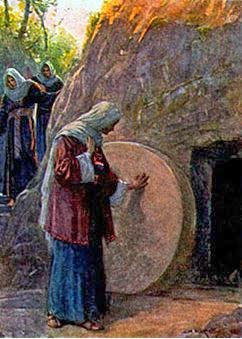
Peter makes a simple argument that was easily understood by his audience. We know Jesus has been resurrected because His tomb is empty. Likewise, we know David has not been resurrected because his body is still in the tomb. If that argument was sound in 30 AD, then it remains sound today, because the Christian doctrine of resurrection hasn’t changed. Since the ancients are still in the tomb, how can some claim David and the rest of the OT saints were resurrected in 70 AD?

A spirit body resurrection?

Some who reject a physical resurrection believe in the resurrection of a “spirit body.” (Notice the Bible doesn’t teach a spirit body, but a spiritual body – compare 1 Cor. 15:44 with 2:14-16.) A “spirit body” is like a “square circle,” it is nonsensical because it is a contradiction in terms. By definition, a spirit is not a body, and a body is not a spirit. When Paul looks forward to the resurrection, Paul looks forward to being “set free from the body of this death” (Rom. 7:24). The solution was not to be set free from the body, which happens at death, for Paul did not wish to be “unclothed” (2 Cor. 5:2-4).  Nor can the resurrection be said to be merely spiritual life, because the Christian already had that prior to both 70 AD and the resurrection (Rom. 8:9-11). The solution is not found in death, but in life evermore.

Baptism for the dead

When Paul speaks of Christians “who are baptized for the dead” (1 Cor. 15:29), what is Paul talking about? The answer can be found in the context. Paul gives no indication that this baptismal practice is strange or wrong; in fact, he uses the practice to reinforce his point, which suggests his agreement with the practice. But what is it? Although ambiguous in the English translation, the “dead” in the original Greek language is definitely plural.

Paul is pointing to the fact that when Christians are baptized into Christ, they are baptized for their own dead bodies. Read 1 Cor. 15:29-35, and everywhere you read the word “dead,” read it as “dead bodies” and you will see that this not only make sense, it becomes explicit by v. 35 and throughout the rest of the chapter. In Rom. 7:24, he refers to his own living body as “the body of this death,” and in Rom. 8:10, even though the bodies Paul refers to were still physically alive, he nevertheless refers to them as being “dead.” Paul links Christian baptism with the body, death, and resurrection in Rom. 6:2-9 and Col. 2:11-13.

If the body was still alive, then in what sense was it “dead”?  Since the body is of the earth, and is made for life on the earth, it is earthy (Gen. 2:7, 3:19; 1 Cor. 15:44-49) and so has earthly, fleshly appetites. So in a sense, the body has a mind of its own, and its appetites are geared toward the things of this world, which is the mindset of death (Rom. 8:12-13). This means the body is weak towards carrying out the will of the Holy Spirit (Rom. 7:14-23, 8:3-8; also see Matt. 26:41). Since the flesh is in a sense morally dead because of our sin, it was a body of death, and therefore, mortal. The body is dead because sin is living in it (Rom. 7:14-21, 8:10).

Jesus became a life-giving spirit

When Paul writes that Jesus “became a life-giving spirit” (1 Cor 15:45), some believe this proves a spirit-only resurrection. But we do not become “life-giving” spirits like Christ, for we have no life in ourselves. Rather, we receive life from the Spirit of Christ. How so? We do not have to wonder, because Paul tells us in Rom. 8:9-11. In v. 9, Paul refers to “the Spirit of Christ,” and relates it to our resurrection by giving “life to your mortal bodies.”

The resurrection is not only about making our mortal bodies immortal, but about making our bodies into spiritual bodies – bodies that are strong to carry out the desires of the Holy Spirit (1 Cor. 15:42-54). Just as Jesus supplied the missing ingredients to transform the water buried in the earth into excellent wine at the end of the wedding (John 2:6-10), so Jesus will one day return from Heaven to supply the missing ingredients to transform our earthly tent into a heavenly building (2 Cor. 5:1-10) on the last day (John 6:54, 11:24). At that time, our transformation into the likeness of Christ (Eph. 4:13) will finally be complete!

Conclusion

New Jerusalem and the new heavens & earth represents Christ’s spiritual kingdom here on the earth right now. It is Christ reigning through His Church, and on behalf of His Church. One day He will return, bring an end to death and sin through the power of His resurrection, punish the wicked, and take us into Heaven where the glory of God will “be all in all” (1 Cor. 15:28). There we will be with God and each other in a state of perpetual spiritual bliss. “Therefore comfort one another with these words” (1 Thes. 4:18).

The Significance of the Overthrow of the Old Covenant System in 70 AD (Quotes)


“No matter what view of eschatology we embrace, we must take seriously the redemptive-historical importance of Jerusalem’s destruction in 70 AD.”

–R.C. Sproul, The Last Days According to Jesus, p. 26

In the last post, Prophecy Teachers Needlessly Prophesy Horrors for Israel, I included a quote from Philip Mauro (1921) in which he said that many “seem not to be aware of the immense significance of the destruction of Jerusalem in A.D. 70…and the vast amount of prophecy which it fulfilled.” Mauro’s viewpoint echoes the understanding of numerous leaders throughout church history, as demonstrated in the quotes below. Many of these quotes also demonstrate a good understanding that what Paul said around 52 AD to the believers in Thessalonica was at the heart of why the old covenant system had to be removed, and why Israel was ripe for judgment:

For you, brethren, became imitators of the churches of God which are in Judea in Christ Jesus. For you also suffered the same things from your own countrymen, just as they did from the Judeans, who killed both the Lord Jesus and their own prophets, and have persecuted us; and they do not please God and are contrary to all men, forbidding us to speak to the Gentiles that they may be saved, so as always to fill up the measure of their sins; but wrath has come upon them to the uttermost” (I Thessalonians 2:14-16)

On a personal note, I was brought up in a Pentecostal church from the time I was three years old (1981), attended Bible College from 1997-2000, and spent significant time in other church circles, but it wasn’t until 2008/2009 – through the internet – that I heard for the first time that some believers found spiritual or prophetic significance in Jerusalem’s destruction in 70 AD. Before this time, I also hardly knew a single detail about the events of that time period (the Roman-Jewish War of 66-73 AD), and I suspect this was also true of almost every Christian I personally knew. 

The following quotes are adapted from The Preterist Archive, compiled by Todd Dennis, and have been arranged chronologically, ranging from 174 AD to 1997:

[1] Irenaeus (174 AD): “CHAP. IV.–ANSWER TO ANOTHER OBJECTION, SHOWING THAT THE DESTRUCTION OF JERUSALEM, WHICH WAS THE CITY OF THE GREAT KING, DIMINISHED NOTHING FROM THE SUPREME MAJESTY’ AND POWER OF GOD, FOR THAT THIS DESTRUCTION WAS PUT IN EXECUTION BY THE MOST WISE COUNSEL OF THE SAME GOD. (1) Further, also, concerning Jerusalem and the Lord, they venture to assert that, if it had been ‘the city of the great King,’ it would not have been deserted. This is just as if anyone should say, that if straw were a creation of God, it would never part company with the wheat; and that the vine twigs, if made by God, never would be lopped away and deprived of the clusters… Even as Esaias saith, ‘The children of Jacob shall strike root, and Israel shall flourish, and the whole world shall be filled with his fruit.’ The fruit, therefore, having been sown throughout all the world, she (Jerusalem) was deservedly forsaken, and those things which had formerly brought forth fruit abundantly were taken away; for from these, according to the flesh, were Christ and the apostles enabled to bring forth fruit. But now these are no longer useful for bringing forth fruit. For all things which have a beginning in time must of course have an end in time also. (2) Since, then, the law originated with Moses, it terminated with John as a necessary consequence. Christ had come to fulfil it: wherefore ‘the law and the prophets were’ with them ‘until John.’ And therefore Jerusalem, taking its commencement from David, and fulfilling its own times, must have an end of legislation when the new covenant was revealed.

[2] Tertullian (160-220 AD): “Therefore, when these times also were completed, and the Jews subdued, there afterwards ceased in that place [Jerusalem] ‘libations and sacrifices,’ which thenceforward have not been able to be in that place celebrated; for ‘the unction,’ too, was ‘exterminated’ in that place after the passion of Christ. For it had been predicted that the unction should be exterminated in that place; as in the Psalms it is prophesied, ‘They exterminated my hands and feet.’ … Accordingly, all the synagogue of Israel did slay Him, saying to Pilate, when he was desirous to dismiss Him, ‘His blood be upon us, and upon our children;’ and, ‘If thou dismiss him, thou art not a friend of Caesar;’ in order that all things might be fulfilled which had been written of Him” (An Answer to the Jews, Chapter VII—Of Jerusalem’s Destruction).

[3] Hyppolytus of Rome, disciple of Irenaeus (170-236 AD): “Come, then, O blessed Isaiah; arise, tell us clearly what thou didst prophesy with respect to the mighty Babylon [Isaiah 13]. For thou didst speak also of Jerusalem, and thy word is accomplished. For thou didst speak boldly and openly: ‘Your country is desolate, your cities are burned with fire; your land, strangers devour it in your presence, and it is desolate as overthrown by many strangers. The daughter of Sion shall be left as a cottage in a vineyard, and as a lodge in a garden of cucumbers, as a besieged city’ [Isaiah 1:8]. What then? Are not these things come to pass? Are not the things announced by thee fulfilled? Is not their country, Judea, desolate? Is not the holy place burned with fire? Are not their walls cast down? Are not their cities destroyed? Their land, do not strangers devour it? Do not the Romans rule the country? And indeed these impious people hated thee, and did saw thee asunder, and they crucified Christ. Thou art dead in the world, but thou livest in Christ” (Fragments of Dogmatic and Historical Works).

[4] Origen (185-254 AD): “Therefore He [God], also, having separated from her [Israel], married, so to speak, another [the Church], having given into the hands of the former the bill of divorcement; wherefore they can no longer do the things enjoined on them by the law, because of the bill of divorcement. And a sign that she has received the bill of divorcement is this, that Jerusalem was destroyed along with what they called the sanctuary of the things in it which were believed to be holy, and with the altar of burnt offerings, and all the worship associated with it… And what was more unseemly than the fact, that they all said in His case, ‘Crucify Him, crucify Him,’ and ‘Away with such a fellow from the earth’? And can this be freed from the charge of unseemliness, ‘His blood be upon us, and upon our children’? Wherefore, when He was avenged, Jerusalem was compassed with armies, and its desolation was near, and their house was taken away from it, and ‘the daughter of Zion was left as a booth in a vineyard, and as a lodge in a garden of cucumbers, and as a besieged city.’ And, about the same time, I think, the husband wrote out a bill of divorcement to his former wife, and gave it into her hands, and sent her away from His own house, and the bond of her who came from the Gentiles has been cancelled about which the Apostle says, ‘Having blotted out the bond written in ordinances, which was contrary to us, and He hath taken it out of the way, nailing it to the cross;’ for Paul also and others became proselytes of Israel for her who came from the Gentiles” (Commentary on the Gospel According to Matthew, Book 2, Section 19).

[5] Lactantius (240-320 AD): “Also Zechariah says: ‘And they shall look on me whom they pierced.’ Amos thus speaks of the obscuring of the sun: ‘In that day, saith the Lord, the sun shall go down at noon, and the clear day shall be dark; and I will turn your feasts into mourning, and your songs into lamentation.’ Jeremiah also speaks of the city of Jerusalem, in which He suffered: ‘Her sun is gone down while it was yet day; she hath been confounded and reviled, and the residue of them will I deliver to the sword.’ Nor were these things spoken in vain. For after a short time the Emperor Vespasian subdued the Jews, and laid waste their lands with the sword and fire, besieged and reduced them by famine, overthrew Jerusalem, led the captives in triumph, and prohibited the others who were left from ever returning to their native land. And these things were done by God on account of that crucifixion of Christ, as He before declared this to Solomon in their Scriptures, saying, ‘And Israel shall be for perdition and a reproach to the people, and this house shall be desolate; and every one that shall pass by shall be astonished, and shall say, “Why hath God done these evils to this land, and to this house? And they shall say, Because they forsook the Lord their God, and persecuted their King, who was dearly beloved by God, and crucified Him with great degradation, therefore hath God brought upon them these evils.”’ For what would they not deserve who put to death their Lord, who had come for their salvation?” (Epitome of the Divine Institutes, Chapter 46).

[6] Eusebius (314 AD): “If any one compares the words of our Saviour with the other accounts of the historian (Josephus) concerning the whole war, how can one fail to wonder, and to admit that the foreknowledge and the prophecy of our Saviour were truly divine and marvelously strange” (Proof of the GospelBook III, Ch. VII).

[7] Athanasius (345 AD): “When did prophet and vision cease from Israel? Was it not when Christ came, the Holy One of holies? It is, in fact, a sign and notable proof of the coming of the Word that Jerusalem no longer stands, neither is prophet raised up nor vision revealed among them. And it is natural that it should be so, for when He that was signified had come, what need was there any longer of any to signify Him? And when the Truth had come, what further need was there of the shadow? On His account only they prophesied continually, until such time as Essential Righteousness has come, Who was made the Ransom for the sins of all. For the same reason Jerusalem stood until the same time, in order that there men might premeditate the types before the Truth was known. So, of course, once the Holy One of holies had come, both vision and prophecy were sealed” (Incarnation, Chapter VI).

[8] John Calvin (1509-1564): “So in this passage [Daniel 9], without doubt, he treats of the period after the destruction of the Temple; there could be no hope of restoration, as the law with all its ceremonies would then arrive at its termination… That devastation happened as soon as the gospel began to be promulgated. God then deserted his Temple, because it was only founded for a time, and was but a shadow, until the Jews so completely violated the whole covenant that no sanctity remained in either the Temple, the nation, or the land itself. Some restrict this [the abomination of desolation] to those standards which Tiberius erected on the very highest pinnacle of the Temple, and others to the statue of Caligula, but I have already stated my view of these opinions as too forced. I have no hesitation in referring this language of the angel to that profanation of the Temple which happened after the manifestation of Christ, when sacrifices ceased, and the shadows of the law were abolished. From the time, therefore, at which the sacrifice really ceased to be offered; this refers to the period at which Christ by his advent should abolish the shadows of the law, thus making all offering of sacrifices to God totally valueless… The Jews never anticipated the final cessation of their ceremonies, and always boasted in their peculiar external worship, and unless God had openly demonstrated it before their eyes, they would never have renounced their sacrifices and rites as mere shadowy representations. Hence Jerusalem and their Temple were exposed to the vengeance of the Gentiles. This, therefore, was the setting up of this stupefying abomination; it was a clear testimony to the wrath of God, exhorting the Jews in their confusion to boast no longer in their Temple and its holiness.”

[9] Jonathan Edwards (1703-1758): “Thus there was a final end to the Old Testament world: all was finished with a kind of day of judgment, in which the people of God were saved, and His enemies terribly destroyed” (1736).

[10] William Whiston (1667-1752): “Josephus speaks so, that it is most evident he was fully satisfied that God was on the Romans’ side, and made use of them now for the destruction of the Jews, which was for certain the true state of this matter, as the prophet Daniel first, and our Saviour himself afterwards had clearly foretold” (Literature Accomplished of Prophecy, p. 64, 1737).

[11] John Wesley (1703-1791): “Josephus’ History of the Jewish War is the best commentary on this chapter (Matt. 24). It is a wonderful instance of God’s providence, that he, an eyewitness, and one who lived and died a Jew, should, especially in so extraordinary a manner, be preserved, to transmit to us a collection of important facts, which so exactly illustrate this glorious prophecy, in almost every circumstance” (Explanatory Notes Upon the New Testament, 1754).

[12] Dom Toutee (1790): “St. Chrysostom shows that the destruction of Jerusalem is to be ascribed, not to the power of the Romans, for God had often delivered it from no less dangers; but to a special providence which was pleased to put it out of the power of human perversity to delay or respite the extinction of those ceremonial observances.”

[13] William Dool Killen (1859): “Nero died A.D. 68, and the war which involved the destruction of Jerusalem and of upwards of a million of the Jews, was already in progress. The holy city fell A.D. 70; and the Mosaic economy, which had been virtually abolished by the death of Christ, now reached its practical termination. At the same period the prophecy of Daniel was literally fulfilled; for “the sacrifice and the oblation” were made to cease, [168:5] as the demolition of the temple and the dispersion of the priests put an end to the celebration of the Levitical worship. The overthrow of the metropolis of Palestine contributed in various ways to the advancement of the Christian cause. Judaism, no longer able to provide for the maintenance of its ritual, was exhibited to the world as a defunct system; its institutions, now more narrowly examined by the spiritual eye, were discovered to be but types of the blessings of a more glorious dispensation; and many believers, who had hitherto adhered to the ceremonial law, discontinued its observances. Christ, forty years before, had predicted the siege and desolation of Jerusalem; [169:1] and the remarkable verification of a prophecy, delivered at a time when the catastrophe was exceedingly improbable, appears to have induced not a few to think more favourably of the credentials of the gospel. In another point of view the ruin of the ancient capital of Judea proved advantageous to the Church. In the subversion of their chief city the power of the Jews sustained a shock from which it has never since recovered; and the disciples were partially delivered from the attacks of their most restless and implacable persecutors” (The Ancient Church: Its History, Doctrine, Worship, and Constitution, Project Gutenberg, available at http://www2.cddc.vt.edu/gutenberg/1/6/7/0/16700/16700-8.txt).

[14] C.H. (Charles) Spurgeon (1834-1892): “The destruction of Jerusalem was more terrible than anything that the world has ever witnessed, either before or since. Even Titus seemed to see in his cruel work the hand of an avenging God… Truly, the blood of the martyrs slain in Jerusalem was amply avenged when the whole city became veritable Aceldama, or field of blood… There was a sufficient interval for the full proclamation of the gospel by the apostles and evangelists of the early Christian Church, and for the gathering out of those who recognized the crucified Christ as their true Messiah. Then came the awful end, which the Saviour foresaw and foretold, and the prospect of which wrung from his lips and heart the sorrowful lament that followed his prophecy of the doom awaiting this guilty capital…Nothing remained for the King but to pronounce the solemn sentence of death upon those who would not come unto him that they might have life: ‘Behold, your house is left unto you desolate.’ The whole ‘house’ of the Jews was left desolate when Jesus departed from them; and the temple, the holy and beautiful ‘house’ became a spiritual desolation when Christ finally left it. Jerusalem was too far gone to be rescued from its self-sought doom (Commentary on Matthew, 1868, pp. 412-413).

[15] Philip Schaff (1819-1893): “A few years afterwards followed the destruction of Jerusalem, which must have made an overpowering impression and broken the last ties which bound Jewish Christianity to the old theocracy…The awfiul catastrophe of the destruction of the Jewish theocracy must have produced the profoundest sensation among the Christians… It was the greatest calamity of Judaism and a great benefit to Christianity; a refutation of the one, a vindication…of the other. It separated them forever” (History of the Christian Church, Vol. 1, 1877, pp. 403-404).

[16] F.W. Farrar (1831-1903): “The Fall of Jerusalem and all the events which accompanied and followed it in the Roman world and in the Christian world, had a significance which it is hardly possible to overestimate. They were the final end of the Old Dispensation. They were the full inauguration of the New Covenant. They were God’s own overwhelming judgment on that form of Judaic Christianity which threatened to crush the work of St. Paul, to lay on the Gentiles the yoke of abrogated Mosaism, to establish itself by threats and anathemas as the only orthodoxy… No event less awful than the desolation of Judea, the destruction of Judaism, the annihilation of all possibility of observing the precepts of Moses, could have opened the eyes of the Judaisers from their dream of imagined infallibility. Nothing but God’s own unmistakable interposition – nothing but the manifest coming of Christ – could have persuaded Jewish Christians that the Law of the Wilderness was annulled” (The Early Days of Christianity, 1882, pp. 489-490).

[17] Philip Mauro (1859-1952): “It is greatly to be regretted that those who, in our day, give themselves to the study and exposition of prophecy, seem not to be aware of the immense significance of the destruction of Jerusalem in A.D. 70, which was accompanied by the extinction of Jewish national existence, and the dispersion of the Jewish people among all the nations. The failure to recognize the significance of that event, and the vast amount of prophecy which it fulfilled, has been the cause of great confusion, for the necessary consequence of missing the past fulfillment of predicted events is to leave on our hands a mass of prophecies for which we must needs contrive fulfillments in the future. The harmful results are twofold; for first, we are thus deprived of the evidential value, and the support to the faith, of those remarkable fulfillments of prophecy which are so clearly presented to us in authentic contemporary histories; and second, our vision of things to come is greatly obscured and confused by the transference to the future of predicted events which, in fact, have already happened, and whereof complete records have been preserved for our information.

“Yet, in the face of all this, we have today a widely held scheme of prophetic interpretation, which has for its very cornerstone the idea that, when God’s time to remember His promised mercies to Israel shall at last have come, He will gather them into their ancient land again, only to pour upon them calamities and distresses far exceeding even the horrors which attended the destruction of Jerusalem in A.D. 70. This is, we are convinced, an error of such magnitude as to derange the whole program of unfulfilled prophecy” (Seventy Weeks and the Great Tribulation, 1921, emphasis added).

[18] John Piper (1996): “It is almost impossible to exaggerate the importance of what happened in A.D. 70 in Jerusalem. It was an event that, for Jews and Christians, was critical in defining their faith for the next 2000 years.”

[19] R.C. Sproul (1997): “The coming of Christ in A.D.70 was a coming in judgment on the Jewish nation, indicating the end of the Jewish age and the fulfillment of a day of the Lord. Jesus really did come in judgment at this time, fulfilling his prophecy in the Olivet Discourse” (The Last Days According to Jesus, p. 158, 1998). “The most significant, redemptive, historical action that takes place outside the New Testament, is the judgment that falls on Jerusalem, and by which judgment the Christian Church now [clearly] emerges as The Body of Christ” (R.C. Sproul, Dust to Glory  video series, 1997).

Philip Mauro (1921): Prophecy Teachers Today Needlessly Prophesy Horrors for Israel


This is a great quote from Philip Mauro, almost 100 years ago, regarding the destruction of Jerusalem in 70 AD, its significance in relation to Bible prophecy, and how popular beliefs on Bible prophecy speak to the people of Israel today:

“It is greatly to be regretted that those who, in our day, give themselves to the study and exposition of prophecy, seem not to be aware of the immense significance of the destruction of Jerusalem in A.D. 70, which was accompanied by the extinction of Jewish national existence, and the dispersion of the Jewish people among all the nations. The failure to recognize the significance of that event, and the vast amount of prophecy which it fulfilled, has been the cause of great confusion, for the necessary consequence of missing the past fulfillment of predicted events is to leave on our hands a mass of prophecies for which we must needs contrive fulfillments in the future. The harmful results are two fold; for first, we are thus deprived of the evidential value, and the support to the faith, of those remarkable fulfillments of prophecy which are so clearly presented to us in authentic contemporary histories; and second, our vision of things to come is greatly obscured and confused by the transference to the future of predicted events which, in fact, have already happened, and whereof complete records have been preserved for our information.”

“Yet, in the face of all this, we have today a widely held scheme of prophetic interpretation, which has for its very cornerstone the idea that, when God’s time to remember His promised mercies to Israel shall at last have come, He will gather them into their ancient land again, only to pour upon them calamities and distresses far exceeding even the horrors which attended the destruction of Jerusalem in A.D. 70. This is, we are convinced, an error of such magnitude as to derange the whole program of unfulfilled prophecy.”

–Philip Mauro, “Seventy Weeks and the Great Tribulation,” 1921

For some good information on the historical events that took place from 62 AD – 70 AD, and the spiritual significance of many of these events in light of Bible prophecy, please see the following posts:

1. The Historical Events Leading Up to 70 AD, Part 1
2. The Historical Events Leading Up to 70 AD, Part 2
3. The Historical Events Leading Up to 70 AD, Part 3
4. The Spiritual Significance of [Events in] 70 AD

Visitors are also encouraged to check out our series on the Olivet Discourse (Matthew 24, Mark 13, Luke 21) and our series on the book of Revelation, for some good information on how these prophecies were fulfilled by first century historical events.

Debate: Michael Brown and Don Preston On Romans 11:25-27 (Video and Notes)


As announced earlier, a debate took place on June 3rd between Dr. Michael Brown and Dr. Don K. Preston regarding Romans 11:25-27. The debate lasted for 1 hour, 45 minutes and was moderated by Dr. James White of Alpha & Omega Ministries. Don K. Preston is an author, pastor, and the president of Preterist Research Institute (websites 1, 2, and 3), and Michael Brown is an author, professor, and radio host (websites 1, 2, and 3). Both men have authored 22 books each.

The key questions for the debate were as follows: “Does Romans 11:25-27 state that there will be a national turning of the Jewish people to God? Are there any Old Testament promises made to ethnic Israel that remain to be fulfilled?” Both men had 17 minutes each to make their initial case, 12 minutes each to rebut the other’s arguments, 15 minutes each to cross-examine the other, and five minutes each for concluding statements. Here’s the video of the debate, followed by the less-than-perfect notes I took while watching it. (I’ve also included the video time markers for each section of the debate, and my additional thoughts are in red font.)

A. Introduction by Dr. James White (0:00 – 3:53)

B1. Michael Brown’s Initial Case (3:54 – 20:54)

According to Michael Brown, Romans 11:25-27 is about “ethnic, national Israel” and a future “national turning of the Jewish people.” (Will the unsaved Palestinians and expatriates living in Israel be excluded from this national turning because they’re not Jewish? Will Jews living outside Israel be excluded as well?)

Michael distinguishes this entity, Israel, from “the Gentile church.” (I’m not sure what “the Gentile church” is, since there is no Jew or Gentile in Jesus Christ, and no distinction – Romans 10:12-13, Galatians 3:28, Colossians 3:11.) Paul is looking forward to the full inclusion of Jews, says Michael, not just a remnant. The “partial hardening” of Israel is partial in that it’s not for all time. This hardening, though, is still on Jewish hearts to this day.

–The “fullness of the Gentiles” refers to salvation for Gentiles.
–The church is not Jacob (in reference to Jeremiah 31).
–The wolf is not yet laying down with the lamb. (Paul demonstrates otherwise in Romans 15 by quoting from the same section of Isaiah 11 where it’s predicted that the wolf would lay down with the lamb. Paul applied this passage to Gentiles, in his day, putting their hope in Christ along with Jews. See here for more details.)
–We haven’t yet seen the renovating of the universe spoken of in II Peter 3. (I personally see Peter’s prophecy as speaking of the burning of the Jerusalem temple and the destruction of the old covenant system in 70 AD, as did Eusebius, John Owen, Jonathan Edwards, and others in church history. See here for more.)
–The new covenant was inaugurated with the remnant, but not yet with the nation as a whole.
–“If words mean anything, _____________ has not happened” (in reference to a number of things that Michael Brown believes have not yet been fulfilled).
–The expression “all Israel will be saved” (Romans 11:26) will not necessarily include all Jews, but will include many of them. (Is this because it won’t include Jews living outside Israel, or is this an admission that God only promised to save a remnant from Israel? I was surprised to hear Michael Brown say this.)

B2. Don Preston’s Initial Case (21:41 – 38:37)

Don Preston agrees that Romans 11:25-27 deals with ethnic Israel, and adds that verses 28-29 deal with ethnic Israel and Jewish unbelievers. Don lists the following Scriptures as providing the background to Paul’s teaching here: Deuteronomy 32:18, 43; Isaiah 26:21, 27:10-13, 59:1-21; Jeremiah 31; and Daniel 9:24-27.

–Both judgment and salvation are in view in Isaiah 26-27 and in Isaiah 59, including judgment for the shedding of innocent blood (themes in Matthew 21, 23; Revelation 6, 16-19; etc.).
–Hosea predicts both the divorce of Israel and God’s promise of remarriage for Israel. This is what Paul is speaking of in Romans 11. The remnant of Israel was to be joined with new covenant believers from other nations, and all of them made one in Jesus.
–God would slay the kingdom, but preserve the family.
–“Paul is dealing with the climax of Israel’s covenant history” in Romans 11.

C1. Michael Brown’s Rebuttal (39:16 – 51:13)

–The temple has not yet been rebuilt.
–Israel has not yet welcomed Jesus back (Matthew 23:39).
–Atonement has been made, but not yet received by national Israel.
–Isaiah 60 predicts that Israel would rise and shine, but this hasn’t happened yet. (What if the light that would shine was Jesus, and a remnant of Israel would rise with believers from other nations and shine with His light? See here for more.)
–Israel’s return from Babylonian exile in the 6th century did not happen with the expected and predicted glory. Those prophecies only happened in part.

C2. Don Preston’s Rebuttal (51:33 – 1:03:33)

–In I Peter 1, Peter said that the prophets looked into the salvation we have experienced in Christ, and they did not understand the time or the manner of its fulfillment.
–Hosea 3 predicted that the 10 northern tribes of Israel would be without a temple, altar, ephod, and sacrifices until the last days when David would be their king.
–In II Peter 2, Peter writes to the 12 tribes of the diaspora, referring to them as a royal priesthood called to make spiritual sacrifices. Jesus, of course, is exalted to the throne of David. Hosea’s predictions for Israel were fulfilled in Peter’s day.

D1. Michael Brown’s Cross-examination of Don Preston (1:04:36 – 1:19:36)

Michael Brown posed this question to Don Preston: “How was all Israel saved in 70 AD and how is there no longer hardening on Israel today?” The following are some of Don’s replies to this and other questions that came up:

–God never promised to save the entire nation of Israel. In fact, Paul quoted Isaiah in saying that only a remnant would be saved (Romans 9:27-28).
–The remnant of Israel was transferred from the old covenant body to the new covenant body. “All Israel will be saved” = The full number of the remnant will come in.
–Any hardening of Jewish hearts in Israel today is not in fulfillment of Romans 11:25, which was a prophecy for Paul’s generation.
–James, who also addressed the 12 tribes, testified that he was among the first fruits gathering of Jewish believers (James 1:18).
–Don addresses the fulfillment of Isaiah 2, in context of Isaiah 2-4, and Jesus’ application of portions of Isaiah 2 in Luke 23:28-31.

D2. Don Preston’s Cross-examination of Michael Brown (1:19:53 – 1:34:54)

Don Preston posed this question to Michael Brown: On what basis can we reject or look beyond instances when the New Testament writers spiritually apply Old Testament promises that, on the surface, appear to require literal or physical fulfillments? The following are some of Michael’s replies to this question:

–If a later interpretation undermines an earlier prophecy, it has to be discounted.
–“If the New Testament writers made void the words of the Old Testament prophets, then it’s the New Testament writers who have to be rightly questioned” (1:22:40). “Consistent interpretation says they made nothing void. They just gave further insight into the meaning of the prophets.”

Don Preston posed this question to Michael Brown: Was the establishment of the kingdom truly at hand when Jesus said it was? The following are some of Michael’s replies to this question:

–Yes.
–“We’ve been in the last days for the last 2000 years.”
–We are in the transition age that has many “untils.”

Don Preston posed this question to Michael Brown: Peter said, “The end of all things is near” (I Peter 4:7), and Paul said that the consummation (or the goal) of all previous ages was upon his generation” (I Corinthians 10:11). What is the significance of these statements if we are still waiting for the events of the last days to take place? The following are some of Michael’s replies to this question:

–“I take all those things seriously, including I John 1:18” (“Little children, it is the last hour; and as you have heard that the Antichrist is coming, even now many antichrists have come, by which we know that it is the last hour“).
–We live in a holy tension now, as many prophecies are not fully realized.
–“In Isaiah 49 the Messiah appears to have failed in His mission to Israel. And the Lord says to Him, ‘not only will you regather the lost tribes of Israel (national restoration), but You will also be a light to the nations.’ Hence, Isaiah 42 speaks of a persevering until.” (??? I had a hard time understanding what Michael meant here.)
–The national repentance of Israel (Zechariah 12:10-13) hasn’t happened yet.
–“We are living in the last hour.” (How is this possible if John said it was the last hour in the first century, nearly 2000 years ago? This would mean that “the last hour” has lasted longer than the entire old covenant age, which was 1300 years. See here for more.)

E1. Michael Brown’s Closing Statement (1:35:33 – 1:40:34)

“The Israel that is hardened, that has rejected the Messiah, will be the Israel that turns back fully.”

E2. Don Preston’s Closing Statement (1:40:47 – 1:45:49)

–“Isaiah 27 and Isaiah 59 foretold that the salvation of Israel would take place at the time of the judgment of Israel for shedding the innocent blood of the martyrs.”
–Jesus said this blood, from the beginning of Israel’s history until His generation, was going to be held to Israel’s account in Jesus’ own generation in the form of judgment.
–The time of the putting away of Israel’s sin in Daniel 9:24-27 is confined to the 70 weeks and the related destruction of Jerusalem in 70 AD, as Michael Brown concurred earlier in the debate. Therefore, the putting away of Israel’s sin in Romans 11 occurred no later than 70 AD.
–Judah had to be divorced in the same way the 10 tribes were, according to the Old Testament prophets and Jesus. In Matthew 22 those who rejected the wedding invitation persecuted and killed God’s servants. Jerusalem, the principal city of Judah, was to be burned at the time of the marriage promised in the Old Testament. This happened in 70 AD, and this is also in accordance with Revelation 18-19 where Babylon the Great (earlier identified as “the city where our Lord was crucified – Rev. 11:8) was to be burned just before Jesus married New Jerusalem. God married the remnant of Israel along with believers from all other nations.

——————————————————————————

Final thoughts: This was a very civil debate, which was great to see. Both men showed a high level of respect toward the other. I wish Don Preston would have given his perspective on “the fullness of the Gentiles” and also that he would have said more about “the partial hardening” that was on Israel. I understand that there were time pressures, however.

Personally I believe that only Jesus’ generation in Israel was under this hardening, in accordance with Jesus’ frequent statements that they were an evil, wicked, vile, faithless, and adulterous generation; and in accordance with His declaration that they had dull hearts, ears hard of hearing, closed eyes, etc. (see Matthew 13:10-17).

Concerning “the fullness of the Gentiles,” I personally believe this is not related at all to Gentiles being saved, but rather to the Gentile nations that had dominion over Israel from the time of Daniel onward: Babylon, Medo-Persia, Greece, and Rome. This period would end with the 3.5 year trampling of Jerusalem by the Gentiles (compare Romans 11:25 with Luke 21:24 and Revelation 11:1-2). The significance is that New Jerusalem, the new covenant community, is free (Galatians 4:21-31).

God’s promise of a new covenant for the house of Israel (Jeremiah 31) has been fulfilled in the church, the spiritual house built on the foundation of the apostles (ministers of the new covenant – II Cor. 3:5-6), with Jesus as the Chief Cornerstone (Ephesians 2:11-22).

Your thoughts on this debate are welcome in the comment section below.

Are We In “the Last Days”? The Last Days of What?


1. When did the Biblical “last days” begin? Before Jesus began His 3.5 year ministry? On the Day of Pentecost? In 1948? In the late 20th century? 

2. What time period or age are we referring to when we speak of the last days? World history? The old covenant age? The new covenant age? Something else?

3. When were the first days? Billions or millions of years ago? 6000 years ago? Around 1200 BC? The 1950’s?

4. When were the middle days of this time period or age? Logically, we should expect this to be the longest period, with the greatest number of days.

Amidst all the rhetoric about “the last days” being here upon us now in 2014, it’s evident that many have done very little to analyze these types of questions. Consider the following two examples, before comparing their ideas to what the Bible says about “the last days.”

1. A poll was conducted in 2006 by McLaughlin & Associates, asking “1,000 randomly selected American adults” the following question: 

“Do you agree or disagree with the following statement: ‘Events such as the rebirth of the State of Israel, wars and instability in the Middle East, recent earthquakes, and the tsunami in Asia are evidence that we are living in what the Bible calls the last days.'”

They found that 42% of Americans agreed with this statement, and 58% of evangelical/born-again Christians agreed. See here for the rest of the results. From this survey, a majority of evangelical Christians in the US believe that events in the last 65 years or so prove that the Biblical last days are here now. The suggestion is that the last days arrived in recent decades, not a couple thousand years ago.

2. In 1990 the Christian rock band, Petra, produced a song called “Last Daze” (a play on “last days”) – from their album “Beyond Belief.” I was a Petra fan during the 90’s (I still respect them), and this was one of my favorites. From the lyrics to this song, it’s clear that they believed “the last days” are here now, and that spiritual delusion will intensify until the time of “the blaze”:

…In the last daze, the final haze
There was strong delusion to believe a lie
In the last daze before the blaze
They couldn’t see beyond their misty trance
To grab the truth and have a fighting chance
In the last daze…

Some say it’s a certainty
A sign of the times I am told
But I weep for the souls of those
Who will never return to the fold…

What does the New Testament have to say about “the last days” (and other equivalent expressions) and their timing? Here are a few examples:

“God, who at various times and in various ways spoke in time past to the fathers by the prophets, has in these last days spoken to us by His Son, whom He has appointed heir of all things, through whom also He made the worlds” (Hebrews 1:1-2).

“He [Jesus] indeed was foreordained before the foundation of the world, but was manifest in these last times for you” (I Peter 1:20).

“He then would have had to suffer often since the foundation of the world; but now, once at the end of the ages, He has appeared to put away sin by the sacrifice of Himself” (Hebrews 9:26).

“Now all these things happened to them as examples, and they were written for our admonition, upon whom the ends of the ages have come” (I Corinthians 10:11).

“And do this, knowing the time, that now it is high time to awake out of sleep; for now our salvation is nearer than when we first believed. The night is far spent, the day is at hand. Therefore let us cast off the works of darkness, and let us put on the armor of light” (Romans 13:11-12).

“But the end of all things is at hand; therefore be serious and watchful in your prayers” (I Peter 4:7).

“Little children, it is the last hour; and as you have heard that the Antichrist is coming, even now many antichrists have come, by which we know that it is the last hour” (I John 2:18).

According to these and other Scriptures, Jesus lived and ministered in the last days. Notice the distinction in Hebrews 1 between God speaking throughout the old covenant period by the prophets, and God speaking by His Son at the onset of the new covenant period. The last days were linked to the transition period from one covenant to the other. 

We also see that Peter, Paul, and John wrote to believers living at the end of the age(s). John even said it was “the last hour.” This dispels the idea that “the last days” began in the 20th century, and it also dispels the idea that “the last days” began about 2000 years ago and continue until today. How could “the last days” still be here if “the last hour” of the last days arrived almost 2000 years ago? Consider, however, the real possibility that John wrote his epistle around 65 AD. Then it would make sense for John to say it was “the last hour” (of the old covenant age) just a few short years before it came to a dramatic end in 70 AD.

The old covenant age began in roughly 1300 BC during the days of Moses. It was made obsolete by Jesus’ work on the cross (30 AD), but was still “becoming obsolete and growing old” and “ready to vanish away” (Hebrews 8:13). This was its state for one generation – about 40 years. In 70 AD it did vanish away when the Roman armies came and burned the city (Jerusalem) of those who rejected Jesus’ wedding invitation (Matthew 22:7; Revelation 17:16, 18:8-10, 17-20). I believe “the last days” covered this transition period. I agree with Model 3 in the chart below (models 1 and 2 represent other popular ideas about “the last days”:

Duration of old covenant Last Days Began Duration of Last Days
Model 1 1300 years Pentecost 1984 years (and counting)
Model 2 1300 years 1948 66 years (and counting)
Model 3 1300 years Time of Jesus’ ministry 27 – 70 AD (Ended)

The new covenant age has already outlasted the old covenant age by 700 years (i.e. 2000 years and counting, compared to 1300 years):

Last Days Timeline

To answer the four questions at the beginning of this post then, I believe Scripture reveals that [1] the Biblical last days began at (or before) the time of the 3.5 year ministry of Jesus (27-30 AD); [2] they were the last days of the old covenant age; [3] “the first days” were in the days of Moses, around 1300 BC, when the old covenant was established, and [4] “the middle days” were the next 1200 or so years before Jesus was born in Bethlehem, covering the time of the judges, the kings, and the prophets. In light of what Scripture says about “the last days,” how would you answer these questions? 

Here is what the great preacher, John Owen (1616-1683), once said:

“Most expositors suppose that this expression [In Hebrews 1:2], ‘The last days,’ is a periphrasis [euphemism] for the times of the gospel. But it doth not appear that they are anywhere so called; nor were they ever known by that name among the Jews, upon whose principles the apostle proceeds… It is the last days of the Judaical church and state, which were then drawing to their period and abolition, that are here and elsewhere called ‘The last days,’ or ‘The latter days,’ or ‘The last hour,’ 2 Peter 3:31 John 2:18Jude 1:18… This phrase of speech is signally used in the Old Testament to denote the last days of the Judaical church” (The Works of John Owen, Volume 19, pp.12 – 13).

For a more extensive study of the topic of “this age and the age to come,” please see this post.

The Early Church Fathers and the Last Days of the Jewish Age


The following resource was compiled by Bishop George Kouri, an author and the pastor of The King’s Church in Jacksonville, Florida. He references the stated beliefs of Barnabas, Clement of Alexandrea, Origen, Tertullian, Athanasius, Irenaeus, and Hippolytus concerning “the last days”, “the end of the age,” and Daniel’s 70th Week (Daniel 9). This is not exhaustive, and there’s no doubt that leaders in church history have held quite a variety of views about these and related topics in the field of eschatology. When researching their beliefs, though, it’s easy to see that many did not view the Biblical “last days” as being about the (alleged) end of world history, but rather as the last days of the old covenant age. Here are just a few examples, as provided by George Kouri (all emphasis in the original):

BARNABAS:

Written anonymously around 100 AD, the “Epistle of Barnabas” is the earliest extra-Canonical source we have. Although not included in the Canon of the New Testament, it is an incredibly early documentation of the early Church’s beliefs about the last days. The Apostle John was probably alive when it was written. And although the authorship is disputed, we will refer to Barnabas as the author.

The Epistle of Barnabas sets forth the common view held by the early Church that the seventieth week of Daniel ended with the destruction of the Temple in 70 AD, as Messiah’s Day dawned and Christ’s Church was born. Barnabas writes, “For it is written, ‘And it shall come to pass, when the week is completed, the temple of God shall be built…in the name of the Lord.’ I find…that a temple does exist. Having received the forgiveness of sins…in our habitation God dwells in us….This is the spiritual temple built for the Lord.” (EOB, 16:6)

Barnabas uses the expression “the week,” but does not mention Daniel. Yet scholars agree from the context that this is definitely a reference to Daniel’s 70th week. And it is assumed by many scholars that the prophecy of Daniel’s seventy weeks was so well known and so widely expounded in the early Church that it needed no further explanation. The early Church did not avoid Daniel’s prophecy.

This early Christian writer connects Daniel’s vision of seventy weeks with the prophecy of Haggai 2:7-9 and the building of a “spiritual temple,” the Church. The author of the Epistle of Barnabas obviously believed that Daniel’s 70th week was fulfilled with Christ’s first advent. This was when the Old Temple was destroyed and the new “spiritual temple” was initially established. Writing in 100 AD he clearly believed the 70th week of Daniel was already completed.

It seems clear from this passage in the Epistle of Barnabas that less than a century after Christ’s passion (remember that according to Daniel the Messiah would be cut off in the middle of the 70th week), it was the widespread belief of the Church that the 70th week of Daniel was completed. It is certain that Barnabas placed the end of the 70th week no later than 70 AD. His mention of the building of the Church (which was able to grow largely unimpeded after 70AD) makes it probable that Barnabas saw 67 to 70 AD and the destruction of Herod’s Temple as the end of the Jewish or Old Covenant Age and the dawning of Messiah’s Day. As David B. Currie writes in his book, Rapture, The End-Times Error That Leaves The Bible Behind, “He (Barnabas) assumes his readers will agree that the events of ‘the week’ led to the building of the Church”  (Page 422).

CLEMENT OF ALEXANDREA

Within a century of Barnabas, Clement became bishop of Alexandria until his death in 215 AD. Clement taught that the blessings of the New Covenant required the end of biblical Judaism within the 70 weeks of Daniel. Clement writes of the destruction of the Temple by the Romans in 70 AD in the prophetic language of Daniel’s seventy weeks, “Vespasian rose to the supreme power (Emperor of Rome) and destroyed Jerusalem, and desolated the holy place”  (STO, XXI, 142-143).

Clement of Alexandrea believed the Jewish Age, the abomination of desolation spoken of by Daniel and the great tribulation were behind, not ahead of the Church.

ORIGEN (185-254 AD)

A student of Clement of Alexandrea, Origen agreed that the destruction of the Temple by the Romans in 70 AD marked the end of the Jewish Age and the fulfillment of Daniel’s prophecy regarding the 70 weeks. Origen writes,“The weeks of years up to the time of Christ the leader that Daniel the prophet predicted were fulfilled” (TPR, IV:1:5).

Like Clement, Origen also believed the Jewish Age, the abomination of desolation spoken of by Daniel and the great tribulation were behind the Church, not ahead of it.

TERTULLIAN

In 203 AD Tertullian wrote his famous treatise Against The Jews. This early Church father also taught that Daniel’s 70th week had been fulfilled in 70 AD: “Vespasian vanquished the Jews…and so by the date of his storming Jerusalem, the Jews had completed the seventy weeks foretold by Daniel”  (AAJ, VII; CID).

Contrary to modern postponement preachers and teachers, Tertullian believed the Jewish age, the abomination of desolation, and the great tribulation was behind, not ahead of the Church.

ATHANASIUS

Athanasius was bishop of Alexandria from 326 to 373 AD. Like the early Church fathers before him, he also taught that the 70 weeks of Daniel culminated and the Jewish Age ended in 70 AD: “Jerusalem is to stand till His coming (Daniel’s reference to Messiah’s appearing in His First Advent), and thenceforth, prophet and vision cease in Israel (the end of the Old Covenant or Jewish Age). This is why Jerusalem stood till then…that they might be exercised in the types as a preparation for the reality…but from that time forth all prophecy is sealed and the city and Temple taken” (INC, XXXIX:3-XV:8).

Athanasius clearly reflects the view of the entire early Church: once the Messiah had come, the role of the Temple in Jerusalem would be ended. “Things to be done which belonged to Jerusalem beneath…were fulfilled, and those which belonged to the shadows had passed away” (FEL, IV:3-4).

This important early Church father clearly believed that the Jewish age ended in 70 AD with the destruction of Jerusalem and the Temple.

IRENAEUS AND HIPPOLYTUS

Irenaeus was a contemporary of Clement of Alexandrea whose widely held view we dealt with above. Irenaeus and his pupil Hippolytus are the only two writers from the early Church period who believed in a still-future fulfillment of Daniel’s 70th week. They both placed the 70th week at the end of the gospel age and so are the first interpreters to postulate a gap between the 69th and 70th weeks (AG, V). Both predicted a specific date for the second coming that has long since come and gone.

But their belief in a future 70th week was never widely accepted! St. Jerome specifically pointed out that the number of years in their system did not coincide with the historical events they purported to cover. He wrote, “If by any chance those of future generations should not see these predictions of his (Irenaeus) fulfilled at the time he (Irenaeus) set, then they will be forced to seek for some other solution and to convict the teacher himself (Irenaeus) of erroneous interpretation”  (CID).

David B. Currie points out in his scholarly work, “As a point of history, the views of Irenaeus did give seed to premillennialism. But the early fathers of the Church strongly and universally denounced this concept. The early Church understood the presumptuous-parenthesis theory that rapturists employ…but they resoundingly rejected it”  (David B. Currie, Rapture, page 425).

The prevailing view of the early Church fathers was that Daniel’s vision of the 70 weeks was fulfilled in 70 AD. The final or 70th week began with the baptism of Jesus and his presentation to Israel by John the Baptist. The Messiah was cut off in the middle of the 70th week when Jesus was crucified. The abomination of desolation and the great tribulation spoken of by Daniel were fulfilled in the destruction of Jerusalem and the Temple by the Romans in 70 AD.

These events marked the end of the Jewish age and the dawning of Messiah’s Day.

Wade Burleson: Four Blood Moons – It’s Called Lunacy for a Reason


Lunacy – Def. “originally referring to temporary insanity attributed to changes of the moon.” Cf. Old English “lunatic,” literally moon-sick.”    -Wade Burleson

I’ve read a couple of articles, but no books, on one of the latest fads to invade the world of Evangelical Christianity – the “four blood moons” of 2014-2015. My understanding is that this phenomenon was first highlighted by Mark Biltz, a Hebrew roots proponent and pastor of El Shaddai Ministries in Tacoma, Washington. He wrote a book in 2008 called “Blood Moons: Decoding the Imminent Heavenly Signs.” More recently, in 2013, John Hagee published his book on the topic, “Four Blood Moons: Something Is About to Change.”

Wade Burleson, a pastor and author in Enid, Oklahoma, wrote a review in March 2014 of Hagee’s book. I appreciate a lot of his thoughts (not 100%, but close), and believe that his article is informative and thought-provoking, so I’d like to share it here:

…Mr. Hagee’s newest book Four Blood Moons: Something Is About to Change makes a case that the author may be suffering from a form of temporary insanity.  Christians who believe what John Hagee is proposing without thinking for themselves, could find themselves afflicted with the same disease.

Mr. Hagee believes that something terrible, but ultimately triumphant, is about to happen to the nation of Israel due to the four total lunar eclipses that will occur in the northern hemisphere during 2014 and 2015.  These four eclipses, called by astronomers a tetrad, occur on April 15, 2014, which is Jewish Passover; on October 8, 2014, which is the Jewish Festival of Tabernacles; on April 4, 2015, which is (again) Jewish Passover; and on September 28, 2015 which is (again) the Jewish Festival of Tabernacles. 

Contrary to what Hagee would have the reader believe, lunar eclipses aren’t that special. There are at least two to five lunar eclipses every year. Likewise, lunar tetrads (total lunar eclipses that occur six months apart, with no partial lunar eclipses in between) also occur frequently. There have been 62 tetrads since Christ. The last one was in 2003 and 2004, and there will be a total of 8 lunar tetrads in this century (2001 to 2100). 

Hagee writes that what is rare is that this lunar tetrad is occurring on Jewish holy days. Well, maybe. Since the times of Christ, there have been eight tetrads that have occurred on Jewish Passover and the Festival of TabernaclesThink about this for a moment, though. If the first total lunar eclipse of a tetrad happens to occur on Passover (15 Nissan on the Hebrew calendar), it is guaranteed that the second total lunar eclipse will occur the Festival of Tabernacles (15 Tishri on the Hebrew calendar) because the Hebrew calendar is lunar, and the Festival of Tabernacles is exactly six lunar months after the Festival of Passover.  So it is also guaranteed that the third and fourth lunar eclipses of a tetrad will occur on those same Hebrew festival daysthe following year.  Again, the lunar tetrad falling on Hebrew holidays is not as rare as Hagee would like you to believe. Here are the eight that have occurred since Christ. 

1. AD 162-163 
2. AD 795-796 
3. AD 842-843 
4. AD 860-861 
5. AD 1493-1494 
6. AD 1949-1950 
7. AD 1967-1968 
8. AD 2014-2015 

Hagee writes that every time a tetrad occurs on Jewish feast days something traumatic  and ‘world-changing’ happens to Israel. He gives three examples. First, in 1492 Spain expelled the Jews and Christopher Columbus discovered America, giving the Jews a place to go. Second, in 1948 Israel became a nation again. And third, in 1967 Israel won the Six Day War and captured Jerusalem. In a moment I will absolutely destroy Hagee’s conclusion about “traumatic things” happening to the Jews and the nation of Israel every time a lunar tetrad occurs on Hebrew holy days. For now, just think about this: Israel wasn’t even a nation the first six times a lunar tetrad occurred. 

Yet, Hagee concludes that something traumatic, but ultimately triumphant, is going to happen to Israel during 2014 and 2015, an event that ‘will change the course of world history.’ More to the point, Hagee believes the “rapture” will occur, Israel will go to war in a great battle called Armageddon, and Jesus Christ will return to earth because the prophet Joel said,

The sun will be turned to darkness and the moon to blood before the coming of the great and dreadful day of the LORD” (Joel 2:31).

Now, while being kind to Mr. Hagee as a brother in Christ, and writing as one who also believes in the full inspiration of Scripture, I would like to show you why the premise of Hagee’s book is speculative at best, and pure lunacy at worst.

7 Reasons Why the Premise of John Hagee’s Four Blood Moons  Is Potential Lunacy

(1). Anytime Jewish literature describes the fall of a government or nation, apocalyptic language is used. This highly symbolic manner of writing, with language like, “the sun was darkened, the moon would not give her light, and the stars shall fall,” is the way the Hebrew prophets described how God would come in judgment upon a nation. The Old Testament refers to the fall of Babylon in 539 BC (Isaiah 13:10-13) in this manner. Likewise, Egypt’s collapse in 590 BC (Ezekiel 32:7-8) and Judah’s fall in 586 BC (Zephaniah 1:14-16) are described with this stellar apocalyptic language. The sun going dark and the moon turning to blood is biblical symbolic language describing the fall of a nation by the judgment of God, not literal astronomy. 

(2). John Hagee falsely calls the lunar tetrad occurring in 2014 and 2015 four blood moons. These four lunar eclipses are not blood moons at all! They are simply full moons that are eclipsed! Hagee wrongly calls them “blood moons” in order to bring Joel 2:31 into play and act as if Jesus is coming as Messiah over Israel after “the moon turns to blood.” Astronomers who hear Christians call the next four lunar eclipses “Blood Moons” will rightly think we are ignorant of astronomy. Truth be told, we are mostly ignorant of the Bible.

(3). When the prophet Joel wrote “The sun will be turned to darkness and the moon to blood before the coming of the great and dreadful day of the LORD” (Joel 2:31), he was describing the judgment of God upon the nation of Israel for their rejection of His Son. National judgment on any people in rebellion to God is often described as “the dreadful day of the Lord.” Joel’s prophecy, referred to by Luke in Acts 2:20, was a prediction of the “great day of the Lord” against Israel, the day when God judged the nation by destroying Jerusalem, the Jewish Temple and scattered the people (AD 70). God brought to an end the Old Covenant, formally ushered in the New Covenant (agreement) where people of every nation, race, family and language group find peace with God through faith in the person and work of His Son. Listen to the great Hebrew linguist and Baptist theologian John Gill commentary on Acts 2:20 and Joel’s prophecy:

“The sun shall be turned into darkness”… as at the death of Christ, by a total eclipse of it: “and the moon into blood,” as at the opening of the sixth seal (Rev. 6:12) “before that great and notable day of the Lord come”: when he shall come in power and great glory, as God did a few years after this (AD 70), to take vengeance on the Jews, and destroy their nation, city, and temple; in which there was a display of his greatness, and power, and which was awful and terrible to them, as in Joel it is called “the great and dreadful day of the Lord” (see Gill’s note on Matthew 24:29 also).

(4). Hagee attempts to prove that every time a tetrad occurs on Jewish holy days, something happens to the Jews and Israel. That’s simply not true for a couple of reasons. First, the Jews were scattered for nineteen centuries and Israel did not exist as a nation. NOTHING happened to the Jews or the nation of Israel during the years of the first six tetrads. Hagee tries to suggest that Spain “expelled the Jews” in 1492 and that was this was a ‘traumatic and terrible’ event. However, astronomers tell us that the actual tetrad occurred on Passover and Tabernacles in 1493 and 1494, not 1492. The Jews were expelled from Spain a full eighteen months before the first lunar eclipse of 1493/1494 tetrad even began. Second, there are only two tetrads that fall on Jewish holy days during Israel’s time as a nation (since 1948). Interestingly, Hagee makes the same dating mistake when he speaks of Israel’s “traumatic” war for independence. Israel was declared a nation and went to war in 1948, not during the lunar tetrad of 1949/1950. Hagee’s error of misstating the actual date of astronomical tetrads seems intentional. He must misstate the dates of previous tetrads in order to convince readers that his prophecies in Four Blood Moons are reliable. However, fudging facts to prove an argument is not scientific or ethical. 


(5). One of my favorite Bible series at Emmanuel was “Portraits of Christ: The Feasts and the Festivals of Israel.” I know enough about Jewish calendaring and the holy days of Old Covenant Israel to know that the priests watched the moon from the mountains of Israel to declare new moons (months), holy days, and other events by blowing the shofars. In other words, the moon was eyeballed by the priests of Israel! Interestingly, the lunar eclipse tetrad of 2014/2015 will not be visible from Israel! We Americans seem to think the world truly revolves around us. Smile. One would think if a special occurrence in the lunar cycle (a tetrad) were important to Israel, they could at least see it!

(6). Hagee’s use of the term “blood moons” for the upcoming lunar eclipse tetrad is utter deception. A tetrad is four successive total lunar eclipses with no partial lunar eclipses in between, each of which is separated from the other by six lunar months. Hagee’s book is about a tetrad, but he’s calling it four blood moons. There are NOT four blood moons occurring in 2014 and 2015. A blood moon can only occur in the fall. The twisting of science to conform to one’s alleged presuppositions of Joel 2:13 (the rapture, Armageddon, the return of Christ as Messiah of the nation of Israel, etc…) is pure deceit. Of course, this is done in order to convince people that “the moon turning to blood” before the “day of the Lord” (Jesus’ return), and that Jesus return is going to happen in 2014/2015. We’ve heard these same kinds of predictions on the return of Jesus in times past (88 Reasons Why Jesus Will Return in 1988), and there will be additional false prophecies regarding the “return of Christ” in the future. What’s unfortunate is Christians never take the time to think through these silly predictions for themselves.

(7).  The great theologian John Brown once wrote: 

“A person at all familiar with the phraseology of the Old Testament Scriptures, knows that the dissolution of the Mosaic economy, and the establishment of the  Christian economy, is often spoken of as the removing of the old earth and heavens, and the creation of a new earth and new heavens.” (John Brown, vol. 1, p. 170).  

Amen, John Brown. I stand with you in promoting Christ, His mercy and grace, and the incredible blessing of living in a world built on the principles He taught–the Christian economy as you call it.  Love your enemy. Do good to those who abuse you. Be merciful and kind, seek justice for the sake of others, forgive those who have wronged you, and remember the poor, the fatherless, and the widows. What kind of world would we live in if we all took seriously the establishment of the Christian economy in our spheres of influence?

I love the nation of Israel. It is a democracy in the middle of Islamic totalitarianism. [Adam’s note: I have reservations about this statement.] However, the only hope for Israel and this world is for individuals in these various nations to become followers of the true and eternal King, to learn to live at peace with all men, and to love others the same way Jesus has loved us. YetJohn Hagee, has declared

“When all is said and done, the flag of Israel will be flying over the walls of the city of Jerusalem when Messiah comes, and it’s going to be forever. And every nation that rises up in judgment against Israel God will punish and punish severely.”

Mr. Hagee, our time as followers of Jesus might be better spent telling others about the love of God in Christ, and not blindly supporting the nation of Israel. It seems that the New Covenant Scriptures attributes the judgment of God in terms of our treatment of His beloved Son. Do I trust Him, or do I despise Him? Do I love Him, or do I hate Him? It is far better to make a sinful soul at peace with God through a faith relationship in Jesus Christ than it is to muster support for the nation of Israel. Nations come and go. Kingdoms rise and fall. Christ’s Kingdom is the only eternal one. God calls those who love and trust His Son “a chosen people, a royal priesthood, a holy nation, His special possession, so that we might declare the praises of Him who called us out of darkness into His wonderful light” (I Peter 2:9). 

We live in a changing world. Something catastrophic may happen to Israel and/or America during 2014/2015, but it’s not the result of blood moons or God’s judgment. God judges individuals on the basis of whether or not they trust in His Son. The only favored nation now is “the holy nation” of people from every nation, tribe, kindred and tongue who have received Christ as Lord and Savior. Our praises of Jesus to a people living in darkness are never enhanced by the proclamation of false prophecies. My hope is that this little blog might save just one person from the lunacy of Four Blood Moons