Who Are God’s Chosen People and Why Are They Chosen?


Who Are God’s Chosen People and Why Are They Chosen?

by Adam Maarschalk (September 22, 2010)

What follows is an actual discussion which took place on my Facebook page during the month of August 2010, concerning the very pivotal theological question of who God’s chosen people are. I was pleased that the discussion drew out the common ideas which are normally expressed on this topic. Lord willing, this won’t be the only post at this site dealing with this question, but I believe that the reader will find the following conversation to be educational and profitable. Anyone is more than welcome to add further thoughts, as well as to express agreement or disagreement with any of the thoughts expressed in this discussion. All of the 29 comments have been numbered for easy referencing, and they are also color-coded to indicate which participant wrote them (Adam, Dan, Mike, Manuel, Nadia, David). Last names have been removed for the sake of privacy. Here are the questions posed, and the comments which followed:

ORIGINAL POST: Important Christian theology question: According to the Bible, who are God’s chosen people at this present time? For what purpose are they chosen? How many chosen peoples does God have? One? Two?

COMMENT #1 (by Dan):  Ah, your favorite subject. God can choose different people for different things simultaneously. He doesn’t have to cancel out one choice for one purpose before he makes another choice for another purpose. He can have more than one plan in operation at one time. God chose us, the church, for eternal life. He didn’t choose Israel for eternal life, He chose them for other things, like for preserving His words and for being a means of revealing the true God to this world, etc. So, 2 peoples chosen for 2 different purposes. There’s no conflict here.

COMMENT #2 (by Adam): Hi Dan. Thanks for your comment. I’ll share my own viewpoint later today after I see what feedback comes in. In the meantime, I have a few questions for clarification, in particular regarding the second group you named (Israel):

[1] Do you believe that all who live in Israel today are presently chosen to preserve God’s words, reveal Him to this world, etc? In other words, does this include Palestinians and foreigners who are working/studying there? Does this exclude Jews who happen to live outside of Israel?

[2] Do you believe that God had only one chosen people (the Church) from 70 AD – 1948 when there was no established nation of Israel, and that ever since 1948 He has had two chosen peoples?

[3] What, if any, New Testament Scriptures speak of a present calling for the political nation of Israel (or for ethnic Jews, if this is what you mean instead)?

COMMENT #3 (by Mike): My question would be… EVERYONE in Israel? Just the Jews? Or Christians? What about Israeli Muslims? Is it a question of religion or ethnicity? Also kind of along the same lines, who are the 144,000 in Revelations? I used to think that was a big number, then I grew up.

COMMENT #4 (by Manuel): 1) Those who have trusted in Christ for salvation. 2) They are saved and therefore are the “chosen” to spread the good news of God’s redemption through Christ. 3) God only has one chosen people which are the spiritual seed of Abraham. In other words, the believers in Jesus Christ (people of faith in Christ). This is also known as spiritual Israel (not the nation of Israel). In my opinion.

COMMENT #5 (by Adam): Manuel, you have articulated my position on this matter, and I very much agree with what you have written. God has only ever had one chosen people, and no one (regardless of race) is part of God’s chosen people if they are outside of Christ. God’s chosen people in Old Testament times were chosen for the same purpose as God’s chosen people at this time. Compare what was spoken by Moses to “the people of Israel” (Exodus 19:3) to what has been spoken to the Church through Peter. The parallel language is unmistakable, and I have letter-coded the parallels (A, B, and C):

[1] To ancient national Israel: “Now therefore, if you will indeed obey My voice and keep My covenant, you shall be [A] MY TREASURED POSSESSION among all peoples, for all the earth is mine; and you shall be to Me [B] A KINGDOM OF PRIESTS and a [C] HOLY NATION…” (Exodus 19:5-6).

[2] To the Church: “But you are a chosen race, [B] A ROYAL PRIESTHOOD, a [C] HOLY NATION, a people [A] FOR HIS OWN POSSESSION, that you may proclaim the excellencies of Him who called you out of darkness into His marvelous light. Once you were not a people, but now you are God’s people…” (I Peter 2:9-10).

Can there be any question that the Church is chosen for the same purpose that the nation of Israel was once chosen? In fact, Dan, I forgot in my previous reply to ask about your statement that ancient Israel was not chosen for eternal life. I believe the people of Israel were indeed chosen for this, and that the faithful among them have this inheritance as much as we do. Otherwise, should we expect that Moses, Joshua, David, Isaiah, Jeremiah, Ezekiel, Daniel, and many other faithful servants from Israel fell short of inheriting eternal life? Will we be separated from them for eternity? The people of Israel were to make known the path to eternal life (faith in the coming Messiah) to the nations surrounding them, but this often did not happen. The kingdom was eventually taken away from faithless Israel, as Jesus prophesied (Matthew 21:43, cf. Matt. 22:1-14), and given to “a people producing its fruits” (clearly the Church, those who belong to Christ and are indwelt by the Holy Spirit who enables us to produce spiritual fruit). This “people” (some translations say “nation”), of course, is made up of both Jews and Gentiles (i.e. those who trust in Christ).

As Manuel said/implied, Israel has never ceased to exist. The body of Christ today IS Israel in every true sense (see, for example, Romans 9:6-8 and Galatians 6:16). Outside of Christ there is no Israel (as God’s people), despite the fact that a secular, political nation in the Middle East happens to bear that name today. Romans 9:6-8 is most profound on this point (parenthetical notes are mine): “…For not all who are descended from [natural] Israel belong to [spiritual] Israel, and not all are [spiritual] children of Abraham because they are his [physical] offspring…it is not the children of the flesh who are the children of God, but the children of the promise are counted as offspring.” See this article for an excellent explanation of Galatians 6:16’s use of the phrase “the Israel of God” to refer to the Church: http://www.bible-researcher.com/gal6-16.html. Furthermore, we who are in Christ are spiritual Jews, so to speak: “For no one is a Jew who is merely one outwardly, nor is circumcision outward and physical. But a Jew is one inwardly, and circumcision is a matter of the heart, by the Spirit, not by the letter…” (Romans 2:28-29; see also Philippians 3:3).

Galatians 3:16 further points out that all the promises were made to Abraham and his offspring, “referring to One, ‘And to your offspring,’ who is Christ.” In the same chapter, Paul says, “And if you are Christ’s, then you are Abraham’s offspring, heirs according to promise” (Gal. 3:29). Does Paul leave any room for those who are outside of Christ to be heirs of the promises? No, he doesn’t, not even for unbelieving Jews. Nor did Jesus (see, for example, John 8:31-47), nor does the New Testament in any place.

Today many teach that the Jews (meaning all ethnic Jews) are God’s chosen people. I believe this is classic false teaching. I Peter 2:9-10, already quoted here, makes it explicitly clear why God’s chosen people, the body of Christ (believing Jews and Gentiles), are chosen. His people have been called out of darkness and now have the privilege of proclaiming His excellencies to those who are still in darkness. Unbelieving Jews remain in darkness, and cannot possibly carry out any such calling. For those who teach that all ethnic Jews are God’s chosen people, the question remains: What are they (allegedly) chosen for at this present time?

Another implication of this teaching (that all Jews are God’s chosen people) is that it makes Jewish believers superior to non-Jewish believers, something that the New Testament declares cannot be the case (e.g. Romans 10:12-13; Galatians 3:16, 28-29; Gal. 5:6, Gal. 6:15-16). The reason this superiority is implied is that Jewish believers would then be heirs of two sets of spiritual promises/blessings. One set of promises would be theirs simply because they are ethnically Jewish, and the other set would be theirs because they belong to Christ. Gentile believers could only partake of the second set of promises, and could never partake of the first set. The New Testament doesn’t allow for this, and in fact combats this idea, saying, for example: “For there is no distinction between Jew and Greek; the same Lord is Lord of all, bestowing His riches on all who call on Him” (Romans 10:12).

God never rejected the entire race of Jewish people, but continues to have a remnant from among them (Romans 9:27, 11:1-5). Any Jew who trusts in Christ for salvation is part of God’s one and only chosen people, the Church. In Christ there is no distinction between Jew and Gentile, no partiality, no superiority for one group over the other, and no special plan that applies to one group and not the other. Any Jew who does not trust in Christ is just as much lost and in darkness as any non-Jew who does not belong to Christ. They are chosen, along with lost Gentiles, only for condemnation (John 3:18).

COMMENT #6 (by Adam): An excellent, though lengthy, treatment of this subject of God’s chosen people can be seen here in this article by Stephen Sizer:

http://www.cc-vw.org/articles/zcs2.pdf

COMMENT #7 (by Adam): Hi Mike. I appreciated your thoughtful questions above. And I liked your line about the 144,000 (“I used to think that was a big number, then I grew up”). I can identify with that. 🙂 Regarding the 144,000, I personally believe they were first-century AD believers (all Jewish, or mostly Jewish) who fled from Jerusalem to Pella (in modern day Jordan) before that city was invaded by the Romans. They did this in response to a very specific warning given by Jesus (see Matthew 24:15-20 and Luke 21:20-23). I believe their virginity (Revelation 14:4) was not necessarily physical, but rather spiritual (this is language commonly used in the Old Testament for faithfulness versus faithlessness). If interested, feel free to check out the studies on my blog on Revelation 7 and 14 (where the 144,000 are mentioned):

[1] https://kloposmasm.wordpress.com/2009/09/27/revelation-7-study/
[2] https://kloposmasm.wordpress.com/2009/11/30/revelation-chapter-14/

COMMENT #8 (by Nadia): Adam, I see you have your own theological forum. Nice work:)

COMMENT #9 (by Adam): Thanks, Nadia. Do you have any thoughts you’d like to add to what’s already been stated here?

COMMENT #10 (by David): The beginning of the Mission to the Gentiles is very strong evidence that Jesus of Nazareth is the promised Messiah. It was God’s purpose all along that the blessings promised to Abraham and his seed should go out to all the nations of the world. It is this that we see unfolding in the book of Acts.

COMMENT #11 (by David): We should learn to read the whole of the Bible missiologically, rather than see world evangelism as being based merely on the texts traditionally known as The Great Commission. That’s the grand narrative expounded in Christopher J H Wright’s book, “The Mission of God”.

COMMENT #12 (by David): Don’t you hate it when people who oppose Adam’s position accuse us of teaching “replacement theology”? If ever there was a bad description of consistent Biblical theology, surely that is one.

COMMENT #13 (by David): Often overlooked when Christians are debating this theological topic: The suffering of Palestinian Christians. Brethren – pray for them.

COMMENT #14 (by Adam): David, thank you for your comments. Yes, world evangelization was a Biblical goal long before Jesus delivered what is known as the Great Commission. I also understand what you’re saying about the common accusation of teaching “replacement theology.” This phrase seems to be used quite often as a cop-out or a conversation stopper. Ironically, those who use it as a weapon often assign promises made to the Church to either the modern nation of Israel or to the Jewish people as a race, the majority of whom are completely separated from Christ, in whom all promises are fulfilled. In effect, then, it’s the Church that becomes (at least in part) “replaced.”

I also agree with you about the plight of Palestinian Christians. Their suffering is not only far too often overlooked, but is even perpetuated by hardline Zionist policies which are rabidly supported by many American professing Christians. But that’s perhaps a subject for another time and place. Indeed, let’s pray for them.

COMMENT #15 (by Nadia): Unfortunately, I don’t have any thoughts to add. This was our last week’s assignment and I am behind 😦 Maybe later I will put my two cents 🙂

COMMENT #16 (by Dan): ‎? I guess I needed to be more specific. I didn’t use the word ‘Israel’ to mean the current political entity in the Holy Land. That seems to be the assumption behind the questions. God called the descendants of Jacob, “Israel’, regardless of whether they were living in the promised land or not. For example, the prophet Ezekiel was among the captives of Judah in Babylon, long after the northern tribes were taken captive by Assyria. He used the word “Israel’ almost 200 times. It looks like most of those times were the words of God talking to Israel and calling them ‘Israel’ even though they weren’t in their land. That’s the meaning I intended.

All Israel (all ethnic Jews) haven’t been saved (received eternal life). All the Church has been saved, or they wouldn’t be the Church. So, I meant Israel, as a whole, isn’t guaranteed eternal life. This doesn’t exclude Abraham, Moses, David, etc. from attaining it. The problem with contrasting Israel and the Church is that there is a lot of overlap between the two, as well as the contrasts. The Church wasn’t something completely separate from Israel. God gave the New Covenant to Israel, but called Gentiles to be a part, also, as wild olive branches grafted into the natural olive tree (Romans 11). God didn’t create a whole new tree, He grafted us into the old one. That’s why the parallel passages from Moses and Peter make perfect sense. At the same time, God does have covenants with ethnic Israel that are irrevocable (also Romans 11). Caboose…

COMMENT #17 (by Adam): Dan, thank you for following up on your previous comment, and for addressing some of my (and Mike’s) questions. OK, so I think we’re clear now that you believe that all ethnic Jews are God’s chosen people, and that this chosen people is distinct from God’s other chosen people, the Church. You and I have talked briefly about dispensationalism in the past, but I know that it’s this system (invented by John Nelson Darby in the 1830’s) which holds that Israel and the Church are distinct, with each entity having separate (although some overlapping) promises.

To me, the parallel language used by Moses (Exodus 19) and Peter (I Peter 2) only makes sense if the Church now IS Israel, and if outside of the Church there is no Israel (regardless of the fact that a political entity bears that name today).

You said that God grafted Gentile believers into God’s natural olive tree. However, was/is the olive tree natural or spiritual? I believe it’s spiritual, and that it’s the natural branches (the Jews) who, because they didn’t believe in Christ, were cut off from the tree (Romans 11:17-24) but can be grafted in on an individual basis if they believe on Christ (verse 23). The grafting in of Gentiles is likewise on an individual basis, only for those who believe. You also said that the New Covenant was given to Israel, which you have defined as referring to ethnic Jews. Surely we agree, though, that unbelieving Jews have nothing to do with the New Covenant, right? The New Covenant was established through Christ’s work on the cross. Also, in response to what you said, what exactly are the covenants that God maintains with ethnic Israel to this day, and how do we reconcile this idea with New Testament teaching (see previous comments) that all spiritual blessings belong to the Church and that all promises are fulfilled in Christ (and therefore none are fulfilled outside of Christ)?

In any case, the words of Moses and Peter simply cannot be true of ethnic Jews as a whole or for anyone who does not belong to Christ. So the question remains: If ethnic Jews are God’s chosen people at this present time, where does the New Testament express the purpose for which they are chosen? On the other hand, here is what the New Testament has to say about God’s chosen people and why they are chosen (I did a quick Bible Concordance search for NT passages speaking of God’s chosen ones in a corporate sense):

[1] “For many are called, but few are chosen” (Matthew 22:14; see verses 1-13 for context).

[2] “You did not choose Me, but I chose you and appointed you that you should go and bear fruit and that your fruit should abide, so that whatever you ask the Father in My name, He may give it to you” (John 15:16).

[3] “If you were of the world, the world would love you as its own; but because you are not of the world, but I chose you out of the world, therefore the world hates you” (John 15:19).

[4] “Blessed be the God and Father of our Lord Jesus Christ, who has blessed us in Christ with every spiritual blessing in the heavenly places, even as He chose us in Him before the foundation of the world, that we should be holy and blameless before Him…” (Ephesians 1:3-4; see also verses 5-14 for an even fuller description of what belongs to God’s chosen people).

[5] See also Ephesians 2:11-22 [The word “chosen” is not used, but this passage speaks of God bringing those who were far off (Gentiles) “near by the blood of Christ,” creating “one new man”, “one body,” and breaking down the wall of hostility that separated them (us) from the “the commonwealth of Israel” and “the covenants of promise.”]

[6] “Here there is not Greek and Jew, circumcised and uncircumcised, barbarian, Scythian, slave, free; but Christ is all, and in all. Put on then, as God’s chosen ones, holy and beloved, compassion, kindness, humility, meekness, and patience…” (Colossians 3:11-12).

[7] “As you come to Him, a living stone rejected by men but in the sight of God chosen and precious, you yourselves like living stones are being built up as a spiritual house, to be a holy priesthood, to offer spiritual sacrifices acceptable to God through Jesus Christ… But you are a chosen race, a royal priesthood, a holy nation, a people for His own possession, that you may proclaim the excellencies of Him who called you out of darkness into His marvelous light. Once you were not a people, but now you are God’s people; once you had not received mercy, but now you have received mercy” (I Peter 2:4-10).

Clearly God’s chosen people, according to these passages, are strictly those who belong to Christ. It’s all about bearing spiritual fruit, not being of this world, having every single spiritual blessing, being holy and blameless, being God’s own special possession, proclaiming His excellencies to those who are in darkness, receiving mercy, etc. None of these things can be true for unbelieving Jews, or for the Jewish race as a whole. So where is the evidence in the New Testament that all ethnic Jews are chosen for any unique purpose at all? What are they presently chosen for?

COMMENT #18 (by Dan): I guess John Nelson Darby organized ideas in the 1830’s about Bible dispensations to a greater degree than previously, but he didn’t invent it. Writings about various ‘dispensations’ (also called ‘economies’) in the Bible goes back to Justin Martyr (110-165 A.D.), Irenaeus (130-200 A.D.), Clement of Alexandria, who specified 4 dispensations (150-220 A.D.), and Augustine (354-530 A.D.). Some of them were even premillenialists, believing that Jerusalem and the Temple had to be rebuilt because of prophecies about the Antichrist. Nearer to Darby, Pierre Poiret (1646-1719) wrote a 6-volume systematic theology that included 7 dispensations. John Edwards (1637-1716) wrote a 2-volume systematic theology titled “A Complete History or Survey of All the Dispensations”. Isaac Watts (1674-1748) wrote about 6 dispensations. Even the apostle Paul, in his letter to the Ephesians refers to a future dispensation: “… the dispensation of the fullness of times…” (Eph. 1:10). That would be the last dispensation, sometimes called ‘the eternal state’.

Actually, I’ve never warmed up to the term, ‘Dispensationalism”. It’s never made sense to me to focus so much on dispensations. If someone says that I’m a dispensationalist, I think, “OK, whatever.” I also don’t think much about ‘Covenantalism’, the antithesis of Dispensationalism. I can’t get into the debate about whether to focus on dispensations or covenants. I see them both in the Bible, and I don’t understand this whole thing about drawing a line in the sand and lining up on one side or the other. I think it’s much more important to focus on whether to take the words of the Bible literally or to take them symbolically. And I realize that some of the differences between Dispensationalism and Covenantalism DO involve this. Dispensationalists tend to take the Bible literally and Covenantalists tend to allegorize the Bible. I read recently that any kind of ‘ism’ in systematic theology has problem scriptures. I suppose that’s true. Some dispensationalists are realizing the necessity to fine-tune some of their doctrine. They’re called Progressive Dispensationalists. Mostly, they’re realizing that Classic Dispensationalism makes too much distinction between Israel and the Church and that they shouldn’t keep them distinct forever. Some Covenantalists are also realizing the necessity to fine-tune some of their doctrine. They’re called Progressive Covenantalists, and they realize that they can’t just allegorize the wealth of specific details in all the prophecies about Israel’s future, including their national restoration in their land. I’ve also read that anyone’s beliefs about Israel indicate whether they’re a Dispensationalist of a Covenantalist. That’s actually not true. After reading some of Stephen Sizers articles on his website, I read a couple books by his friend, David Pawson, defending Christian Zionism. I was really suprised to find out that David Pawson, even though he is a Christian Zionist, is NOT a dispensationalist, and very much against dispensationalism. So, I find this whole ‘ism’ thing in systematic theology not very helpful in understanding things. Caboose time again (that pesky Post Office)…

COMMENT #19 (by Adam): Dan, I also don’t have a problem with seeing a few different ages or dispensations in history. I understand that some in the past have seen three dispensations: law (up until Christ), grace (this present age), and kingdom/eternal state. Others have seen four: patriarchal, Mosaic, Church age, Zionic and/or kingdom age. Darby, however, is credited even by Classic Dispensationalists as having developed the modern system of dispensationalism. You’re correct that some now favor Progressive Dispensationalism (which I’m not really sure how to define), and that some Christian Zionists are not classic dispensationalists.

Beyond the breaking up of history into ages (dispensations), the key component of dispensationalism seems to be the distinction between national Israel and the Church, as well as the assertion that God’s promises to national Israel have never been fulfilled but will be in the future. Another key component is the idea that this present Church age is an unforeseen parenthesis (interruption) in God’s program with national Israel, which He will allegedly fully resume during a future 7-year Tribulation period after the Church is taken away (raptured). According to classic dispensationalism, the “Tribulation saints” will somehow be saved without the work of the Holy Spirit (the restrainer of II Thess. 2), who will have been removed from the earth together with the Church. John Nelson Darby also championed the idea that all ethnic Jews are God’s chosen people, even if they reject Christ. It’s these ideas that I personally reject more so than the breaking up of history into different ages (although I also don’t believe that there will be a future earthly kingdom based out of Jerusalem–premillennialism, nor do I believe that the Great Tribulation is future or that it was ever said to be 7 years in length).

Anyway, as much as I’m happy to discuss dispensationalism, I hope this topic doesn’t become a rabbit trail leading away from the specific topic at hand:

“Who are God’s chosen people? Does He have one chosen people or two, and for what purpose are they chosen?”

Dispensationalism is related in a way, though, since Darby (and C.I. Scofield after him) did so much to promote the idea that all ethnic Jews are God’s chosen people. So feel free to respond to what I’ve written here about dispensationalism, but if at all possible I’d like to hear from you (and anyone else who shares your viewpoint) why you believe that even unbelieving Jews remain among God’s chosen people. That is, for what purpose are they presently chosen? In particular, I’d like to know which New Testament texts express this idea. Feel free to invite anyone else here to tackle this question.

COMMENT #20 (by Dan): I agree with much of what you said here. I’ve also heard that the Church age is an unforeseen parenthesis, and that God will someday ‘resume’ His program with Israel. Completely untrue. Even back at the beginning, when God first called Abraham, He promised him that all the families of the earth would be blessed through Abraham’s one, specific seed/descendent – which we know is Jesus. “All the families of the earth” reaches way out beyond the promised land to include the whole planet, and reaches way out beyond one particular line of the sons of Shem to include all men. The church would only be ‘unforeseen’ to someone ignorant of the Bible. And God’s dealings with ethnic Israel doesn’t have to ‘resume’ because it was never put on hold to begin with. God’s dealings with ethnic Israel during their diaspora/dispersion were fully explained by Moses in Leviticus 26 and elsewhere, so rather than being on hold, the program of God for Israel has been ongoing in just the way the Bible said it would.

You’re also correct that the Great Tribulation was never said to be 7 years in length. We’ve heard the phrase “seven-year Tribulation” so often that many think it comes from the Bible. It doesn’t. It comes from people thinking that the entire 70th week of Daniel is the Tribulation, but there’s no Biblical reason to think that. And you brought up the teaching that the ‘Tribulation saints’ will be saved without the work of the Holy Spirit. Right – saved without the Holy Spirit. Where do people come up with this stuff? It’d be funny if it wasn’t so sad. Christians should know better.

“Who are God’s chosen people? Does He have one chosen people or two?” Answering that with either a simple “one” or “two” could be misunderstood and misleading and wouldn’t communicate effectively or satisfactorily. The answer has to have more information with it than just one word. It has to also include some explanation. So, the best answer I can think of right now is to say that God has one chosen group and one group of chosen individuals. This is a very important distinction! We’re not comparing apples with apples here, or even apples with oranges – we’re comparing apples with trees. Again, God has one chosen group and one group of chosen individuals – and the chosen group is chosen for different purposes than the chosen individuals are chosen for. I think the distinction is profound. There’s no reason to think that God has to unchoose the group before He starts choosing the individuals. As I said before, God can have more than one plan in operation at one time. He’s God.

Israel was chosen as a nation, not as individuals – chosen as a group, irregardless of what any specific individuals within the group did or didn’t do; or what they believed or didn’t believe. God chose to bring about certain results/purposes through this chosen nation-group as a whole. He blessed them as a whole and judged them as a whole. It was primarily the whole – ‘the big picture’.

The church, however, is chosen one at a time, individually, and not as a group, a nation, or a people. They’re randomly scattered and completely unrelated. Like Peter said, “once you were not a people, but now you are God’s people“. 1Pt.2:10

Why did God choose ethnic Israel?
And because He loved your fathers, therefore He chose their descendants after them;…” Deut. 4:37
The LORD did not set His love on you nor choose you because you were more in number than any other people, for you were the least of all peoples;
“but because the LORD loves you, and because He would keep the oath which He swore to your fathers
,…” Deut. 7:7,8
The LORD delighted only in your fathers, to love them; and He chose their descendants after them, you above all peoples, as it is this day.” Deut. 10:15

What about now?
“…they are still the beloved (dear to Him) for the sake of their forefathers.
“For God’s gifts and His call are irrevocable. [He never withdraws them when once they are given, and He does not change His mind about those to whom He gives His grace or to whom He sends His call
.] Rom. 11:28,29 Amplified.

After Jesus came, was there still a legitimate expectation that God would still restore national Israel according to the words of the prophets? The disciples asked Him about this in Acts 1:6, “Therefore, when they had come together, they asked Him, saying, “Lord, will You at this time restore the kingdom to Israel?” Jesus didn’t tell them that God wasn’t dealing with the nation of Israel anymore. He said, “It is not for you to know times or seasons which the Father has put in His own authority.” In other words, God has decided when the restoration of Israel will happen, but is keeping that timetable to himself right now.

Caboose.

COMMENT #21 (by Manuel): To say that God loves the Jewish people more than any other is a racist statement. God chose Abraham as an example of the faith people and his seed or people of faith (in Jesus specifically for our time). Jesus himself wept over Israel’s decision not to follow Him. that He came unto his own but His own did not receive him. So what did Jesus do – He chose those who would believe in Him. Remember when Jesus’ 1/2 brothers and sisters came looking for Him. Jesus said to the onlookers – “But he answered and said unto him tahat told him, Who is my mother? and who are my brethren? And he stretched forth his hand toward his disciples, and said, Behold my mother and my brethren! For whosoever shall do the will of my Father which is in heaven, the same is my brother, and sister, and mother.” Mat 12:48-50
So Jesus did not respect a blood line. He only sees a spiritual line to believers.

There is another principle we have to consider: God is not a respector of persons. And by the same token of nations, or creeds, or whatever.
God the Father is no respecter of persons, and He will not be showing any type of partiality or favoritism to any man or woman He has ever created.
Acts 10:34, Gal 2:6, Deut 10:17, 1 Peter 1:17

Now let’s look at the Jewish response to Jesus according to Jesus himself:

Matt 23:37 “O Jerusalem, Jerusalem, you who kill the prophets and stone those sent to you, how often I have longed to gather your children together, as a hen gathers her chicks under her wings, but you were not willing.”  Verse 38 “Behold your house is left desolate.”
Verse 39 “For I say unto you, Ye shall not see me henceforth, till ye shall say, Blessed is he that cometh in the name of the Lord.”

On verse 39 – Jesus is saying that He will not be seen by the Jewish people until they individually can see Him as the Savior. In other words, until they become his spiritual children, not his physical ethnic group. Please remember that God does not save nations, He only saves individuals from nations. God will not wait for the whole nation to change its mind. If I have already decided to follow him now, I am accepted when I say yes to Him. When I say yes, then I am included into His spiritual family and become a child of God. Now I can rightly say that I am his brethren as noted in Mat 12:50.

I can’t make this more clear than using the Lord’s own words from the word of God.

I think that we as believers should concentrate more on the lost than to wait around for the Jewish nation to repent and see Jesus for who He really is – messiah. There should be an outreach to the Jewish nation as other nations that do not know who the savior is. God loves all people and has children in many nations. We clearly see that God is not showing any favoritism to Israel. We can choose Jesus as savior, or eternal judgement, regardless of our ethnic background. Period.

COMMENT #22 (by Dan): ‎”To say that God loves the Jewish people more than any other is a racist statement”. I agree – who said that?

COMMENT #23 (by Adam): Dan, I’ve been meaning for some time now to reply to your response from over a week ago, but here it is finally. I appreciate your openness regarding the claims of dispensationalism, and where you stand on some of these things. It all makes for very interesting discussion, and helps in getting to know you better. At some point in the future I’d be interested in knowing how you view the 70th week of Daniel (e.g. who makes—or made—the covenant with many, who the “many” are, how the sacrifices and offerings of Daniel 9:27 are to be viewed, etc.). That’s such a pivotal prophecy.

I agree with you that no program of God’s has been postponed or put on hold, including His program with Israel. The difference we have in this regard seems to be in how we identify Israel. In the viewpoint that you’ve articulated, Israel is made up of ethnic Jews. On the other hand, I see Scripture teaching that Israel is the Church, and that outside of the Church there is no true Israel. In other words, there is only continuity, and God has never ceased to have one special and chosen people for Himself, Israel. Some passages to examine on this point are those already quoted above: Romans 2:28-29, Romans 9:6-8, and Galatians 6:15-16.

Prior to Christ’s first coming, Israel as a nation was chosen, as you have said. Still, God always had a faithful remnant, just as He has now. Even at that time, provision was made for those who were unfaithful to be cut off from among God’s people. For example:

And God said to Abraham, ‘As for you, you shall keep My covenant, you and your offspring after you throughout their generations… Every male among you shall be circumcised… So shall My covenant be in your flesh an everlasting covenant. Any uncircumcised male who is not circumcised in the flesh of his foreskin shall be cut off from his people; he has broken My covenant” (Genesis 17:9-14).

Seven days you shall eat unleavened bread. On the first day you shall remove leaven out of your houses, for if anyone eats what is leavened, from the first day until the seventh day, that person shall be cut off from Israel” (Exodus 12:15; see also verse 19).

“…but the person who eats of the flesh of the sacrifice of the Lord’s peace offerings while an uncleanness is on him, that person shall be cut off from his people…” (Leviticus 8:20-21).

Now on the tenth day of this seventh month is the Day of Atonement. It shall be for you a time of holy convocation, and you shall afflict yourselves and present a food offering to the Lord… For whoever is not afflicted on that very day shall be cut off from his people. And whoever does any work on that very day, that person I will destroy from among his people. You shall not do any work. It is a statute forever throughout your generations in all your dwelling places” (Leviticus 23:27-31).

The ultimate cutting off from God’s people was to come upon those who reject(ed) Christ:

Moses said, ‘The Lord God will raise up for you a prophet like me from your brothers. You shall listen to Him in whatever He tells you. And it shall be that every soul who does not listen to that prophet shall be destroyed from the people.’ And all the prophets who have spoken, from Samuel and those who came after him, also proclaimed these days. You are the sons of the prophets and of the covenant that God made with your fathers, saying to Abraham, ‘And in your offspring shall all the families of the earth be blessed.’ God, having raised up His servant, sent Him to you first, to bless you by turning every one of you from your wickedness” (Acts 3:22-26).

Under the Old Covenant, God’s people weren’t as plentiful as it might seem that they were, for there were many who descended physically from Abraham but were not counted as being among God’s people, Israel, because of their unfaithfulness. God’s people were those Israelites who served Him faithfully, as well as those from other nations who joined them in this service. When John the Baptist (Matthew 3:7-12) and Jesus (e.g. John 8:37-47) refused to allow their Jewish audience to claim to be among God’s people because of their physical descent from Abraham, they really weren’t saying anything different than what Moses and the Old Testament prophets had said.

Prior to the cross, the majority of those who were counted as God’s people were ethnic Jews. God’s people today are those who belong to Christ, whether Jew or Gentile. There has been an expansion, a very intentional opening up of the gospel to the Gentiles, and today the majority of those who are counted as God’s people are Gentiles. Aside from this difference, there is also much continuity. God had a faithful remnant prior to the cross, and the same is true today.

I have to confess that I don’t understand the distinction you tried to make between God having one chosen group and one group of chosen individuals. I have pondered what you said, but I just don’t see it. You said that the chosen group (and by this, I understand that you mean ethnic Jews) is chosen for different purposes than the group of chosen individuals (the body of Christ) is chosen. But how is this true? As already shown in previous comments, “the people of Israel” (Exodus 19:3-6) were chosen for the very same purposes that the body of Christ is presently chosen (I Peter 2:9-10). You also said that the nation of Israel was chosen as a group, regardless of what individuals did/believed or didn’t do/didn’t believe. However, as shown above, provision was made to cut off faithless individuals from among that group known as Israel, so that only a faithful remnant remained (from God’s vantage point) to make up God’s people. You also said that a distinctive of the Church is that we are chosen “individually, and not as a group, a nation, or a people.” We are saved individually, yes, but our calling/purpose/choosing is certainly corporate, and we are declared by Scripture to be a people and a holy nation (e.g. Matthew 21:43, II Corinthians 6:16-17, Ephesians 2:11-22, I Peter 2:4-10).

Regarding Romans 11:28-29, the Jewish people are spoken of as “beloved for the sake of their forefathers.” This speaks of the historical significance of the Jewish people and the nation of Israel, and to me it also fits with what Peter said (quoted earlier): “God, having raised up His servant, sent Him to you first, to bless you by turning every one of you from your wickedness” (Acts 3:26). Jesus lived and ministered among the Jews, and the gospel was first made available to them, before being proclaimed throughout the nations. At the same time, “God has consigned all to disobedience, that He may have mercy on all” (Rom. 11:32). In other words, Jews are just as lost as anyone else without Christ (and on this I know we agree). However, the Jews are not utterly cast off, for any Jew who would turn from disobedience, drawn to Jesus by the Father (John 6:44), would receive mercy (just as any Gentile would). At that point, and at that point only, could they possibly take their place in fulfilling the purposes for which God’s people are chosen (both in ancient times and also now): to be a holy people, a nation of priests, a people for His own possession, and a light to the nations.

My response concerning Acts 1:6 will follow in the next comment…

COMMENT #24 (by Adam): Regarding Acts 1:6, you’re right that Jesus didn’t explicitly rebuke the disciples for asking a nationalistic question. Their question was similar in nature to the statement made by the two men on the way to Emmaus: “But we had hoped that He was the One to redeem Israel” (Luke 24:21). Jesus was patient in His reply to these two men, just as He was with the question asked by the apostles as recorded in Acts 1:6 (“Lord, will You at this time restore the kingdom to Israel?”). In addition to His statement regarding times and seasons, part of His reply was to again prophesy of the Day of Pentecost, the giving of the Holy Spirit with power, and the mandate to be His witnesses even to the end of the earth. It’s interesting, and I would say very revealing, that after Pentecost came the apostles never again spoke of the kingdom of God in nationalistic terms. I appreciate the explanation that Stephen Sizer gives regarding Acts 1:6.

“It is interesting that in this question, the Apostles at least, see ‘Israel’ as having a separate existence as a people without sovereignty in the land. In his commentary, John Calvin writes, ‘There are as many mistakes in this question as there are words.’ John Stott, in his commentary on the Acts of the Apostles, succinctly appraises errors made:

‘The mistake they made was to misunderstand both the nature of the kingdom and the relation between the kingdom and the Spirit. Their question must have filled Jesus with dismay. Were they still so lacking in perception?… The verb, the noun and the adverb of their sentence all betray doctrinal confusion about the kingdom. For the verb restore shows they were expecting a political and territorial kingdom; the noun Israel that they were expecting a national kingdom; and the adverbial clause at this time that they were expecting its immediate establishment. In his reply (7-8) Jesus corrected their mistaken notions of the kingdom’s nature, extent and arrival.’

Since the Holy Spirit had not been given, the disciples may be forgiven for still holding to an Old Covenant understanding of the Kingdom with the reestablishment of the monarchy and liberation from the brutal colonialism of Rome. Had they been present at Jesus’ trial they might have understood things differently. Jesus explained, ‘My kingdom is not of this world. If it were, my servants would fight to prevent my arrest by the Jews. But now my kingdom is from another place’ (John 18:36).

Jesus repudiated the notion of an earthly and nationalistic kingdom on more than one occasion (see John 6:15). This is why, in reply to the disciples, Jesus says that he has another agenda for the Apostles:

It is not for you to know the times or dates the Father has set by his own authority. But you will receive power when the Holy Spirit comes on you; and you will be my witnesses in Jerusalem, and in all Judea and Samaria, and to the ends of the earth. (Acts 1:8)

The kingdom which Jesus inaugurated would, in contrast to their narrow expectations, be spiritual in character, international in membership and gradual in expansion. And the expansion of this kingdom throughout the world would specifically require their exile from the land. They must turn their backs on Jerusalem and their hopes of ruling there with Jesus in order to fulfill their new role as ambassadors of his kingdom (Matthew 20:20-28; 2 Corinthians 5:20-21). The Acts of the Apostles suggests that they needed something of a kick-start to get going. It is only when the Christians in Jerusalem experience persecution following the death of Stephen and are scattered that they begin to proclaim the gospel to others (see Acts 8:1-4). The Church was sent out into the world to make disciples of all nations but never told to return. Instead Jesus promises to be with them where ever they are in the world (Matthew 28:18-20).”

Source: http://www.cc-vw.org/articles/zcs3.pdf (pages 14-15)

COMMENT #25 (by Adam): Manuel, thank you very much for your latest response as well. I most appreciated your opening up of Matthew 23:39. This is my understanding as well, that Christ was speaking of an individual response, not a corporate one, and that both Jews and Gentiles (us included) have been responding in this way during the last 2000 years. May we continue to labor in the vineyard so that even more will do so.

COMMENT #26 (by Nadia): Adam, I think it’s time to publish a book based on these insights 🙂 looks like you have enough material!

COMMENT #27 (by Manuel ): I have to agree with Nadia on this Adam. That way we can reference from that resource.

COMMENT #28 (by Dan): Adam, I’m getting the distinct impression that we don’t completely agree on some of these things. 😉

Actually, I know that any difference of opinion in these things is just a temporary situation. Ultimately, we will see and know and understand these things in exactly the same way. Now, we know in part, but then we shall know as we are known. Imagine Stephen Sizer, Hal Lindsay, and John Hagee all being in complete agreement about Israel and the Church (OMGosh). It will happen. That’s the power of God.

It’s been awhile since I looked at anything connected with Daniel’s 70th week, so I remember generalities, but I’m a little hazy on specifics. I’ll have to look at it again, and then I’ll get back to you about it.

COMMENT #29 (by Adam): Now, Dan, what gave you that impression? 🙂 Yes, that day you’re speaking of, when we will know fully even as we have been fully known (I Cor. 13:13), is definitely something to look forward to. Very good reminder. I have to admit that the image of Sizer, Lindsay, and Hagee being in complete agreement is a startling one.

I would very much look forward to a discussion of Daniel 9:24-27, if we’re able to do so. When that time comes, it would be good to start a new discussion thread, rather than host it here in this thread. I do continue to appreciate your willingness to dig deeper on some of these things, to challenge and be challenged, etc. It’s very good exercise for the mind and spirit.

——————————————————————————————————————————————–

This wraps up the discussion as it took place on Facebook. What viewpoint do you, the reader, have on this subject of the identity and purpose(s) of God’s chosen people? Are God’s chosen people the physical descendants of Abraham (ethnic Jews)? Are they the spiritual descendants of Abraham (all who belong to Christ through faith)? Do both of these groups make up God’s chosen people? In any response that you may have, please—if you are able to—make an effort to interact with the question of why God’s chosen people are presently chosen. Thank you.

——————————————————————————————————————————————–

All posts on the subject of Christian Zionism can be found here.

A Review of Jan Markell’s Review of “With God On Our Side”


A Critique of Jan Markell’s Review of “With God On Our Side”

By Adam Maarschalk (July 16, 2010)

At the very end of April I wrote a positive review of the recently-released documentary, “With God On Our Side.” This film is, I believe, a much-needed critique of Christian Zionism, the school of thought which lends uncritical support for Jewish Zionism on alleged theological grounds. It’s therefore no surprise that some Christian Zionists and dispensationalists have already denounced this film.

One person who has chosen to slam this film is Jan Markell, known in certain Christian circles as a pioneer in the modern Messianic movement. Jan is the author of eight books and the host of “Understanding the Times,” a national talk radio show heard throughout the US on Christian radio stations. In 1975 she launched into ministry with “Jews for Jesus,” and much of her ministry has focused on Israel ever since. In 1982 she founded Olive Tree Ministries in Maple Grove, Minnesota (a suburb of Minneapolis/Saint Paul), a ministry she continues to lead.

Last month Jan wrote her own review of “With God On Our Side,” which I would like to interact with in this post. Her review is titled “Whose Side Is God On?” It was published on her site four days after the film’s release (on April 8, 2010), although her review contains no evidence that she had viewed the film by that time. In fact, she concludes her review by urging her readers not to see it either. It’s difficult to be objective when taking such a stance, but the reader may judge here whether or not her review is fair and responsible. For the sake of clarity, Jan’s words will be in RED font, and my remarks and interaction will be in BLACK font:

JAN: Today, one of the greatest seductions is that there could be world peace if only the Palestinians had a homeland. So this month, a new film was launched titled “With God On Our Side.” It is aimed at changing the end-time views of evangelicals and the theology that says the Jews are God’s chosen people and have a divine right to the land of Israel.

Praise God that these theological questions are being raised. Many evangelicals have indeed swallowed these lines for years without really giving them much thought. Who, in fact, does the New Testament affirm as God’s chosen people? For what purpose are God’s people chosen, and can unbelieving Jews possibly carry out such a calling? What exactly does the NT have to say about the land of Israel? More on these things in future posts… By the way, I don’t know anyone who believes that world peace will be achieved by granting a homeland to the Palestinians. Let’s mark this as exaggeration #1.

JAN: Porter Speakman, the movie’s producer, explains that there is a biblical alternative for Christians who want to love and support the people of Israel. He says there is a theology that doesn’t favor one people group over another but instead promotes peace and reconciliation for both Jews and Palestinians. That would be terrific if Palestinian leadership wanted peace with Israel. They don’t. They want a one-state solution and the destruction of Israel. So whatever theology Speakman refers to is bogus.

The actions and words of Palestinian leaders, one way or another, have no bearing on what is declared in Scripture. Palestinian leaders can say what they want, but the truth of Scripture still stands. Or would Jan have us believe that the collective voice of Palestinian leadership carries more authority than the Bible, in terms of how we relate to the people living in the Middle East? This film, incidentally, does not hold the Palestinian leaders in any particularly high regard, though it does advocate for the oppressed and suffering among the Palestinian people, a concern which Scripture certainly holds up as a priority. So, Palestinian leadership aside, does the Bible teach us to favor one people group over another, in this case the Jewish people? Or does Speakman’s “bogus” theology agree with the Bible? In my own review I began with these relevant passages:

For there is no difference between Jew and Gentile–the same Lord is Lord of all and richly blesses all who call on Him” (Romans 10:12).

In reading this, then, you will be able to understand my insight into the mystery of Christ, which was not made known to men in other generations as it has now been revealed by the Spirit to God’s holy apostles and prophets. This mystery is that through the gospel the Gentiles are heirs together with Israel, members together of one body, and sharers together in the promise in Christ Jesus” (Ephesians 3:4-6).

For not all who are descended from Israel are Israel. Nor because they are his descendants are they all Abraham’s children. On the contrary, ‘It is through Isaac that your children will be reckoned.’ In other words, it is not the natural children who are God’s children, but it is the children of the promise who are regarded as Abraham’s offspring” (Romans 9:6-8).

Much more evidence could be supplied to demonstrate that ethnic descent counts for nothing in the kingdom of God (e.g. Galatians 3:28-29, 5:6, 6:15-16; Ephesians 2:11-22, I Peter 2:4-10), and that the playing field has been leveled because of what Christ accomplished on the cross. Speakman’s theology is upheld on these points.

JAN: The film’s trailer claims, “Palestinian Christians lived here for centuries in this land. Suddenly they meet Christian groups of people who say the Palestinians are obstacles to the Second Coming of Christ. You need to move out to make room for the Jewish Diaspora to come here.”

Historical fact: No one urged Arabs living in the region to flee in 1948 and 1967 except Arab leaders themselves. This was for political purposes. Perhaps nowhere is historical revisionism more prominent than it is with issues surrounding the Jews, Israel, the Middle East conflict, and the Holocaust.

It’s indeed tragic that Arab leaders have too often exploited the civilian population of Palestine for political purposes. This does not make the underlined statement above entirely factual, though, nor does that statement come close to telling the whole story. One could make the case that the Arabs who fled in 1948 were actually among the more fortunate ones. Tens of thousands of Palestinians were killed that year, and some 700,000 made homeless, including many of our brothers and sisters in Christ. Whole towns and villages of formerly peace-dwelling people were either sacked by Zionists, or tricked into leaving “temporarily for their own safety” with the false promise that they could soon return. Robin Miller details some of the massacres which took place at that time in this very grim, but well-documented article: http://www.robincmiller.com/pales2.htm.

Elias Chacour is a Palestinian Christian who was 9 years old in 1948, and lived in one of the villages that was completely destroyed by the newly arrived Zionists from Europe. He personally witnessed the murder of unarmed villagers (many of them were Christians), and the removal of every last person from that village by brute force, trickery, or kidnapping. The same thing (or worse) happened to surrounding villages that he knew of. His excellent book, “Blood Brothers,” chronicles these and other stories, but this is far from being his only point. He also doesn’t come across as bitter as he tells his story. In fact, he presently lives among both Jews and Palestinians, working to see reconciliation between the two groups. His book is very much worth reading, for many reasons, and I hope to post excerpts from it in the future.

Historians continue to dispute the reasons for the large Palestinian refugee situation created in 1948 (see, for example, this Wikipedia article). I’ve seen claims that up to 68% of the 700,000 or so Palestinians made homeless at that time fled in response to orders given by Arab leaders. However, I’ve never seen a higher number than this, and most historians seem to say that this number is far too high. Granted that it was true, though, this still means that at least 225,000 Palestinians were made homeless in 1948 because of the actions of the incoming Zionists. This is nothing to make light of, especially if one teaches that this was a fulfillment of Bible prophecy.

Wikipedia also has a list of about 500 “Arab towns and villages depopulated during the 1948 Palestinian exodus.” According to the article, “Some areas were entirely depopulated and destroyed; others were left with a few hundred residents and were repopulated by Jewish immigrants, then renamed.” Older documents related to these events were newly released to the public in the 1980’s. Benny Morris, Professor of History at Ben-Gurion University of the Negev (who regards himself as a Zionist), had previously written a book on this subject, but when he was able to view the newly released documents, he had this to say:

[W]hat the new documents reveal is that there were both far more expulsions and atrocities by Israeli troops than tabulated in the book’s first edition and, at the same time, far more orders and advices to various communities by Arab officials and officers to quit [leave] their villages, or to at least send away their women, old folk and children, fuelling the exodus.

JAN: Mark Tooley of the Institute for Religion and Democracy states, “Anti-Israel activists see American evangelicals as key to U.S. support for Israel. That is why they are targeting evangelicals with messages of pro-Palestinian solidarity as supposedly central to Christian compassion.

“The film’s main message to evangelicals is that the old religious Right crassly imposed a pro-Israel U.S. foreign policy based on its end-time theology, creating untold suffering among largely innocent Palestinians. The film suggests that more thoughtful, more compassionate evangelicals will reject that heritage and instead stand with the Palestinians as the victim group most needing Christian compassion.”

Tooley continues, “The film perpetuates a simplistic stereotype alleging that American evangelicals self-servingly only support Israel because a Jewish presence there is central to their blood-thirsty, apocalyptic dreams about the Second Coming of Jesus.” I hope other evangelicals are as outraged as I am at being called “blood-thirsty!”

I wonder if this outrage shouldn’t be directed toward Mark Tooley, as he is the one who chose to use this term. I watched the film from beginning to end, and I don’t recall anything like this being said. I’m not so sure that Tooley watched the film either. “Anti-Israel…pro-Palestinian”—must we be so polarizing? For one thing, I hope it’s understood that one can be critical of the policies of the secular nation of Israel without holding animosity toward the Jewish community as a whole. One may also demonstrate compassion for the Palestinian people without condoning everything said and done by Palestinians. Again, the film’s synopsis in part states:

This film demonstrates that there is a biblical alternative for Christians who want to love and support the people of Israel, a theology that doesn’t favor one people group over another but instead promotes peace and reconciliation for both Jews and Palestinians [underlining added; bold in original].

“With God On Our Side” attempts to promote equality and an end to the rampant and unbiblical favoritism in Christian Zionist circles toward the Jewish people. In doing so, it is rightfully pointed out that many Jewish citizens and leaders are responsible for injustices toward the Palestinian people, a point which the average Christian Zionist often refuses to see. Equal time and space might be given to Palestinian injustices toward the Jewish people if this film were not a critique of Christian Zionism, a movement that already works overtime in pointing out such injustices.

JAN: To sum it up, Israel and the U.S. are nasty imperialists, and Christian Zionist evangelicals only back the Jews because of perceived abused theology: God will bring the Jews back to the land. It rightfully belongs to them. The last days’ scenario centers around the Jewish people and nation. Say folks, I say we can’t change Scripture although many are trying to do so today!

No, but I hope and pray that Scripture will change us, myself included. As tempting as it is, I will refrain from doubling the size of this post in order to address the underlined statement above. In my own view, though (and that of John Owens, Jonathan Edwards, and others), suffice it to say that where the New Testament speaks frequently of “these last days,” it speaks of the last days of Old Covenant, temple-based Judaism. Natural Israel did indeed play a part in those last days, but the result was her judgment, out of which a faithful remnant was saved. That faithful remnant of Jews, though, according to the clear teaching of the New Testament, was not the least bit superior in status to Gentile believers, and such remains the case today. Furthermore, unbelieving Jews are entirely outside of being heirs of the promises of God, as are unbelieving Gentiles. All prophecy, and all of God’s promises, are fulfilled only in Jesus Christ (e.g. Galatians 3:16, 29).

JAN: What is true is that Palestinian leaders and the entire Arab world abuse them, not U.S. imperialism and anybody’s end-time theology. Evangelicals are strong supporters of Islamic evangelism around the world [VERY much to the contrary, only about 2% of all giving among evangelicals goes toward missions, and only a fraction of this 2% is directed toward Muslim outreach]. Many evangelical agencies have been raised up, particularly since 9/11, to reach out to lost Muslims, including Palestinians. One such organization is Joel Rosenberg’s Joshua Fund.

The film “With God On Our Side” wants increased U.S. pressure on Israel to accommodate Palestinian demands, facilitated by reduced U.S. evangelical support for Israel. It just won’t happen. We are smart enough to know that what they really want is Israel dismantled altogether in favor of a one-state solution: Palestine.

Sigh… And this conclusion was reached how? Certainly not by watching the film. Once again, here is the film’s synopsis in part: “This film demonstrates that there is a biblical alternative for Christians who want to love and support the people of Israel…”

JAN: Just what exactly is “Christian Zionism?” It is a movement supporting the return of the Jewish people to their rightful homeland and the resumption of Jewish sovereignty in the land of Israel. Christians who fit into this category are almost exclusively evangelicals who believe God has a continuing special relationship with the Jews. He has a covenant with them that can never be broken. This is apart from the church. This is based on a literal and futurist interpretation of the Bible and the conviction that Old Testament prophecies concerning the Jewish people are being fulfilled today in the State of Israel.

This description of a belief that “God has a continuing special relationship with the Jews” sounds like classic dispensationalism, a doctrinal system invented by John Nelson Darby in the 1830’s. The idea that God maintains one covenant with ethnic Jews, and another with the body of Christ, violates the New Testament in numerous and very significant ways. Just to name a couple: [1] It creates two peoples of God, one a group of people who can trace their descent from Abraham according to the flesh, and the other a group of people who are spiritually descended from Abraham. For starters, see Romans 2:28-29, Romans 4:13-17, Romans 9:6-8, Galatians 5:6, Galatians 6:15, and Ephesians 2:11-22 for the truth on this point.  [2] It makes Jewish believers superior in status and inheritance to Gentile believers, since a Jewish believer allegedly inherits the blessings of both groups and both covenants, whereas a Gentile believer only belongs to the one group and will never experience the blessings/promises set aside for the first group. See Romans 10:12 and Galatians 3:28-29 for the truth on this point and/or do a New Testament concordance search for the words “distinction” and “partiality.”

I’ll briefly make a couple of other comments regarding this paragraph from Jan above. First, I hope we can at least pause and consider the use of the word “rightful” when it comes to ownership of the land of Israel/Palestine. Did it ever truly “belong” to anyone other than God? Consider these words from God in Leviticus 25:23 to the people of Israel, “…for the land is Mine and you are but aliens and My tenants.” Blogger PJ Miller highly recommends, and rightfully so, a 2002 message by John Piper on this subject titled “Land Divine? – We Should Treat the Israeli-Palestinian Dispute As We Would Any Other” (a couple of eschatological differences aside, I recommend it as well).

Secondly, I hope we can also ponder on whether or not the modern state of Israel has anything to do with “Old Testament prophecies concerning the Jewish people.” Much could be said on this, but one question I have (out of many) on this point has to do with Ezekiel 36-37. These two chapters contain [1] a prediction of a soon return to the land (36:8) [2] one of the clearest predictions of this present New Covenant age (36:25-28; cf. 37:24-28) in the Old Testament. Why would Ezekiel have predicted a return which was to take place 2600 years in his future (as many popular teachers today will contend), rather than the return which indeed took place “soon” under Zerubbabel/Ezra/Nehemiah? Beyond this question, of course, one must grapple with the spiritual language used in these two chapters, and determine whether it speaks of this present New Covenant age—having begun in the first century AD (likely an amillennial understanding) or a future Millennial age (a premillennial understanding).

JAN: According to the film, “With God on Our Side,” Christian Zionism and our strange theology have muddied the waters more than any other entity! So, along comes a man who cannot stand the stench of Israel, Stephen Sizer. He is a Church of England priest who has written several anti-Israel books and anti-Christian Zionist books including Christian Zionism: Roadmap to Armageddon and Zion’s Christian Soldiers. Here are some more blood-thirsty images!

Sizer insists that the theology of Christian Zionists rejects some ethnic groups such as the Palestinians. He suggests we are using the lens of Bible prophecy and not the lens of justice. Most evangelicals will always choose the lens of the Bible so let Sizer bang his head against the wall in utter frustration. He has a great platform to do so on the program by the so-called “Bible Answerman”, Hank Hanegraaff. Who are some championing this film? Those who usually side with religious Left causes including Tony Campolo, Jim Wallis, Brian McLaren, Steve Haas from World Vision, Gary Burge from Wheaton College, and more.

These are baseless accusations and, to be frank, they are “hits below the belt.” The onus is upon Jan to prove that Stephen Sizer “cannot stand the stench of Israel,” and that his books are “anti-Israel.” According to his Wikipedia site, Stephen Sizer is a pastor at Christ Church in Surrey, England. He’s also an author, theologian, and an international speaker specializing in topics relating to the land of Israel. He affirms “the right of the State of Israel to exist within secure and internationally recognized borders,” and stands against anti-Semitism. However, he disagrees “with a political system which gives preference to expatriate Jews born elsewhere in the world, while denying the same rights to the Arab Palestinians born in the country itself.” His position is that what is known today as Christian Zionism has “no Biblical foundation or historical precedent.”

There are plenty of unbiblical viewpoints which are widespread in the evangelical Christian community here in the US, and on issues related to justice and compassion there is indeed much that is found wanting. One of the most influential evangelical leaders in the US is mega church pastor and author John Hagee. In the previous post we examined a brief video clip from him in which he states the following words: “God, in the book of Genesis, takes Abraham out and says, ‘I’m going to give you this land, to your seed forever.’ All of that land around Israel, that we’re now saying the international nations have control of, have no more control of it than you control the moon. That property was given to them by a mandate from God Himself, and it belongs to them. The Palestinians have absolutely no claim to it, not ever. It is the greatest historical fraud in the history of humanity.” For the implications of this statement as they relate to Biblical justice, please see that post and in particular the discussion following the above-mentioned video clip.

JAN: This film comes at a time when Barack Obama is going to try to impose a peace treaty between Israel and the Palestinians. Obama is behaving as though he were President of the World, dictating borders and treaties even if one side does not want to participate. He is about to clash with the Lord God of Israel and America may never be the same. What other sovereign nation would put up with this scenario? None.

Gen. David Pretraeus has blamed the war on terror on Israel, saying that the perception in the Arab world is that America cannot “stand up to Israel.” As a consequence of that perception, Pretraeus said, America was losing support among the moderate Arab states.  There are no moderate Arab states. But this is just one more American voice condemning our number-one ally and “the apple of God’s eye” (Zechariah 2:8). There is now talk that Barack Obama is going to shut down Israel’s nuclear program. What other nation would be on the receiving end of such abuse?

Some have concluded that Israel, while important, isn’t that important to the United States. The administration has “dug in” on its position and maintains that any Jewish construction in Jerusalem is an “Israeli provocation” and that the price for “peace” is a Palestinian state ethnically cleansed of any Jewish presence.

Though again there is much that could be said on these points, I would like to generally refrain from responding to the overtly political statements being made here, both for the sake of space and also to minimize the chance that this will become the focal point of discussions which might take place in the comment section following this post. Instead I’d like to focus on Jan’s interpretation of Zechariah 2:8.

If Jan is correct in her assertion that the modern, political, secular nation of Israel is “the apple of God’s eye,” then who was the apple of God’s eye from 70 AD until 1948 when there was no nation of Israel? Did nearly 19 centuries pass without God having a special possession to call His own? This time period covers much of the present church age, so what is the Church in God’s eyes? Chopped liver? On the other hand, this is the testimony of the New Testament regarding the Church, which is made up of believing Jews and Gentiles alike: “But you are a chosen race, a royal priesthood, a holy nation, a people for His own possession, that you may proclaim the excellencies of Him who called you out of darkness into His marvelous light” (I Peter 2:9). We need not look any further to discover who can rightly be called the apple of God’s eye.

JAN: So those behind this pathetic effort to demonize a group of Christian Zionists and, for that matter, demonize all of Israel, need to do a reality check. There are consequences. Covenants are involved: Genesis 17:6-7; Genesis 12:1-7; Psalm 105:8-15. God is on the side of those with whom He has covenants: Israel and believing Christians who call him Savior. He will never break a covenant. That you can count on. You and I are betting eternity on His trustworthiness. Watching Him perform His promises to Israel should give us great comfort!

God did, though, find fault with the Old Covenant (Hebrews 8:6-7), and Jesus now mediates a New Covenant that is “much more excellent than the old…enacted on better promises.” The first one is obsolete (verse 13). Regarding the land promise, it’s true that the word “eternal” is attached to it in Scripture. As stated in the previous post:

Let us take note that the covenant of fleshly circumcision was also said to be forever/eternal/perpetual [see, for example, Genesis 17:9-14, and note the language used]. The same was said regarding numerous temple-based rituals [Exodus 28:43, 29:28, 31:16-17, 40:15; Leviticus 3:17, 6:18, 22, 7:34, 36]. How does the New Testament deal with the non-land covenants/statutes which were said to be eternal? Should the “eternal” land promises be dealt with in a different manner? If so, why? Were they ever said to be conditional? Are we not heirs of a better “land” under the New Covenant? The land promise was first articulated to Abraham, but what city did he look forward to possessing? The answer can be found here:

For he was looking forward to the city that has foundations, whose designer and builder is God… These [Abel, Enoch, Noah, Abraham, Isaac, Jacob, etc.] all died in faith, not having received the things promised, but having seen them and greeted them from afar, and having acknowledged that they were strangers and exiles on the earth. For people who speak thus make it clear that they are seeking a homeland… But as it is, they desire a better country, that is, a heavenly one. Therefore God is not ashamed to be called their God, for He has prepared for them a city (Hebrews 11:10-16; cf. Hebrews 12:22-24 and Galatians 4:21-31).

JAN: I think it is time someone woke up and smelled the bagels.

Yes, it is certainly time to wake up. On this we agree.

JAN: Note: The official Web site does not state that the film will be available in theatres. Currently, they just suggest buying it at Amazon.com. I recommend you not put more nickels in their coffers so they can make a more vitriolic sequel…

“Vitriolic” can be defined as follows: “spiteful, venomous, hurtful, bitter, cruel, rancorous, and malicious.” If you have the means to purchase this film, please do so, and you will find that none of these words apply. Instead, you will have the opportunity to hear the perspective of Palestinian believers on this subject, gain new insights, have your heart stirred with compassion for all who are involved in the present Israeli-Palestinian conflict, encounter profitable and thought-provoking theological questions, and enjoy beautiful footage from the land of Israel/Palestine. “With God On Our Side” is available for purchase on Amazon.com, where several helpful reviews of the film can be seen. Alternatively, it can now also be purchased at WorldChristian.com.

Awaiting His return,
Jan Markell

SOURCE: Jan’s review has been presented above in its entirety. It can be seen in its original format either…

[1] HERE: http://archive.constantcontact.com/fs019/1101818841456/archive/1103296867412.html
[2] OR HERE: http://www.bible-prophecy-today.com/2010/04/whose-side-is-god-on.html#axzz0o21o4cr8

—————————————————————————————————————————————————————

All posts on the subject of Christian Zionism can be found here.


My Desire for Ethnic Cleansing is More Righteous Than Yours


My Desire for Ethnic Cleansing is More Righteous than Yours

By Adam Maarschalk (June 11, 2010)

What does former Arkansas governor Mike Huckabee have in common with White House reporter Helen Thomas? Not much in terms of their political leanings. As we will see momentarily, though, both have left their mark on history by calling for the ethnic cleansing of hundreds of thousands of people. Huckabee targeted the Palestinian people with his remarks, while Thomas took aim at the Jewish people. Their remarks, less than two years apart, are quite similar. Yet, remarkably, one had the nerve last weekend to lash out at the other.

Is there a difference between being anti-Palestinian and being anti-Semitic? Is one more righteous than the other? Is the ethnic cleansing of one group of people justifiable, while the ethnic cleansing of another group of people is not? First, let’s consider Mike Huckabee’s analysis of the remarks made by Helen Thomas, which he rightfully saw as inappropriate, and then we’ll take a look at similar remarks made by Huckabee himself in 2008:

VIDEO SOURCE

Here’s a quick summary of what we see in this video:

[1] Mike Huckabee, hosting a segment on Fox News, cuts away to a video clip of Senior White House correspondent Helen Thomas being asked for her comments on Israel. She utters the now famous words, “Tell them [the Jews] to get the hell out of Palestine.” She states that the Jews have occupied the land of Palestine, and they should therefore “go home [to] Poland, Germany, and America and everywhere else [they came from].”

[2] Huckabee compares Helen’s words to Mexicans living in America being asked to go back to Mexico, to a KKK member suggesting that all African Americans go back to Africa, and to Native Americans asking that all white people go back to where they came from.

PHOTO SOURCE (Primary source unknown)

[3] Huckabee then acknowledges that Helen Thomas has since apologized for her remarks, but calls her apology “pretty lame.” This, by the way, is the apology she posted on her website:

“I deeply regret my comments I made last week regarding the Israelis and the Palestinians. They do not reflect my heart-felt belief that peace will come to the Middle East only when all parties recognize the need for mutual respect and tolerance. May that day come soon.”

[4] Huckabee calls her original comments “outrageous, anti-semitic, racist, indefensible…”

[5] Huckabee declares that the Jews living in Israel “are home.” To emphasize his point, he adds, “Read Genesis 15, Exodus 23, Numbers 34. That’s why they are where they are. Helen, I’ve got a suggestion. Maybe it’s time for you to go home.”

[6] Huckabee says that Thomas, because of her comments, can no longer be an objective journalist, and she ought to be soundly rebuked by “her pals in the press corps.”

However, as Raw Story author Stephen C. Webster points out, Huckabee has his own “outrageous” comments to answer for:

There’s a saying about how people who live in glass houses should take care to avoid throwing stones. Former Arkansas Governor Mike Huckabee appears to be ignoring that age-old advice, taking several moments…to attack veteran White House reporter Helen Thomas over her opinion on the Israel-Palestine conflict — in spite of his own remarkably similar comments on Palestinians.

Webster points out that Huckabee shared the following thoughts in August 2008 with World Net Daily:

Because of the limited footprint of real estate they have, it’s not practical for Israel to give up any land. The two-state solution is no solution, but will cause only problems… It’s unimaginable. The city [of Jerusalem] must remain under Jewish sovereignty… There is only one place on earth where the Jewish people could have a homeland that is consistent with their roots, whereas the Palestinians can create their homeland in many other places in the Middle East, outside Israel.

Huckabee also expressed strong support for moving Jews into Arab-majority neighborhoods in East Jerusalem. Huckabee made these statements while on tour with Jerusalem Reclamation Project, “a pro-settler group seeking to bolster the Jewish presence in traditionally Arab east Jerusalem,” according to AP News journalist Steven Gutkin. On that same tour, Huckabee added this opinion:

The question is should the Palestinians have a place to call their own? Yes, I have no problem with that. Should it be in the middle of the Jewish homeland? That’s what I think has to be honestly assessed as virtually unrealistic.

In other words, says Huckabee, the non-Jewish population currently living in Israel ought to be removed from that land. If carried out, this would be known as “ethnic cleansing,” defined this way by the Merriam-Webster dictionary:

The expulsion, imprisonment, or killing of an ethnic minority by a dominant majority in order to achieve ethnic homogeneity

A good case can be made that this is precisely what has been taking place in the present Israel-Palestinian conflict. One of the talking points of the Zionist cause, also taken up by Christian Zionism (Huckabee belongs to this camp), is that Palestine was largely uninhabited prior to the establishment of Israel as a nation in 1948. This reflects the controversial statement of Zionism’s founder, Theodor Herzl, made at a landmark conference in Switzerland in 1897:

[Palestine is] a land without a people, waiting for a people without a land.

Many Zionists today also spin the propaganda that the vast majority of Palestinians today are recent arrivals to the land now known as Israel. This is simply not true. The land has been inhabited for many centuries. Many Palestinians today can legitimately attest that their grandparents, great-grandparents, and earlier ancestors were born in the region known as Palestine. Documented sources on Wikipedia, for example, state the following:

According to Ottoman [empire] statistics studied by Justin McCarthy, the population of Palestine in the early 19th century was 350,000, in 1860 it was 411,000 and in 1900 about 600,000, of which 94% were Arabs. In 1914 Palestine had a population of 657,000 Muslim Arabs, 81,000 Christian Arabs, and 59,000 Jews. McCarthy estimates the non-Jewish population of Palestine at 452,789 in 1882, 737,389 in 1914, 725,507 in 1922, 880,746 in 1931 and 1,339,763 in 1946.

If these numbers are true, using the given variables, we can construct a chart which looks like this:

YEAR ARABS % JEWS % TOTAL
Early 1800’s 329,000 94% 21,000 6% 350,000
1860 386,000 94% 25,000 6% 411,000
1882 452,000 94% 29,000 6% 481,000
1900 564,000 94% 36,000 6% 600,000
1914 737,389 ** 93% 59,000 7% 796,000
1922 725,507 N/A N/A N/A N/A
1931 880,746 N/A N/A N/A N/A
1946 1,339,763 N/A N/A N/A N/A

**89% Muslim, 11% Christian

According to official census reports for the British Mandate for Palestine, the following chart reflects the religious demographics of Palestine in 1922, 1931, and 1942 (the figures from 1942 being only estimates because of “Arab and Jewish illegal immigration” at the time):

YEAR MUSLIMS % JEWS % CHRISTIANS % TOTAL
1922 589,177 78.3% 83,790 11.1% 71,464 9.5% 752,048
1931 759,700 73.5% 174,606 16.9% 88,907 8.6% 1,033,314
1942 995,292 61.4% 484,408 29.9% 127,184 7.9% 1,620,005

Is a Palestinian homeland, then, “virtually unrealistic,” as Mike Huckabee says? Was it unrealistic in centuries past? On the contrary, there is evidence that a scandalous plan has been hatched during the last 120 years or so to replace the Palestinian homeland with a Jewish one by means of ethnic cleansing. For example, in 1921, the active chairman of the Zionist Commission, Dr. Eder, said the following to British government officials:

There can only be one National Home in Palestine, and that a Jewish one, and no equality in the partnership between Arabs, but a Jewish predominance as soon as the numbers of that race are sufficiently increased.

It’s disheartening, tragic actually, that Christian Zionists have aligned themselves with Zionists who have been advocating ethnic cleansing since the beginning of their movement. Ironically, Christian Zionists have stood in complete solidarity with non-Christian Jews who have been responsible for making homeless, or even killing, Palestinian Christians (along with Palestinian Muslims).

One very important thing to remember is that not all Jews are Zionists. Many, in fact, strongly oppose Zionism.

One Palestinian Christian whose family was hunted, tricked, made homeless, and temporarily split up (and whose entire village was destroyed) is Elias Chacour, the author of “Blood Brothers.” Elias was 9 years old when Israel became a nation in 1948, at which time these things and much more took place. In his personal experience, prior to this turn of events, his family and their fellow villagers had lived peacefully with their Jewish neighbors, all of whom were disgusted when these things took place. Following the Zionist invasion, everything changed. Naturally speaking, Elias has every reason to be bitter, as many more not-yet-mentioned injustices took place against him, his family, and many of the Palestinian people he knew. But Elias’ heart has been transformed by Christ, and today, despite having been educated in the West, he voluntarily lives among his people, ministering and seeking for ways to see Jews and Palestinians reconciled to each other. His story and his message is one that desperately needs to be heard, especially by anyone who is enamored with Christian Zionism. His powerful book, “Blood Brothers,” is available on Amazon.com for as little as $3.50 (used), or $4.85 (new). I highly, highly recommend it:

http://www.amazon.com/Blood-Brothers-Elias-Chacour/dp/0800793218/ref=sr_1_1?ie=UTF8&s=books&qid=1276242746&sr=8-1

Many were deeply shocked and/or angered last week at the statements made by Helen Thomas regarding the Jewish people living in Israel, and Thomas has since stepped down from her position. Let there be no misunderstanding—I’m not defending what she said. Yet it’s revealing, at least in the US, that when similar statements are made regarding the Palestinian people (whether as harsh-sounding as Helen’s or not), there seems to be much less of an outcry. It’s even more shameful when Christian pastors and leaders articulate such things and hundreds of thousands in the evangelical Christian community shout “Amen!” Mike Huckabee is not alone in the sentiments that he holds.

In May 2002, House Republican Majority Leader Dick Armey (Texas) said on MSNBC’s highly-rated Hardball program that he was “not content to give up any part of Israel for the purpose of a Palestinian state.” He added that “there are many Arab nations that have many hundreds of thousands of acres of land, soil, and property and opportunity to create a Palestinian state…I happen to believe that the Palestinians should leave… I believe that Israel is the state for the Jewish people.” Armey, in this interview, was given numerous chances to clarify his stance, and to back down from his hard-line rhetoric, but he stuck to his guns. His belief was that the West Bank should have no Palestinian presence whatsoever. The transcript of this entire conversation can be seen here.

Megachurch Pastor John Hagee, the founder of the organization Christians United for Israel (CUFI), has been even more extreme. As a political lobbyist on behalf of Zionism, Hagee utilizes his followers to push the American government to consistently side with Israel, even if it means supporting unjust and inhumane policies toward the minorities within her borders. This brief video clip from the documentary film, “With God On Our Side,” illustrates just how extreme John Hagee is when it comes to disparaging the Palestinian people in favor of Zionist ambitions:

Video Source: “The Rebranding of Christians United for Israel (Christian Zionism)” by Porter Speakman, Jr.

In this video clip, we hear John Hagee say these words:

God, in the book of Genesis, takes Abraham out and says, “I’m going to give you this land, to your seed forever.” All of that land around Israel, that we’re now saying the international nations have control of, have no more control of it than you control the moon. That property was given to them by a mandate from God Himself, and it belongs to them. The Palestinians have absolutely no claim to it, not ever. It is the greatest historical fraud in the history of humanity.

These are strong words, but they are devoid of compassion. The implications of saying that the Palestinian people have never had a claim to this land are huge. Among other things, it says to many Palestinian Muslims and Palestinian Christians alike that their forced removal from their homes was justifiable. They deserved such brutal treatment, including being made refugees and witnessing the murder of friends and family, because they dared to squat illegally on the land once occupied by ancient Israel prior to the destruction of that nation in 70 AD. It’s not a travesty that 700,000 or so Palestinians were made refugees in 1948, or that 4 million or so have been made refugees since that time. No, this was their due for standing in the way of the rightful occupation of this land by the Jewish people.

Hagee’s comments go even deeper than this, though. He mentioned “all of that land around Israel,” saying that it also belongs to the Jewish people forever. It seems that he would justify further ethnic cleansing, and perhaps even genocide, if that’s what it would take to get this land into the hands of Zionists. Stephen Webster addresses this same question with regard to the statements made by Mike Huckabee, but it applies just as well to what Hagee is saying here:

Liberal watchdog blog Think Progress added: “Moreover, Huckabee’s suggestion that the Bible be used to justify international boundaries and dictate foreign policy seems to be both a violation of the separation of church and state, and dangerously out of touch with reality. Would Huckabee endorse expanding Israel to cover the entire area God promised to Abraham — which would stretch from ‘the river of Egypt to the great river, the Euphrates,’ including much of modern-day Egypt, Jordan, and Syria — and kick out the local populations along the way?”

In future posts we will look more deeply into the theological side of things as it regards Zionism, and the land promises in particular. In order to not leave the claims of Huckabee and Hagee unaddressed, though, I’ll say a few things for now on this subject. God did indeed promise a great deal of land (Genesis 15:18-21) to Abraham and his offspring “forever”:

And I will give to you and to your offspring after you the land of your sojourning, all the land of Canaan, for an everlasting possession, and I will be their God” (Genesis 17:8).

Let us take note that the covenant of fleshly circumcision was also said to be forever/eternal/perpetual [see, for example, Genesis 17:9-14, and note the language used]. The same was said regarding numerous temple-based rituals [Exodus 28:43, 29:28, 31:16-17, 40:15; Leviticus 3:17, 6:18, 22, 7:34, 36]. How does the New Testament deal with the non-land covenants/statutes which were said to be eternal? Should the “eternal” land promises be dealt with in a different manner? If so, why? Were they ever said to be conditional? Are we not heirs of a better “land” under the New Covenant? The land promise was first articulated to Abraham, but what city did he look forward to possessing? The answer can be found here:

For he was looking forward to the city that has foundations, whose designer and builder is God… These [Abel, Enoch, Noah, Abraham, Isaac, Jacob, etc.] all died in faith, not having received the things promised, but having seen them and greeted them from afar, and having acknowledged that they were strangers and exiles on the earth. For people who speak thus make it clear that they are seeking a homeland… But as it is, they desire a better country, that is, a heavenly one. Therefore God is not ashamed to be called their God, for He has prepared for them a city (Hebrews 11:10-16; cf. Hebrews 12:22-24 and Galatians 4:21-31).

Furthermore, all of God’s promises are fulfilled in Christ, and this is true in particular of the promises made to Abraham:

Now the promises were made to Abraham and to his offspring. It does not say, “And to offsprings,” referring to many, but referring to one, “And to your offspring,” who is Christ… And if you are Christ’s, then you are Abraham’s offspring, heirs according to promise (Galatians 3:16, 29).

This fits what the apostle Paul says elsewhere (parenthetical notes added):

For not all who are descended from [natural] Israel belong to [spiritual] Israel, and not all are children of Abraham because they are his [natural] offspring, but “Through Isaac shall your offspring be named.” This means that it is not the children of the flesh who are the children of God, but the children of the promise are counted as offspring (Romans 9:6-8; cf. Romans 2:28-29).

CONCLUSION

If the remarks made by Helen Thomas cause us indignation, but the remarks made by Mike Huckabee, Dick Armey, and John Hagee only make us shrug our shoulders (or, even worse, bring out agreement in us), we have some questions to ask ourselves. Some searching of our hearts is in order, not to mention the cleaning up of our theology. Do we (those of us who claim to be God’s people) love the Palestinian people just as much as we love the Jewish people? Do we see that neither group ought to be subjected to ethnic cleansing in any form? Let us have the heart of God, and the mind of Christ, in these things.

——————————————————————————————————————————-

All posts on the subject of Christian Zionism can be found here.
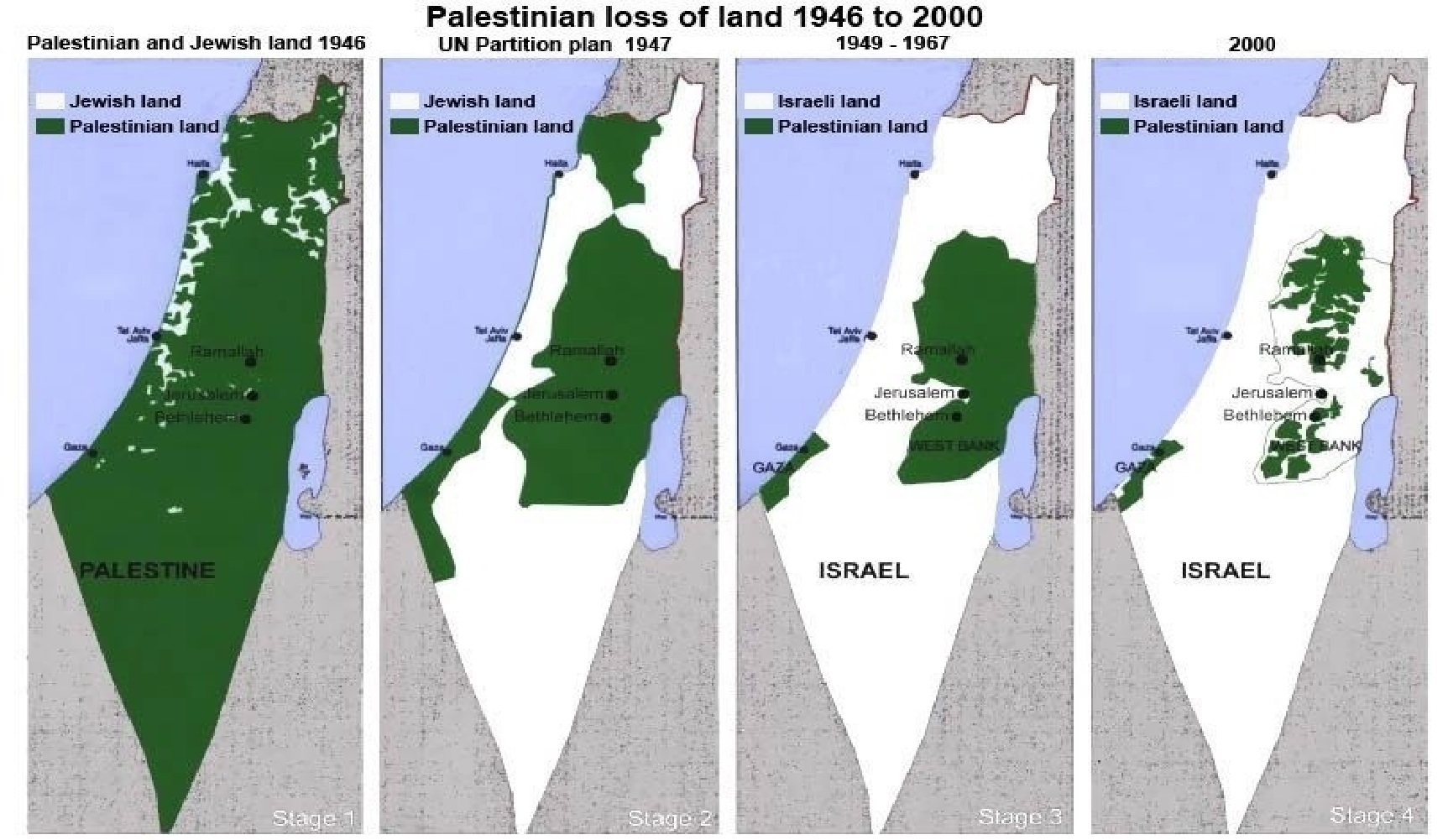
A post on the teachings and agenda of John Hagee is still forthcoming. It’s quite a project, so I allowed this post to “jump the queue” in the meantime.

A Night to Honor Israel – And to Dishonor Jesus and His Church


A Night to Honor Israel – And to Dishonor Jesus and His Church

by Adam Maarschalk (May 23, 2010)

Last Tuesday night (May 18th) a friend and I headed out for what I thought was one of CUFI’s “A Night to Honor Israel” events. On the way there we imagined ourselves in the midst of several thousand fans waving Israeli and American flags. The crowd would be bleeding with unquestioning support for the nation of Israel and all her political policies. It turns out that the flags weren’t there, and neither were the thousands, but the unquestioning support certainly was. And the political nation of Israel was most definitely honored above all else, including Jesus, who didn’t receive one single mention the entire evening. What my friend and I ended up attending was more like a regional information meeting led by John T. Somerville, the Central Regional Coordinator for CUFI (Christians United for Israel). CUFI is a large organization which was founded in 2006 by San Antonio-based megachurch pastor John Hagee.

The event was held at Living Word Christian Center, the premier “health and wealth” (prosperity gospel) church in the Minneapolis/Saint Paul area. LWCC is pastored by Mac Hammond, who is also on the Executive Board of CUFI and is their Region 8 Director (for Minnesota, Illinois, Iowa, Wisconsin). The church draws speakers like Kenneth Copeland, Creflo Dollar (yes, that’s his real last name), and Jesse Duplantis, as evidenced by this poster near the entrance to the massive lobby:

The Ahmadinejad bashing began almost right away, my first clue that this evening’s focus would be as much political as anything else. The speaker, John Somerville, listed off the evils of Iran, giving special attention to Mahmoud Ahmadinejad’s various meetings with foreign diplomats. We were told that each and every time he meets with national leaders he tries to sell them his “let’s wipe Israel off the map” agenda (I certainly acknowledge this agenda as evil). Somerville then predictably invoked Zechariah 2:8, which reads: “…for he who touches you [Jerusalem] touches the apple of His [God’s] eye.” Somerville declared, his voice rising, that the nation of Israel always has been and always will be the apple of God’s eye, His most precious possession. Those who would oppose Israel in any way will incur God’s wrath. As proof of this transgression on the part of national leaders, Somerville put up this ingenious slide picture of different leaders putting a finger up in the air:

Political leaders allegedly “sticking their fingers in God’s eye”

Never mind how easy it was to locate a picture of John Hagee with his own finger extended upward…

If Somerville is correct in his interpretation of Zech. 2:8 (and Hagee as well, for he teaches the same thing), who was the apple of God’s eye from 70 AD until 1948 when there was no nation of Israel? Did nearly 19 centuries pass without God having a special possession to call His own? This time period covers much of the present church age, so what is the Church in God’s eyes? Chopped liver? On the other hand, this is the testimony of the New Testament regarding the Church, which is made up of believing Jews and Gentiles alike: “But you are a chosen race, a royal priesthood, a holy nation, a people for His own possession, that you may proclaim the excellencies of Him who called you out of darkness into His marvelous light” (I Peter 2:9).

Somerville, on Tuesday night, voiced his disagreement with the apostle Peter, by announcing numerous times that the Jews are God’s chosen people. He never did clarify what they are presently chosen for, but one curious thing to note was that whenever this phrase appeared in one of his slides it was always capitalized (“Chosen People”). This made me wonder something. If he were to acknowledge that the body of Christ is God’s chosen people (he did not), would capital letters again be used? Somehow I doubt it. His main proof text for his assertion that the Jews are God’s chosen people was Isaiah 65:9. This verse reads, “I will bring forth offspring from Jacob, and from Judah possessors of My mountains; My chosen shall possess it, and My servants shall dwell there.”

Ah, this verse appears to speak of the land. So is this a clue as to why Somerville believes the Jewish people are presently chosen? “Israel is the only piece of real estate that God calls His own,” Somerville thundered next. And God has given the land of modern Israel (and more) to the Jewish people forever, we were repeatedly told, so woe to anyone who would get in the way of them possessing it. This apparently includes the Palestinian people who happened to be born there, and whose ancestors had lived there and cultivated the land for a long time. Apparently we can chalk it up to mere collateral damage that around 70,000 Palestinian men, women, and children were slaughtered in 1948; around 700,000 made homeless that same year; and 4 million or so have been dispossessed of their land ever since. The land in red on the map below, we were told, rightfully belongs to the Jewish people. The Balfour Declaration of 1917 was “the high-water mark of the British Empire,” Somerville added. Transjordan made up 77% of the (partially) resulting British Mandate, but the British “gave it away in violation of Genesis 12:3 [see below] and Joel 3:2.” The British soon lost their vast empire, according to Somerville, as a direct result of leaving most of “the Promised Land” in the hands of the Arabs:

Somerville emphasized that when God said the land belonged to Israel forever, He meant it. We will address this question in depth in future posts. For now, let us take note that the covenant of fleshly circumcision was also said to be forever/eternal/perpetual [see, for example, Genesis 17:9-14, and note the language used]. The same was said regarding numerous temple-based rituals [Exodus 28:43, 29:28, 31:16-17, 40:15; Leviticus 3:17, 6:18, 22, 7:34, 36]. How does the New Testament deal with the non-land covenants/statutes which were said to be eternal? Should the “eternal” land promises be dealt with in a different manner? If so, why? Were they ever said to be conditional? Are we not heirs of a better “land” under the New Covenant? The land promise was first articulated to Abraham, but what city did he look forward to possessing (hint –> Hebrews 11:10-16)? All of this and more we will deal with later, Lord willing.

Somerville made it very clear that two big “no nos” are [1] attempting to divide the land of Israel and/or Jerusalem, and [2] preventing the Jewish people from coming back to the land God promised them (for which Britain was especially guilty, he said). We were taken to Joel 3:1-2, “For behold, in those days and at that time, when I restore the fortunes of Judah and Jerusalem, I will gather all the nations and bring them down to the Valley of Jehoshaphat. And I will enter into judgment with them there, on behalf of My people and My heritage Israel, because they have scattered them among the nations and have divided up My land.”[1] This text, we were told, is proof positive that America is in deep danger because of President Obama’s lack of pro-Israel policies and his non-red carpet treatment of Benjamin Netanyahu in recent months.

Apologies for the blurry photo. It says: “… …” (Zech. 2:8). Is the US sticking its finger in God’s eye? Is the US being brought under the judgment of God? Is there still time and any hope for our nation?

All night long, the only verses referenced or quoted were from the Old Testament. This was no surprise to me, for the New Testament has much to say in direct response to the many false doctrines of Christian Zionism. Those who belong to Christ today are in the New Covenant, but one wouldn’t have known it from being present at this event. Somerville almost broke from this pattern, though, by going to Matthew 25:40. This verse flashed briefly on the screen in front of us before he decided to skip it, but I took note of what was highlighted in that verse. It’s from the famous Sheep and the Goats passage: “And the King will answer them, Truly I say to you, as you did it to one of the least of these My brothers, you did it to Me.” I’m all too familiar with how John Hagee treats this passage, so I will go ahead and assume that Somerville (as a key representative of his organization) would have treated it the same. In addition to seeing this as a future judgement, they see Christ’s brothers in this passage as the Jewish people, simply because Jesus was an ethnic Jew. Therefore, God will one day judge all people based on how they related to the Jewish people. What is John Hagee’s creepy application of this passage (Matthew 25:31-46)?

It is important to be right on the Israel question when you consider that being wrong brings you under the curse of God and headed for eternal, everlasting fire with the devil and his angels. Israel is not a “take it or leave it” subject. It is a life and death matter-eternal life!

However, Jesus didn’t consider His true brothers to be those who happened to share His same ethnicity, nor even those who happened to be born of His mother:

Then His mother and His brothers came to Him, but they could not reach Him because of the crowd. And He was told, “Your mother and Your brothers are standing outside, desiring to see You.” But He answered them, “My mother and My brothers are those who hear the word of God and do it” (Luke 8:19-21).

Somerville apparently believes that all nations are in some sort of a covenant with God today, saying that they are all duty-bound to honor the promise given to Abraham in Genesis 12:3– “I will bless those who bless you, and him who dishonors you I will curse, and in you all the families of the earth shall be blessed.” Somerville’s immediate application of this verse was to instruct us to all “go find a Jew tonight and bless him,” and God would then be obligated to bless us in return. I’m not sure if he expected us to go out knocking on doors, asking people if they were Jewish, but it was 9:30 pm by the time we got out of there and…well, I guess I failed to receive my guaranteed blessing that night. On a related note, CUFI’s purpose was expressed on another slide: “to fulfill God’s Biblical Mandate to bless Abraham’s descendants.” Clearly we were meant to understand that it’s Abraham’s physical descendants who we are to go out of our way to bless. How does this idea stand up, though, to the scrutiny of the New Testament?

And let us not grow weary of doing good, for in due season we will reap, if we do not give up. So then, as we have opportunity, let us do good to everyone, and especially to those who are of the household of faith (Galatians 6:9-10).

The apostle Paul actually cites Genesis 12:3 in Galatians 3:8. Let’s see what he, under the inspiration of the Holy Spirit, had to say on the matter. First, he said that by this promise “the Scripture, foreseeing that God would justify the Gentiles by faith, preached the gospel beforehand to Abraham” (this also agrees with Peter’s interpretation in Acts 3:25-26). Then Paul goes on to state something which John Hagee and others in this movement very badly need to embrace as truth: “Now the promises were made to Abraham and to his offspring. It does not say, ‘And to offsprings,’ referring to many, but referring to One, ‘And to your offspring,’ who is Christ” (Gal. 3:16). Going on a little bit further, we come to even more truth regarding those who are counted as Abraham’s offspring today: “There is neither Jew nor Greek, there is neither slave nor free, there is neither male nor female, for you are all one in Christ Jesus. And if you are Christ’s, then you are Abraham’s offspring, heirs according to promise” (Gal. 3:28-29).

In Christ, there are no benefits that God grants to males which He will not also grant to females, and there are no benefits or promises that He grants to ethnic Jews which He will not also grant to ethnic non-Jews who trust in Christ. All of God’s promises are accessible only through faith (Romans 4:13-18). “For there is no distinction between Jew and Greek; the same Lord is Lord of all, bestowing His riches on all who call on Him” (Romans 10:12). “For neither circumcision counts for anything, nor uncircumcision, but a new creation” (Galatians 6:15; see also Gal. 5:6 and John 8:39-47).

The saddest part of the evening occurred when Somerville turned the microphone over to a Jewish community leader (a Rabbi?) who was clearly not a follower of Christ. This man, who didn’t hear a trace of the gospel that evening, emphasized the common ground between Jewish Zionists and Christian Zionists, much to the delight of the crowd. It only got worse when he proceeded to define what a “righteous Christian” is: one who [1] does what is right regarding the nation of Israel and the Jewish people [2] rejects “replacement theology,” and [3] believes that all the promises God gave to Abraham apply today to his physical descendants, the Jewish race. Unbelievably, this definition of a “righteous Christian” received applause from the crowd, even though it was implied that all Christians who fail to meet these three criteria are unrighteous. The Biblical definition of righteousness has everything to do with Jesus and His work on the cross. It’s impossible to be a genuine follower of Christ without being made righteous, and to be without righteousness is to be without Christ. The deceived supporters of CUFI fell for the lies spoken by a man who has no hope of ever being found righteous unless God draws him to Himself and he places his trust in Christ for salvation. Tragically, that hope was kept hidden from him that night.

We were pushed hard to join more than 175,000 other Christians in signing “The Israel Pledge.” In fact, the crowd was asked to repeat this pledge out loud together (my friend and I remained silent, although we could certainly agree with point #2):

The Israel Pledge We believe that the Jewish people have a right to live in their ancient land of Israel, and that the modern State of Israel is the fulfillment of this historic right. We maintain that there is no excuse for acts of terrorism against Israel and that Israel has the same right as every other nation to defend her citizens from such violent attacks.

We pledge to stand with our brothers and sisters in Israel and to speak out on their behalf whenever and wherever necessary until the attacks stop and they are finally living in peace and security with their neighbors.

A few days ago, Jews for Jesus’ founder Moishe Rosen passed away. He left behind a heartfelt letter in which he expressed his concerns regarding certain trends today:

As I go, one of the things that concerns me deeply is how much misunderstanding there is among believers. I never thought I would live to see the day when those who know the Lord and are born again were supporting the efforts of rabbis who, frankly, not only don’t know Christ, but don’t want to know Him.

To be an honest ministry, it can only come from the Holy Spirit; and the Holy Spirit can only indwell those who have the new birth and are born again. Therefore, I would urge you to think very seriously before you support any “ministry” that involves Jewish people and doesn’t actually bring the gospel to the Jews… Within Judaism today, there is no salvation because Christ has no place within Judaism.

Source: http://jewsforjesus.org/(HT: PJ Miller)

———————————————————————————————————————————

All posts on the subject of Christian Zionism can be found here.


[1] In a future post I hope to interact with Joel 3:1-2, which is often used today by Christian Zionists to say that God will judge all nations in the future based on how much or how little favor they granted to the nation of Israel which was founded in 1948. Briefly, though, it may be of interest to note that both John Wesley and Matthew Henry saw in this passage a two-fold application: [1] to the time period following Judah’s defeat at the hand of the Babylonians in 586 BC, and [2] to the Church in this present age, in terms of God ultimately vindicating His people who experience persecution and martyrdom for their faith.

“With God On Our Side”: A Documentary on Christian Zionism


FILM REVIEW: “With God On Our Side” (includes video previews)

by Adam Maarschalk: April 29, 2010

For there is no difference between Jew and Gentile–the same Lord is Lord of all and richly blesses all who call on Him” (Romans 10:12).

In reading this, then, you will be able to understand my insight into the mystery of Christ, which was not made known to men in other generations as it has now been revealed by the Spirit to God’s holy apostles and prophets. This mystery is that through the gospel the Gentiles are heirs together with Israel, members together of one body, and sharers together in the promise in Christ Jesus” (Ephesians 3:4-6).

For not all who are descended from Israel are Israel. Nor because they are his descendants are they all Abraham’s children. On the contrary, ‘It is through Isaac that your children will be reckoned.’ In other words, it is not the natural children who are God’s children, but it is the children of the promise who are regarded as Abraham’s offspring” (Romans 9:6-8).

These three passages are only a sampling of New Testament passages demonstrating that “the playing field” is leveled because of Christ’s work on the cross, and that in the kingdom of God ethnic descent counts for absolutely nothing. Saving faith in Christ is required to have any stake whatsoever in the promises of God (see especially Galatians 3:7-9, 16, 29; Romans  4:13-16, 22-25; Galatians 5:6, 6:15-16). How does this New Covenant truth play out, though, in 21st century American Christianity? Do we believe it? Do we teach it? Do we practice it? Or do we teach instead that God favors one ethnic group over all others, and that He holds out promises for that one ethnic group which He withholds from others? The sad fact is that there is a popular movement which indeed strongly advocates this type of partiality and favoritism. This movement is known as Christian Zionism, an offshoot of Dispensationalism, the school of thought invented by John Nelson Darby in the 1830’s and popularized by the 1909 publishing of the Scofield Reference Bible.

Are there significant implications for supporting Christian Zionism? Porter Speakman Jr. believes so. Speakman is the director of a brand new documentary titled “With God On Our Side” (not to be confused with a 2004 documentary by the same name highlighting “the rise of the religious right in America”). It was released by Rooftop Productions on April 8, 2010. The following is the film’s synopsis:

With God On Our Side takes a look at the theology of Christian Zionism, which teaches that because the Jews are God’s chosen people, they have a divine right to the land of Israel. Aspects of this belief system lead some Christians in the West to give uncritical support to Israeli government policies, even those that privilege Jews at the expense of Palestinians, leading to great suffering among Muslim and Christian Palestinians alike and threatening Israel’s security as a whole.

This film demonstrates that there is a biblical alternative for Christians who want to love and support the people of Israel, a theology that doesn’t favor one people group over another but instead promotes peace and reconciliation for both Jews and Palestinians.

I watched this documentary last weekend, and highly recommend it for anyone who has any interest at all in the present Israeli/Palestinian conflict, and especially for those who have theological convictions regarding modern day Israel and/or the Jewish people. My brief review of this film will follow shortly, but first I’d like to highlight the five official (short) video clips posted on Vimeo to promote the film. They don’t do justice to the excellent content of the film itself, but they are a good introduction:

[1]

This first video is the official trailer of “With God On Our Side.” It includes brief testimony from Salim Munayer, a Palestinian Christian who lived in the region when Israel became a nation in 1948. Salim helped to found Musalaha, a non-profit organization “that works toward reconciliation between Israelis and Palestinians based on the Biblical principles of peace, justice, and love.”  This trailer also includes footage from certain Palestinian areas, and speaks briefly of the more than 3 million Palestinian refugees who today make up the largest refugee population in the world. The viewer is also given a couple of brief glances at a “Christians United for Israel” (CUFI) rally led by pastor John Hagee of San Antonio, Texas.

[2]

In this second video clip, Gary Burge (Professor of New Testament at Wheaton College, and a student living in Beirut when the Lebanon civil war broke out in the 1970’s) speaks on Biblical justice and kingdom values. Examples would be the truths Jesus articulated in the Sermon on the Mount, and His actions toward the people who were marginalized in the Israel of His day. Gary asks whether or not evangelical Christians today are promoting and applying these values equally toward all peoples in the Middle East, regardless of their background.

[3]

In this third video clip, Salim Munayer, who is also a leader on faculty at Bethlehem Bible College in Palestine, tells of a popular US Christian radio anchor interviewed some time ago on Israeli TV. This Christian leader cited the book of Joshua in making his case that the Jews should destroy the population of Lebanon. The point of this Palestinian believer is that many American Christian leaders are being perceived in the Middle East as warmongers, as desiring to be rich but not caring for the poor, as standing for power and not peace/justice, as hating Muslims, as being one-sided regarding the Israeli/Palestinian conflict, etc. He points out that certain Christian spokespersons in America (especially from the Christian Zionist camp) are heard loudly in the Middle East, and their statements are immediately translated into Arabic on a regular basis. Their teachings and political opinions are hindering the ministry of believers in that region.

[4]

In this fourth video clip, a Christian British journalist speaks of the unjust accusation of anti-semitism which is often leveled at those who attempt to tell the “Palestinian narrative,” or who advocate equality between the Jewish and Palestinian communities. I might add that I’ve also personally heard this charge applied unfairly to those who simply question or reject the teachings of dispensationalism and/or Christian Zionism, which happen to be fairly new doctrines in Church history. Another term which is hastily applied to those who don’t believe that the Jewish people hold a special status in New Covenant Christianity is “replacement theology.”

Photo Credits: All photos in this post are sourced from the “We Love Israel” page on Facebook.

[5]

In this fifth video clip, Stephen Sizer (a pastor at Christ Church in Surrey, England; also an author, theologian, and an international speaker specializing in topics relating to the land of Israel) speaks of the danger of simplistic answers regarding the Israeli/Palestinian situation. These dangers include making one group or the other “the bad guys,” or demonizing a whole group of people, leading to a justification of the abuse of civilians in order to advance a certain cause. He compares some of the arguments which are being advanced today to the arguments which allowed for the ethnic cleansing of North America’s indigenous people in generations past.

A Brief Review of “With God On Our Side”

One of the features of this film which I greatly appreciated was the space given to Palestinian Christians to share their stories and their perspectives. They are often a forgotten voice in the present conflict. The same is unfortunately true in the world of Christian Zionism, where even Jewish unbelievers are among the favored ones, but our Palestinian Christian brothers and sisters are too often sidelined. One man shared what he saw firsthand in 1948 when Israel became a nation, when his own family members were made homeless along with nearly 700,000 other people. He doesn’t share these details with bitterness. Instead, he expresses how he loved the Jewish people prior to 1948, and by the grace of God continues to love them post-1948. Upon watching the film, one gets the sense that there are so many similar stories which could and should be told.

Another helpful feature of the film is an informative section devoted to the history of the land/region of Palestine during the last several centuries. The film’s very informative official site provides some of these same details, minus the attractive graphics presented in the film. One learns about the Ottoman Empire, its fall around the time of World War I, the famous Balfour Declaration of 1917, and British-controlled Palestine during the “British Mandate,” all prior to 1948. As the film site states,

The status of the populations between Arabs and Jews living in the land of Palestine before 1948 is one that is continuing to be debated. While researching for this film, we came across various population numbers and statistics. We have tried to take numbers that most accurately indicated the realities on the ground at that time. The two main things that can be said with little doubt, no matter what numbers you use is that, one, the land of Palestine was not empty when Jews began immigrating back in the late 19th century. Two, there was a majority Arab population and minority Jewish communities living in the land of Palestine before 1948.

Jewish immigration to Palestine grew, especially during and after WW2 and the Holocaust, which saw the systematic murder of over 6 million Jews at the hands of the Nazis. As Jewish immigration grew, tensions between the two communities mounted. However, before that, Arabs and Jews lived together peacefully. It is true that there was Arab migration into the area as Jewish immigration and opportunities arose; however, the idea that Arabs only started to populate the area when Jews made it prosperous is a myth.

Speaking of myths, some of the theology characteristic of Christian Zionism is discussed throughout the film, but especially during the last half hour (the film is 82 minutes long). The film is not one-sided in this regard, though. Christian Zionists, John Hagee being one of them, are given numerous opportunities to express their views without interruption. In some cases, their views are then refuted by featured speakers in this documentary. In other cases, their specific points are not so thoroughly addressed, though I found myself wishing that they would have been.

The video footage alone makes this film worth viewing. It was fascinating to see the way of life of both Jews and Palestinians in villages, cities, and marketplaces. To be sure, there were heartbreaking moments as well. The suffering and injustices are incredible, and too many are needlessly being made victims, and much more could be said on this. The viewer learns of some disturbing details behind the push to locate settlers in disputed areas, including massive financial support from Christian organizations in America which is enabling certain aggressive activities to continue and increase. Is God on one side of the present conflict, but not on the other? Christian Zionists say “yes,” but does the Bible agree? Emphatically, I must say “no.”

It’s my conviction that it’s impossible to make a responsible case from within the pages of the New Testament that God maintains any promises for the Jewish people which are not available for all who trust in Christ, not even promises regarding the land of Israel. In fact, unbelieving Jews (and Gentiles) are entirely outside of God’s covenant and promises, for these promises are only accessible through faith. Nor do I believe that any promises await any future fulfillment exclusively or primarily for the Jewish people, for there really is no Jew or Gentile in Christ Jesus (Galatians 3:28). I realize that the statements I’ve just made are a huge can of worms for a lot of people. Good! Let us all dig deep on these things for ourselves, and not just blindly follow popular teachers and teachings.

When time allows, I hope to write much more extensively on this very subject, for there are so many things to consider. In the meantime, for anyone who is interested, one excellent resource is  a series of presentations based on Stephen Sizer’s book, “Zion’s Christian Soldiers? The Bible, Israel, and the Church.” Sizer has kindly made this series available online for free (the book is available for purchase here). I have read portions of this series and what I’ve read so far is thorough, well-thought-out, and simply an excellent study. I plan to do a lot of interaction with Sizer’s writings once I do write  further on this subject here at this blog. The following are some of the questions I wish to tackle at that time (feel free, though, to discuss them even now):

-According to the New Testament, who are God’s chosen people today? Does God have one chosen people, or two?

-Are all Jews part of God’s chosen people, as is taught in many Christian circles, or only those Jews who have put their faith in Christ (alongside of all non-Jews who have done the same)?

-Do Jewish Christians (known as “Messianic Jews”) have a higher place in the kingdom of God than non-Jewish followers of Christ? Does Scripture say that this will ever be the case?

-Does Genesis 12:3 mandate that Christians show favoritism toward the modern nation of Israel, the policies of that nation, and/or toward the Jewish people as a whole? Does Genesis 12:3 have anything at all to do with the modern, geopolitical nation of Israel? How about Zechariah 2:8, where Jerusalem is said to be “the apple of God’s eye”?

-Do the Jewish people have a divine right to the land of Israel? Is this idea affirmed anywhere in the New Testament? If yes, where? If no, why not?

-How do the inspired authors of the New Testament apply Old Testament passages which were originally addressed to “the house of Israel”? Are they applied in the NT to the Jewish people as a race, or to the Church (which is made up of believing Jews and Gentiles, with no distinction)? Are they ever spiritualized in any way by the authors of the NT?

-Were the promises given to the nation of Israel in the Old Testament conditional or unconditional? Do they apply to the modern, political nation of Israel? If so, to whom were they applied from 70 AD to 1948 when there was no established nation known as Israel?

-The land promises in the OT were said to be eternal/everlasting/perpetual, as was the covenant of fleshly circumcision, and as were also numerous temple-based rituals. How does the NT deal with the non-land covenants/statutes which were said to be eternal? Should the eternal land promises be dealt with in a different manner? If so, why?

-How does the New Testament speak of earthly Jerusalem in comparison to heavenly Jerusalem, and what are the implications of this contrast?

-Has the New Covenant (promised, for example, in Jeremiah 31 and Ezekiel 36) fully arrived yet? Or is its full arrival awaiting the future salvation of the entire nation of Israel (or all  surviving Jews) at the Second Coming of Christ? This is what dispensationalism teaches.

-Are you sure that what you have been taught regarding the Jewish people, the nation of Israel, and other related issues resembles what has been taught throughout Church history, especially prior to the advent of dispensationalism (the school of thought developed by John Nelson Darby in the 1830’s)?

—————————————————————————————————————————————-

With God On Our Side” is available for purchase on Amazon.com, where several helpful reviews of the film can also be seen.

All posts on the subject of Christian Zionism can be found here.